
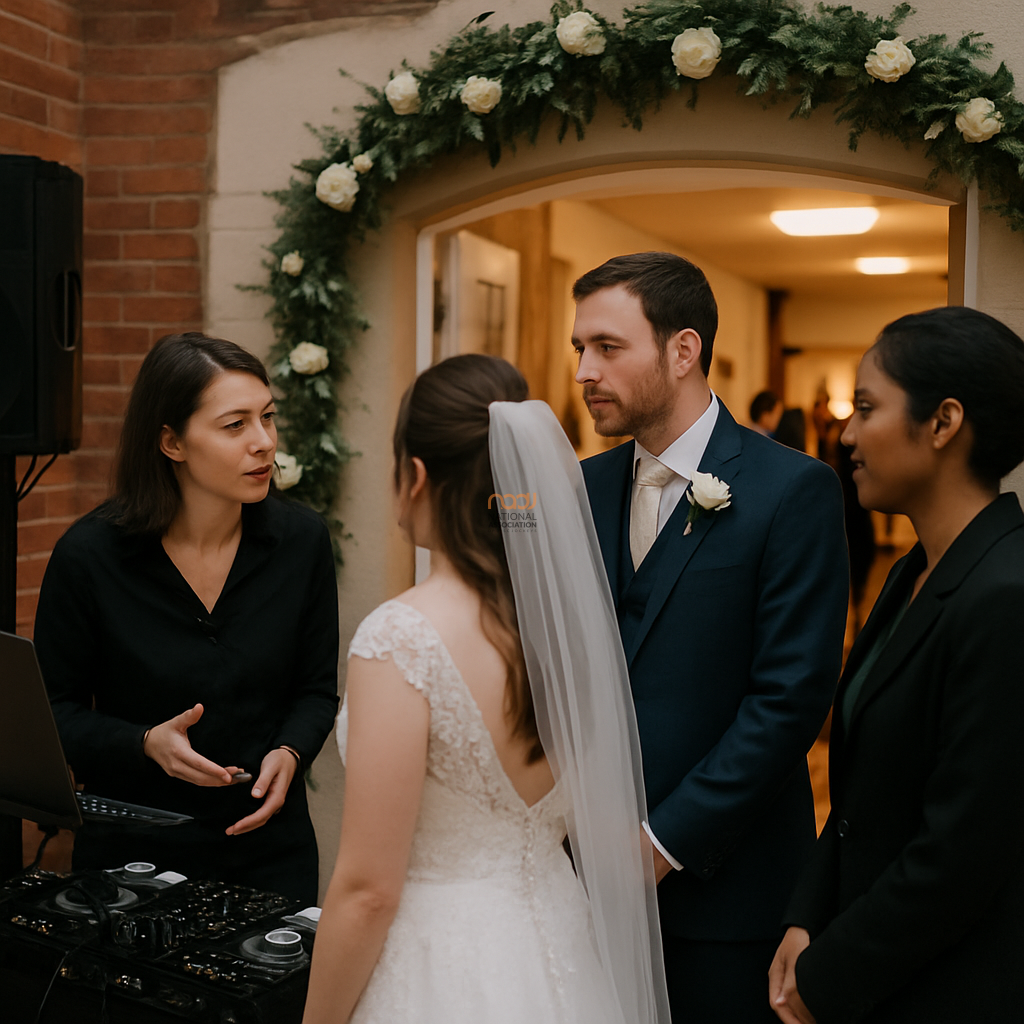
For many mobile DJs, the hardest part of the night is not the first song, but the grand entrance. At a wedding, party or corporate event, that moment depends on timing, clear communication and a venue team that knows what comes next. When the venue has no event manager, the responsibility often lands on the DJ. If you need to co-ordinate grand entrances, the key is to build a simple system before guests arrive.
That does not mean taking on duties that are not yours. It means creating a workable plan so the entrance happens smoothly, safely and without confusion. In the UK, that matters whether you are working in London, Manchester, Birmingham, Leeds, Bristol, Cardiff, Glasgow, Liverpool, Nottingham, Leicester, Coventry or smaller venues across England, Scotland, Wales and Northern Ireland.
Start with a proper pre-event conversation
Do not wait until the crowd is gathered and the couple are ready to walk in. Ask in advance who is actually in charge on the day. If there is no event manager, identify the person who can make decisions quickly: the venue owner, wedding coordinator, toastmaster, best man, organiser or a nominated family member.
Keep the conversation practical. Confirm:
- who will gather the entrance party;
- who will cue the doors or lights, if applicable;
- who will tell you when everyone is ready;
- the exact order of entry;
- any names or introductions you need to announce;
- what you should do if someone is missing or delayed.
This is also the point to ask for a timeline. If the meal is due to start, speeches follow, or there is a set change-over, you need the full picture. A clear running order reduces the chance of pressure later.
Use a simple written cue sheet
Verbal instructions are easy to forget in a busy room. A short cue sheet helps everyone. Keep it brief and readable, with times, names and the sequence of events. A phone note can work, but a printed sheet is often better when staff are moving around.
At a minimum, include the following:
- venue name and contact;
- event host or lead contact;
- entrance order;
- track name and start point;
- who is introducing the entrance;
- any special instructions for lighting, microphones or doors.
If you work regularly with venues, you may want to develop your own standard pre-event template. NADJ members often find that a repeatable process saves time and reduces stress, especially when working multiple shows in one weekend.
Do a quick technical check before the call
Grand entrances depend on sound and timing. Before the room fills, check that your playback source is ready, the correct cue point is set and the volume level is suitable for speech and music. If you are using wireless microphones, test them properly. If you need headphones for cueing or a backup mix check, choose reliable kit that suits professional mobile work; our guide to top DJ headphones for professional mobile DJs in the UK may help when you are reviewing your setup.
It is also sensible to think about contingencies. Have a spare cable, a backup playback option and a plan if a microphone fails. You do not need to overcomplicate the moment, but you do need to be ready if something unexpected happens.
Agree the cue with one person only
One of the biggest causes of confusion is too many people trying to help. If several guests, staff members or family members are all giving instructions, the entrance can become disorganised. To avoid that, nominate one person to give you the final cue.
That person should know exactly what you need from them. For example, “Wait until everyone is in position, then give me a thumbs-up.” Keep the cue consistent. If you change the signal halfway through the night, delays and crossed wires become more likely.
Where possible, brief the entrance party separately. Ask them to stay together, keep drinks down, and pause if the room needs a final check. Small details like this help the entrance feel polished rather than rushed.
Keep the announcement short and clear
If you are making the announcement yourself, keep it confident and concise. You are not there to improvise a full MC set unless that has been agreed. A clean intro works better than a long speech.
For example, you might say: “Ladies and gentlemen, please take your seats and welcome the newlyweds into the room.” Then start the music at the agreed point. If it is a corporate entrance or birthday party, adjust the wording to suit the event and the tone the client has requested.
If a toastmaster or another host is involved, let them lead the spoken introduction and stay ready with the cue. Good co-ordination is about timing, not taking over.
Prepare for delays without showing panic
In real events, somebody will be in the wrong place, a child will run off, or a photo session will overrun. When that happens, stay calm. Do not announce the entrance too early just to fill time. Instead, keep communication open with the nominated contact and wait for confirmation.
A short holding track or background bed can help, but only if it fits the atmosphere. Never let the room feel stranded. The goal is to keep energy steady until everyone is ready.
Think beyond the entrance itself
The best DJs treat the grand entrance as part of the wider flow of the event. After the entrance, what happens next? Is there an immediate first dance, meal service, awards presentation or speeches? If the venue has no event manager, the DJ may need to help maintain that flow through clear transitions.
That does not mean carrying more than your role allows. It means being organised, visible and helpful. If you are a NADJ member, that professional approach supports the standards our industry needs. If you are still building your business, our membership tiers explained page can help you understand the benefits of joining a professional community.
Use the right tools and support
Working DJs benefit from access to reliable resources, peer advice and up-to-date business information. The NADJ Hub is designed to support members with practical industry content, while the NADJ directory can help clients and venues find professional DJs. You can also keep an eye on gig listings for opportunities across the UK.
Where business questions arise, remember that live requirements can change. If you are reviewing insurance, for example, check the current details carefully. Our guide to DJ public liability insurance explains the basics, but it should not replace up-to-date policy advice from your provider.
For wider digital and business support, visit NADJ Media Ltd. Whether you are promoting your services in Birmingham, planning outreach in Glasgow or building a stronger profile across the Midlands, having the right tools matters.
Final thought
When there is no event manager, a successful grand entrance depends on preparation, calm communication and a clear chain of responsibility. Keep the plan simple, agree one cue, test your kit and avoid assumptions. That approach will help you deliver a professional result, protect the flow of the event and reduce avoidable stress for everyone involved.
In short: if you want to co-ordinate grand entrances well, make the process easy for the room, not just for yourself. That is what clients remember.
AI transparency note
NADJ uses artificial intelligence as an editorial assistant. Articles produced through this publisher begin with a human-selected idea, source, brief or editorial direction, and AI may be used to research, structure, draft or improve the wording. AI does not set NADJ editorial policy or operate free-range: people acting for NADJ set the instructions and publishing framework, monitor the output and retain editorial responsibility.
Images used by NADJ may include stock photography or AI-generated visuals where appropriate. NADJ is volunteer-led and editorial time is limited; much of our available time is currently absorbed by governance and management, a substantial data audit and membership-system transfer, and planning 12 Tea & Test days across the UK. You can help strengthen member-led content by sending article ideas or completed submissions to hello@nadj.org.uk.


 Avtar Thethy
 Fabio Capozzi
 Alastair Craig

 Dave Mills