
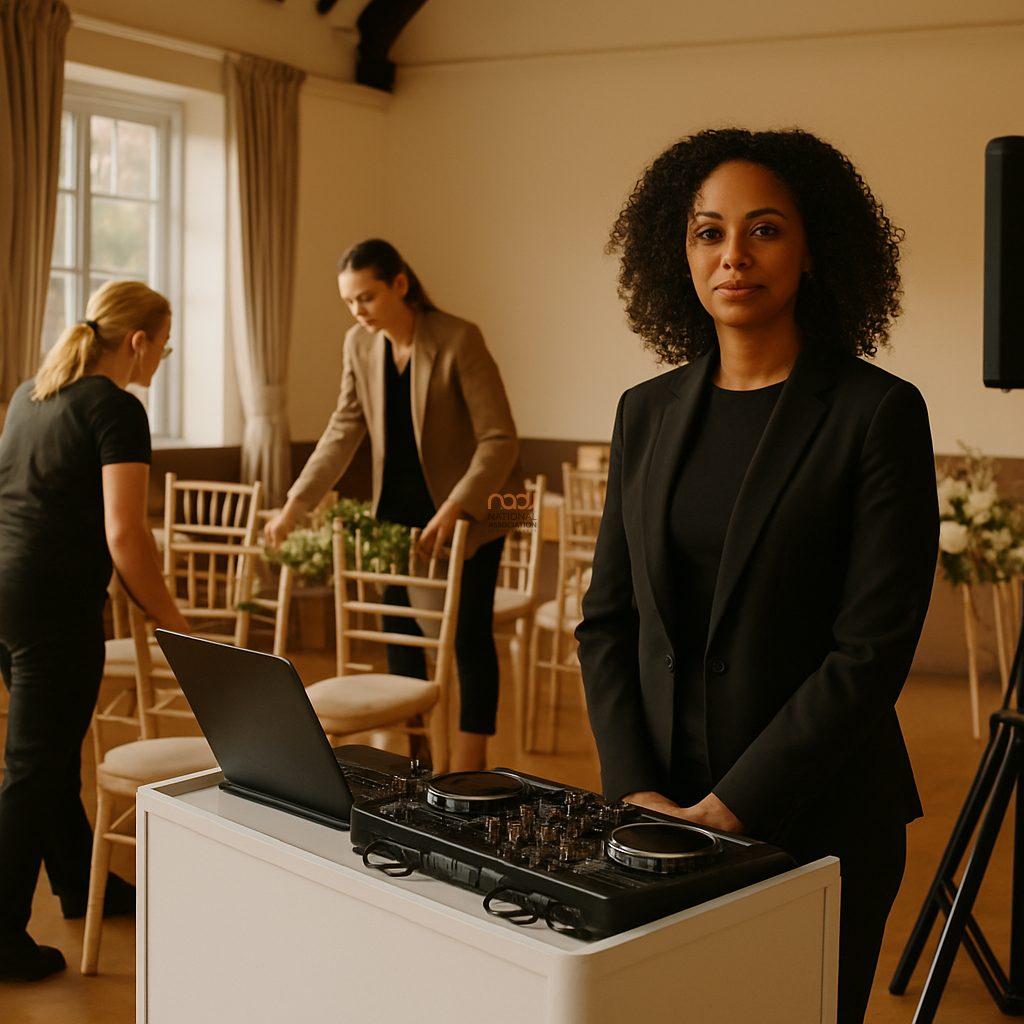
Room turnaround music management is a small part of the day that can have a big impact on the overall flow of a wedding or private event. When the ceremony space has to become a reception room in a short window, the DJ’s job is not just to play the right tracks. It is to protect the atmosphere, avoid awkward silence, and keep the operation calm and efficient.
For working DJs across the UK, from London and Birmingham to Glasgow, Cardiff, Leeds and beyond, the challenge is usually the same: the guests are moving, the venue staff are busy, and you may need to reset your setup while also maintaining a professional musical backdrop. The good news is that with a clear plan, room turnarounds are straightforward to manage.
Understand the purpose of the turnaround
First, be clear about what the room turnaround is meant to achieve. In most cases, it is not an entertainment set in its own right. It is a bridge between two parts of the day. The music should support the pace of the changeover, mask operational noise where appropriate, and help guests feel that the event is still flowing.
That means the music choice should usually sit in the background. It needs to sound deliberate, but not so attention-grabbing that it distracts from staff clearing the room, the couple moving, or guests being directed to the next space.
Plan the soundtrack in advance
The best time to solve a turnaround is before the event begins. Build a dedicated playlist for this part of the day and keep it ready on a reliable device. Avoid relying on a last-minute queue assembled on the spot, especially if mobile reception is poor or you are working in a rural venue in Wales, Northern Ireland or the Scottish Highlands.
Your playlist should be long enough to cover delays. Venues often run slightly over, and a 20-minute changeover can quickly become 35. Choose music that is easy to loop or extend, and keep a few additional tracks in reserve if you need to stretch the mood.
Choose the right style for the event
There is no single correct genre. The right choice depends on the couple, the venue, and the wider programme. Acoustic versions, mellow pop, soul, jazz, lo-fi, soft instrumental edits and tasteful classics all work well in many settings. In other cases, the brief may call for something more upbeat.
As always, read the room and respect the client’s preferences. If the ceremony has been formal, a polished and calm soundtrack often works best. If the event is younger, more relaxed, or strongly themed, you may have more scope to be playful. The key is suitability, not personal taste.
Keep the volume controlled
One of the most common mistakes is treating the turnaround like a pre-party. It is usually better to keep the level modest and consistent. Guests should be able to talk, venue staff should still hear each other, and announcements should remain clear if needed.
If you are using compact systems, this is where sensible kit selection matters. A lightweight, reliable speaker setup with clean output will usually serve you better than pushing a large system too hard. If you are reviewing options, NADJ’s guide to the best PA speakers for mobile DJs in the UK is a useful place to compare practical choices.
Coordinate with the venue and the wedding team
Good room turnaround music management depends on communication. Speak to the venue team, the caterers, the registrar or celebrant where relevant, and any wedding coordinator before the day. Confirm exactly when music is meant to stop, when guests will move, and whether there is any requirement to reduce sound while the room is being reset.
This is especially important in venues across England, Scotland, Wales and Northern Ireland where different teams may each control part of the process. A quick pre-event conversation can prevent confusion later and help you avoid unnecessary interruptions.
Build a simple technical workflow
During a turnaround, you may be concentrating on more than music. You may be striking ceremony equipment, moving a booth, changing cables, or preparing for the reception. Keep your workflow simple and repeatable.
- Use a dedicated playlist or crate for the turnaround period.
- Set cue points in advance so you can recover quickly if needed.
- Keep a charged backup device available.
- Test playback before guests arrive.
- Have a cable and power plan that avoids unnecessary clutter in guest areas.
Where practical, use equipment that is easy to deploy and pack down. If you are regularly working multi-part wedding days, durability and efficiency matter. If something fails, you need to recover without drawing attention to yourself.
Prepare for delays and last-minute changes
Turnarounds rarely run exactly to plan. A ceremony may overrun, photographs may take longer, or the venue may need extra time to clear glassware or furniture. Build flexibility into your music plan so you are not forced into repeating tracks too early or improvising with unsuitable filler.
It also helps to keep a small number of emergency tracks that can work in almost any setting. These should be safe, neutral, and easy to continue without awkward drops in energy. Think of them as your buffer, not your feature material.
Protect your professional standards
Even when the music is background-only, your professionalism is still on show. Keep transitions smooth, avoid long dead air, and monitor levels throughout. If the venue changes the timings at short notice, adapt calmly and confirm any new instructions before making assumptions.
For mobile DJs, this is also a reminder to review the wider business side of the job. Public liability insurance, for example, is one of the topics many DJs ask about, but requirements can vary by venue and contract, so always check live details carefully. NADJ’s guide to DJ public liability insurance in the UK explains the issue in more detail.
Use the turnaround to strengthen your whole booking
A well-managed room change does more than fill a gap. It reassures the client, helps the venue team, and creates the sense that the day is under control. That matters whether you are working a wedding in Manchester, a corporate event in Nottingham, or a private celebration in Bristol.
If you want support, development and industry context, NADJ membership and resources are worth exploring. See the current membership tiers explained, browse the NADJ Hub, and check the NADJ directory or gig listings for wider industry opportunities. For business services, NADJ Media Ltd also supports DJs with professional tools and promotion.
Room turnaround music management is not about making noise. It is about using music intelligently, staying prepared, and keeping the event moving. When you do that well, the guests may barely notice the handover — which is usually exactly the point.
AI transparency note
NADJ uses artificial intelligence as an editorial assistant. Articles produced through this publisher begin with a human-selected idea, source, brief or editorial direction, and AI may be used to research, structure, draft or improve the wording. AI does not set NADJ editorial policy or operate free-range: people acting for NADJ set the instructions and publishing framework, monitor the output and retain editorial responsibility.
Images used by NADJ may include stock photography or AI-generated visuals where appropriate. NADJ is volunteer-led and editorial time is limited; much of our available time is currently absorbed by governance and management, a substantial data audit and membership-system transfer, and planning 12 Tea & Test days across the UK. You can help strengthen member-led content by sending article ideas or completed submissions to hello@nadj.org.uk.


 Avtar Thethy
 Fabio Capozzi
 Alastair Craig

 Dave Mills