
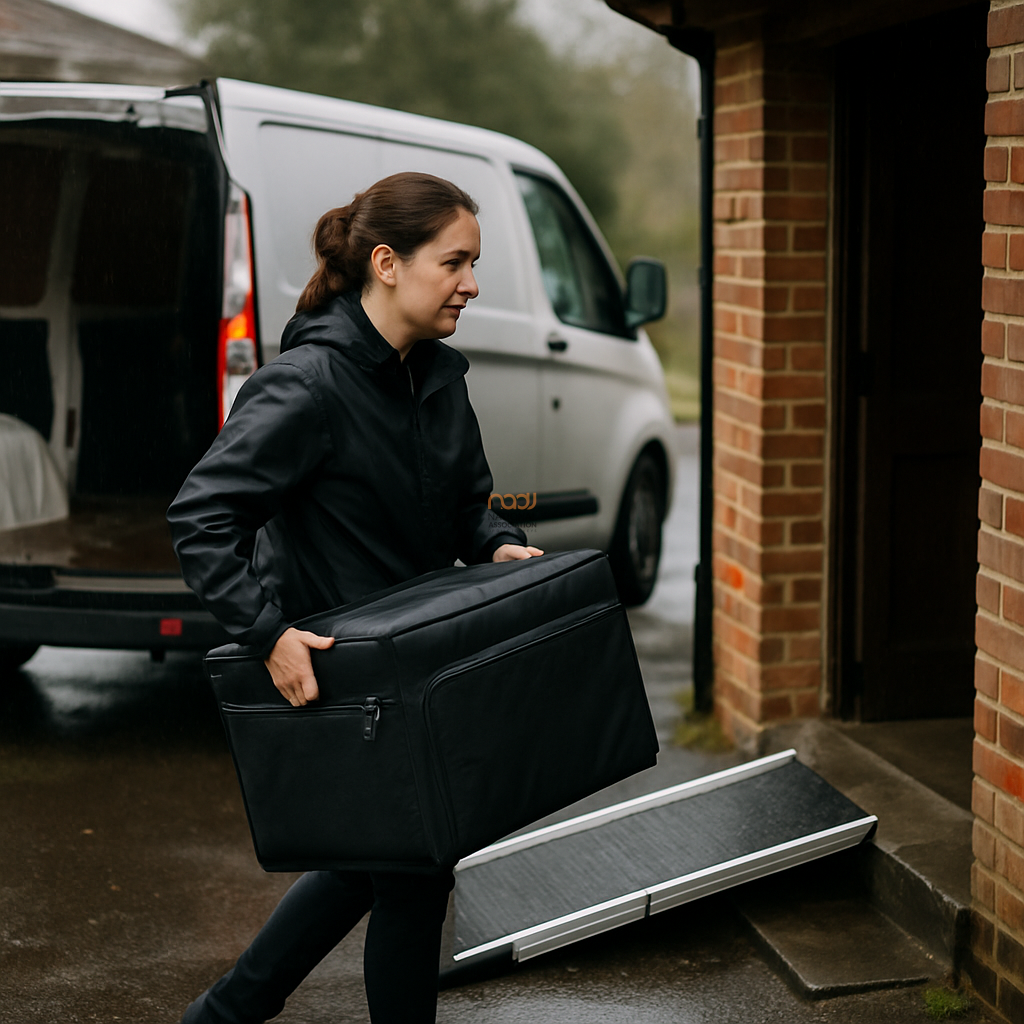
Loading DJ equipment in rain is a problem many mobile DJs across the UK will recognise. Whether you are working in London, Manchester, Birmingham, Leeds, Bristol, Cardiff, Glasgow, Liverpool, Nottingham, Leicester or Coventry, wet weather can turn a routine load-in into a safety and equipment-protection exercise. The good news is that with planning, the right carrying methods and sensible site awareness, you can reduce the risk of slips and water damage without slowing your work to a crawl.
This article is designed for working DJs in England, Scotland, Wales and Northern Ireland who need practical, usable guidance. The aim is not to overstate the danger, but to treat wet conditions seriously and make careful choices that protect both people and kit.
Why rain changes the risk profile
Rain affects more than just comfort. Surfaces become slick, visibility drops, and the time it takes to move between the vehicle and venue often increases. That extra time matters when you are carrying flight cases, lighting bags, speakers, stands or crates of leads.
Moisture also introduces a second issue: water damage. Even light rain can reach connectors, soft bags, exposed cabling, control panels and laptop cases if items are left uncovered for too long. Once moisture gets into equipment, the damage may not be immediate, so a kit that appears to work on arrival may still be at risk later.
Prepare before you leave the vehicle
The safest load-in starts before you step out of the van or car. If rain is forecast, organise your gear so the heaviest or most awkward items are easiest to reach. Keep the load order sensible: anything you need first should be near the door, not buried under lighter bags.
Where possible, use cases and bags that close properly and provide some weather resistance. No bag is truly waterproof in every situation, so do not rely on packaging alone. If you regularly work in wet conditions, consider how your own setup is stored, transported and accessed. NADJ members often review kit handling as part of their wider business practice, alongside support areas such as membership tiers and professional development via membership tiers explained.
Simple pre-load checks
- Check the route from vehicle to entrance for puddles, drains, steps or uneven ground.
- Confirm whether there is a covered drop-off point or side entrance.
- Keep towels or microfibre cloths in the vehicle for quick wipe-downs.
- Use bags with secure zips and latches, not open-top containers.
- Make sure any loose cables are tied off before you start moving.
Reduce slip hazards underfoot
Most rain-related incidents during load-in happen because people move too quickly on wet surfaces. The obvious answer is to slow down, but that is easier said than done when time is tight. A better approach is to change the way you move.
Take shorter steps, keep your centre of gravity low and avoid sudden turns, especially if you are carrying a heavy case. If a case has wheels, use them where the route is smooth and appropriate, but be cautious on wet slopes, kerbs and rough paving. Pushing a wheeled case can be safer than carrying it, yet it still needs control.
If you are working with a second person, agree who leads, who opens doors and who handles the heaviest items. Clear communication reduces rushing, which is often when slips happen.
Footwear matters
Wear practical footwear with good grip. Smooth-soled shoes are not ideal for wet pavements, metal ramps or polished venue entrances. This is basic advice, but it is often overlooked on jobs where DJs want to look smart as well as professional. In wet conditions, function should come first.
Protect electronics from moisture
Even if the walk from vehicle to venue is short, treat every exposed item as vulnerable. Keep tops of cases closed until the moment you need them. If you are moving through heavy rain, use rain covers, large waterproof bags or temporary over-covers where suitable. Do not wrap hot-running items in sealed covers for long periods, as trapped heat is also a concern.
As soon as you arrive, dry any visible moisture from hands, handles, plugs and case surfaces before unpacking. That small pause can prevent drips from reaching sockets or control surfaces. If something gets wet, do not connect it immediately. Move it to a dry area, power it down if needed and inspect it properly before use.
For items that are especially sensitive, such as laptops, media controllers and wireless receivers, keep them in protected inner bags until the setup area is ready. If a venue has limited dry space at the entrance, stage your equipment in the safest order rather than unpacking everything at once.
Plan the venue handover
Wet-weather load-ins often go better when the venue knows you are arriving. If there is a side door, staff entrance or loading bay, ask in advance whether it can be used. This may reduce the distance between vehicle and set-up point and cut exposure to the weather.
Where venues have narrow entrances or carpeted areas that should stay dry, be careful not to track in water from footwear, bags or case wheels. A quick wipe before entering helps. If you notice a slippery floor, say so and adapt your route. That is not awkward; it is professional.
For DJs who work across the country, from small function rooms in the Midlands to larger city-centre venues in Glasgow or Bristol, consistency is valuable. Build the same wet-weather routine into every job so you are not making decisions on the fly.
Check your wider professional setup
Wet-weather safety is only one part of responsible DJ practice. It sits alongside equipment care, public safety awareness and sensible business arrangements. For example, many DJs choose to review their public liability cover and other requirements before major events; NADJ has a useful guide here: DJ public liability insurance UK requirements. Please note that insurance terms vary, and you should always check live policy wording and current conditions directly with the provider.
If you are building your profile or looking for new opportunities, you may also find it helpful to use the NADJ directory or browse gig listings. For wider business support, NADJ Media Ltd also provides services through nadj.co.uk, while the NADJ Hub is a practical place to keep up with member resources and industry information.
Final thoughts
Loading DJ equipment in rain does not have to be chaotic. With a sensible route, the right footwear, dry-handling habits and a clear unpacking order, you can keep yourself safer and reduce the chance of water reaching your kit. The best DJs are not just quick; they are methodical. In wet weather, method wins.
NADJ’s broader aim is to support DJs in running safer, more professional and more sustainable businesses. That includes everyday operational habits such as wet-weather load-ins, because the small decisions you make at the vehicle door can protect a whole night’s work.
AI transparency note
NADJ uses artificial intelligence as an editorial assistant. Articles produced through this publisher begin with a human-selected idea, source, brief or editorial direction, and AI may be used to research, structure, draft or improve the wording. AI does not set NADJ editorial policy or operate free-range: people acting for NADJ set the instructions and publishing framework, monitor the output and retain editorial responsibility.
Images used by NADJ may include stock photography or AI-generated visuals where appropriate. NADJ is volunteer-led and editorial time is limited; much of our available time is currently absorbed by governance and management, a substantial data audit and membership-system transfer, and planning 12 Tea & Test days across the UK. You can help strengthen member-led content by sending article ideas or completed submissions to hello@nadj.org.uk.


 Avtar Thethy
 Fabio Capozzi
 Alastair Craig

 Dave Mills