
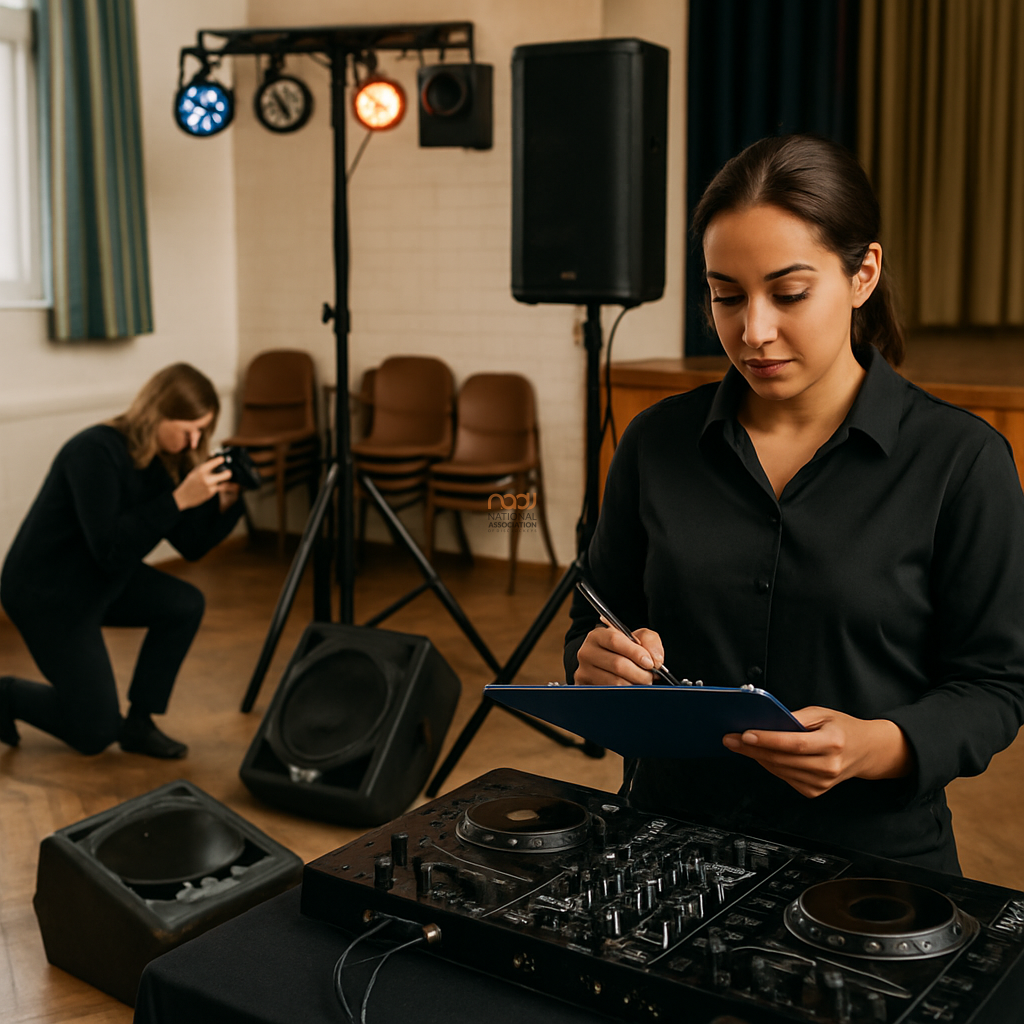
What information an insurer may ask for after a DJ incident is not always obvious until you are dealing with a claim. Whether you work in London, Manchester, Birmingham, Leeds, Bristol, Cardiff, Glasgow, Liverpool, Nottingham, Leicester, Coventry, or elsewhere across the UK, it helps to know in advance what details may be needed if something goes wrong at a gig.
Insurance processes vary by provider and by the type of cover involved, so this article is not legal or financial advice. However, there are common questions insurers may ask after a DJ-related incident, and being prepared can make the process smoother, clearer and faster.
Why insurers ask for detailed information
After an incident, an insurer will usually want to understand what happened, when it happened, who was involved, what losses may have occurred, and whether the circumstances fit the policy terms. The aim is normally to assess the facts of the claim and decide what, if anything, may be covered.
For mobile DJs, that incident could involve accidental damage to venue property, injury to a guest, loss of equipment, theft from a vehicle, or an issue linked to setup, cabling, staging or speakers. If you are reviewing your kit or setup standards, our guide to the best PA speakers for mobile DJs in the UK may also help with safer, more practical equipment choices.
Key information an insurer may request
1. The basic incident details
Expect to be asked for the date, time and location of the incident, along with the name and address of the venue or private function. Insurers may also want to know the type of event, for example a wedding, birthday party, corporate event, school prom or club night, plus the approximate number of guests present.
2. A clear description of what happened
You may need to explain the sequence of events in plain English. Keep this factual and avoid guesswork. For example, say whether a stand collapsed, a cable was tripped over, a speaker was knocked, a drink was spilled, or equipment was left in a vehicle and later stolen. If you do not know something for certain, say so.
3. Details of any injury or damage
If a person was injured, the insurer may ask for the nature of the injury, whether first aid or medical attention was given, and whether anyone else witnessed the event. If property was damaged, you may be asked for what was damaged, how badly, and whether the item belonged to the venue, a client, a guest or you.
It is also sensible to keep copies of repair estimates, invoices and replacement quotations where possible. Do not assume the insurer will accept a verbal estimate alone.
4. Photographs, video and witness details
Many claims are supported by evidence. An insurer may ask for photographs of the scene, the damaged item, the setup area, or the equipment involved. If there are CCTV images, mobile phone video clips or independent witnesses, note their names and contact details if you can do so safely and appropriately.
5. Your own actions before and after the incident
Insurers often want to know what steps you took to reduce the risk of harm and what you did immediately afterwards. That may include how your rig was installed, whether cables were managed properly, whether equipment was left unattended, and whether you secured the area or stopped the performance when needed.
Afterwards, they may ask whether you reported the matter to the venue, the client, the police, or another relevant party. They may also ask when you first notified your insurer. Prompt reporting is usually sensible, but always check your policy wording and the insurer’s claims instructions.
6. Equipment, serial numbers and proof of ownership
If the incident involves loss, theft or damage to your own kit, insurers may ask for a list of affected items, serial numbers, age, purchase price and proof of ownership. This is one reason why DJs should keep organised records of equipment purchases and maintenance.
If you are a NADJ member, your membership tier and the support available to you may help you keep your business paperwork in better order. You can review the options in our membership tiers explained guide.
How to prepare before a claim is ever needed
The best time to prepare is before an incident happens. Keep a simple incident template on your phone or in your gig bag with space for the date, venue, people involved, witness names, a short description and photos. It only takes a few minutes to complete when things are fresh.
It is also useful to make sure your public liability insurance details, equipment records and risk assessments are easy to find. For members wanting a clearer overview of DJ PLI cover expectations, see our guide to DJ public liability insurance UK cover requirements.
Common mistakes DJs should avoid
First, do not speculate about fault. Stick to what you saw, heard and did. Secondly, do not alter evidence unless it is necessary for safety. Thirdly, do not leave a venue without documenting the basics if you can safely do so. Finally, do not delay in informing your insurer, especially if the incident may develop into a formal claim.
It is also worth checking whether the event organiser, venue or another contractor has their own incident reporting process. In some cases, more than one party may need to be notified.
Why good records support professional DJing
Good administration is part of running a professional DJ business, not an afterthought. Clear records can support insurance claims, reduce misunderstandings and show that you take safety seriously. That matters whether you work mainly in the Midlands or travel across England, Scotland, Wales and Northern Ireland.
At NADJ, we aim to help working DJs build stronger, more professional businesses through practical guidance, education and services. If you need to be found by clients or want to expand your bookings, you may also find our directory, gig listings and hub useful. For related business support, visit NADJ Media Ltd.
Final thoughts
When an insurer asks questions after a DJ incident, the safest approach is simple: be prompt, accurate and factual. Keep your notes short but complete, save evidence where possible, and avoid assumptions. That approach will not guarantee a claim outcome, because every policy and situation is different, but it can help you present the strongest possible case.
If you are unsure how your cover applies, speak to your insurer or broker and check the live policy wording. Rules, cover limits and reporting requirements can change, so always rely on current documents rather than old assumptions.
AI transparency note
NADJ uses artificial intelligence as an editorial assistant. Articles produced through this publisher begin with a human-selected idea, source, brief or editorial direction, and AI may be used to research, structure, draft or improve the wording. AI does not set NADJ editorial policy or operate free-range: people acting for NADJ set the instructions and publishing framework, monitor the output and retain editorial responsibility.
Images used by NADJ may include stock photography or AI-generated visuals where appropriate. NADJ is volunteer-led and editorial time is limited; much of our available time is currently absorbed by governance and management, a substantial data audit and membership-system transfer, and planning 12 Tea & Test days across the UK. You can help strengthen member-led content by sending article ideas or completed submissions to hello@nadj.org.uk.


 Avtar Thethy
 Fabio Capozzi
 Alastair Craig

 Dave Mills