

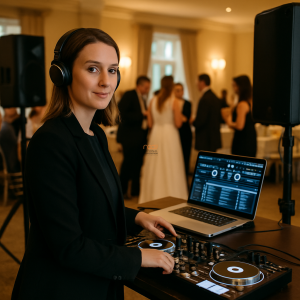
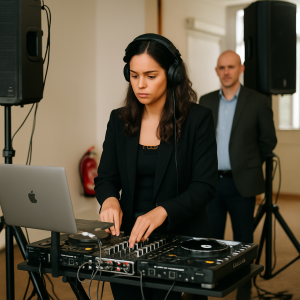
Lone working as a DJ is part of everyday life for many mobile DJs across the UK. Whether you are covering a wedding in Birmingham, a school prom in Leeds, a corporate function in London, or a private party in Glasgow, it is common to arrive, set up, perform and pack down without another DJ or crew member on site.
That can be perfectly manageable, provided you approach it professionally. Lone working is not just about personal safety; it is also about communication, planning and making sure the right people can account for you if plans change. At NADJ, we encourage DJs to treat solo jobs with the same discipline they would apply to sound checks, PAT testing and client contracts: calmly, consistently and with a clear process.
Why lone working matters
Many DJs assume that because an event is indoor, organised and public-facing, there is little risk. In reality, lone working can bring a mix of practical issues: late finishes, difficult parking, isolated venues, unfamiliar loading areas, poor signal, and last-minute changes to access arrangements. There may also be weather-related risks, particularly when unloading in Scotland, Wales or parts of the Midlands during winter.
The aim is not to create alarm. It is to reduce uncertainty. A good lone working routine helps you stay visible to others, make safer decisions and respond quickly if something goes wrong.
Who knows where you are?
This is the central question for any DJ working alone. Before you leave home, someone should know:
- the venue name and full address
- your expected arrival, start and finish times
- your vehicle details if relevant
- who you are working for and the main contact at the venue
- when they should expect your next check-in
That person may be a partner, family member, trusted colleague or business contact. The important thing is that they are reliable and know what to do if you do not return a call or message on time. If you regularly work across the UK, from Manchester and Liverpool through to Cardiff, Nottingham, Leicester, Coventry and Bristol, build this into your standard booking process rather than leaving it to memory.
A simple safety check before you go
Before any lone job, carry out a short pre-departure check. Keep it practical and repeatable.
1. Confirm the booking details
Check the venue address, access instructions, contact names, timings and any special requirements. If you are using your own kit, confirm what you are expected to provide and what is already on site.
2. Share your plan
Send your route and timing to your chosen contact. If your ETA changes, let them know. For longer journeys or rural venues, this becomes even more important.
3. Test your communication
Make sure your phone is charged and that you have signal, data and a charger or power bank. Poor reception is still common in some venues and car parks, so do not rely on one device or one app alone.
4. Check your equipment load
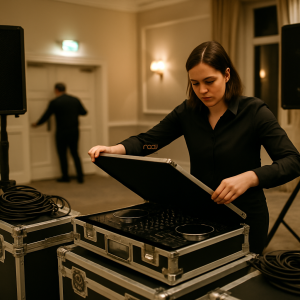
Use sensible manual handling. Avoid overloading yourself. If you are carrying heavy speakers, lighting, cases or controller bags, think carefully about how many trips you need and whether a trolley would reduce strain. For DJs choosing modern setups, our guide to DJ controllers for UK mobile DJs is a useful way to think about lighter, more manageable rigs.
5. Review venue access and exit
On arrival, note where you will park, how you will unload and which doors you will use at the end of the night. If the venue is quiet once guests leave, know your exit route before the function ends.
Practical safety habits on site
Once you are at the venue, stay alert to the basics. Introduce yourself to the main point of contact. Tell them if you are working alone and ask who else is on site after hours. If the venue is large, unfamiliar or has multiple access points, a quick walk-through can help you avoid confusion later.
Keep valuable items out of sight where possible. Be careful about leaving cases, laptops or wallets unattended while moving equipment. If you need to step away, lock what you can and let someone know.
It also helps to keep your setup tidy. Cables should be routed safely and equipment should be stable. A cluttered working area is not only inconvenient; it can make a simple task more hazardous when you are on your own and tired near the end of a long event.
When to escalate a concern
Most lone jobs pass without incident. However, if something does not feel right, trust your judgement. That may mean calling ahead, asking for clearer access instructions, waiting in a well-lit area, or declining to unload until the venue contact is available. If you are dealing with a threatening situation, follow your own safety procedures and seek help promptly.
Do not assume that being self-employed means you must handle every issue alone. Good business practice includes knowing when to pause, ask for support or reschedule where appropriate.
Document your routine
Write your lone working process down and keep it short. A one-page checklist can be enough. Include your pre-departure steps, check-in times, emergency contact details and any venue-specific notes. If you work regularly in different cities such as London, Birmingham, Leeds or Glasgow, a documented routine is especially useful because you can adapt it quickly for each booking.
This also helps if you work with assistants, subcontract DJs or team members. Even if they are not physically with you, they can still follow the same expectations about location updates and end-of-night confirmation.
How NADJ fits into the picture
NADJ exists to support DJs with practical, professional guidance that reflects real working life in the UK. If you are building your business, it is worth exploring our membership tiers explained page to see how membership can support your development. You may also find value in the NADJ Hub, our directory, and the gig listings for opportunities and industry activity.
If you are checking your wider business setup, our NADJ Media Ltd services may also be relevant, particularly for DJs looking to improve their online presence and operations. And if you are reviewing your event cover, our guidance on DJ public liability insurance is a sensible place to start, although you should always check the live policy wording and current requirements directly.
Final thought
Lone working as a DJ is normal, but it should never be casual. A few simple habits, clear communication and a reliable check-in system can make a major difference to your safety and peace of mind. In practice, the best lone workers are not the ones who take the most risks; they are the ones who plan well, stay organised and make sure somebody always knows where they are.





 Avtar Thethy
 Fabio Capozzi
 Alastair Craig
 Dave Mills