

For many working DJs, DJ showcase video content is now one of the most effective ways to turn interest into enquiries. A client may not know your library, your timing or your crowd-reading skills from a still photo alone. Video gives them a faster sense of how you work, how your setup looks in a real room and whether you feel like the right fit for their event.
That does not mean you need a full film crew or a polished promotional reel with a big budget. In fact, the most useful showcase content is often simple, honest and well planned. The aim is to show your value clearly, while keeping the finished content short enough to hold attention and flexible enough to use on your website, directory profile and social channels.
Start with the booking decision, not the camera
Before you film anything, ask a basic question: what would make a client choose you? A wedding client in London may want elegance and reliability. A party client in Manchester or Birmingham may want energy and a proven ability to fill a dancefloor. In Leeds, Bristol, Cardiff, Glasgow, Liverpool, Nottingham, Leicester or Coventry, the same principle applies: your video should answer the client’s likely concerns quickly.
Think about the proof points that matter most. These usually include your presentation, your music style, your range, how you interact with guests and how you handle different event environments. If you specialise in one type of event, say so. If you work across England, Scotland, Wales and Northern Ireland, make that clear too, but avoid exaggeration. Specifics build trust.
Film in real settings, not just rehearsed moments
The strongest DJ showcase video content usually comes from real work. Capture short clips during weddings, parties, corporate events and private functions with the client’s permission and with guest privacy in mind. A busy floor, a first dance transition, a well-timed announcement or a clean equipment setup can all help tell the story.
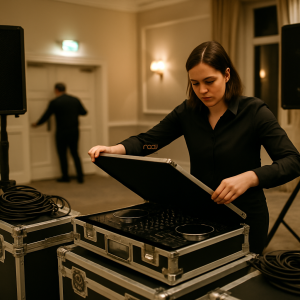
It is also useful to film a few controlled clips when you are not under event pressure. For example, record a short introduction in your setup space, a close-up of your controller or mixer, and a wide shot of your booth in a real venue. This gives you material for a polished edit without making the whole piece feel staged.
Be careful with sound. Some venues in the UK have strict sound management rules, and DJs often have to work around sensitive limiters. If you want more context on that issue, read NADJ’s guidance on working with overly sensitive sound limiters. The main point is simple: if you are filming at an event, focus on clean, usable audio where possible, and do not assume the venue will let you run at full volume for the sake of the camera.
Keep the structure short and purposeful
Most clients will not watch a long reel in full. A strong showcase is often 60 to 120 seconds, although you may also want shorter versions for social media. Lead with your best moments. Do not save the energy for the end.
A practical structure is:
1. Open with a clear identity
Use the first few seconds to show who you are and what you do. A short title card is optional, but the footage should quickly make the point even without sound.
2. Show range and consistency
Include a mix of scenes: setup, crowd reactions, mixing, announcements and dancefloor energy. A good reel does not need constant movement, but it should show that you can deliver more than one type of moment.
3. Finish with confidence
End on a strong image or clip that leaves a professional impression. Then direct viewers to your website, profile or directory listing.
Edit for clarity, not clutter
Over-editing can make a DJ reel feel less trustworthy. Avoid too many effects, fast cuts with no breathing space, or music that distracts from the actual message. Clean edits, steady pacing and consistent colour handling usually work better than flashy treatment.
If you include text, make it brief and readable. Mobile viewers make up a large part of your audience, so keep captions concise. Remember that many people will watch with the sound off, especially on social platforms. That means the visuals must still communicate professionalism on their own.
Also be careful with claims. If you mention years of experience, number of events or a particular style, make sure it is accurate and current. In the same way, if you mention insurance or compliance, only state what you can verify. For general guidance on event cover, NADJ members may find it useful to review the page on DJ public liability insurance and cover requirements, while also checking live policy details directly with the provider.
Make your content easy to find
A great video is only useful if people can actually see it. Host your main showcase on your website, then repurpose short clips for Instagram, Facebook, TikTok and YouTube. Where appropriate, link to your profile on the NADJ Directory so potential clients can find more details about your services.
If you are actively looking for work, also keep an eye on the gig listings. Likewise, if you are working on your wider business presence, the resources at NADJ Hub and the services at NADJ Media Ltd may be relevant, particularly where you need support with websites, ads or business presentation.
Think like a client
Finally, build your showcase from the client’s point of view. They are not looking for every track you played. They are looking for reassurance. They want to see that you are organised, professional, adaptable and able to create the right atmosphere.
That is why the best DJ showcase video content is usually concise, visually clear and rooted in real events. It should feel like evidence, not a sales pitch. When done well, it can support bookings across the UK, from London and the Midlands to Scotland, Wales and Northern Ireland.
For NADJ members and the wider DJ community, the key message is straightforward: invest time in content that reflects the standard of service you want to be hired for. A well-made showcase will not book every job on its own, but it can make the difference between a casual enquiry and a confirmed date.




 Avtar Thethy
 Fabio Capozzi
 Alastair Craig
 Dave Mills