

Start with prevention: reduce the chance of cancellation
The best way to avoid losing money is to lower the risk before the booking is confirmed. Use a written agreement for every job, even if it is a small private event. Your terms should clearly explain what happens if either side cancels, how deposits are treated, and whether a substitute DJ may be provided. That said, any contract should be reviewed carefully and kept in line with current UK law; if in doubt, seek professional advice.
Good diary management also matters. Avoid overbooking, leave enough travel time between events, and have a realistic view of how far you can travel. A tight schedule between, for example, Leeds and London can look profitable on paper but become risky in practice.
Build a backup plan before you need one
If you want to avoid a total loss when you cannot attend, prepare for the possibility now. Keep a list of trusted DJs you could recommend in an emergency. Your own network, local associations and the NADJ Directory can help here: browse the NADJ Directory to connect with other professionals who may be able to assist at short notice.
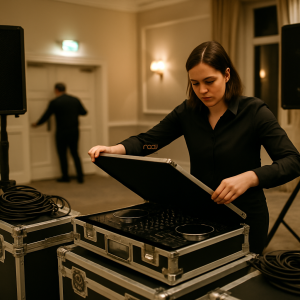
You should also keep your kit organised so that a replacement DJ can step in if required. If you are part of a team, make sure another operator knows your standard setup, music style and event notes. In many cases, quick handover is better for the client than a late apology and a missed event.
Communicate early and be direct
If you know you cannot make a booking, tell the client as soon as possible. Do not wait in the hope that the issue will resolve itself. Clear, prompt communication shows responsibility and gives everyone more time to find a solution.
Keep your message calm and factual. Explain what has happened in plain English, apologise without over-explaining, and say what you can do next. For example, you might offer a substitute DJ, provide a referral, or help the client coordinate with the venue. If the cancellation is due to illness or another genuine emergency, most clients will respond better to honesty than to silence.
Protect your reputation with a practical solution
Clients rarely expect perfection, but they do expect professionalism. If you cancel, focus on solving the problem rather than defending yourself. Offering a competent replacement can soften the impact and show that you take your responsibilities seriously.
Where appropriate, recommend someone with a similar style and experience level. If the event involves specific requirements, such as a wedding first dance or a corporate presentation, make sure the replacement understands the brief. This is especially important where venues have strict conditions, including sound limiters. If that applies, your substitute must be briefed properly; our guide on working with overly sensitive sound limiters for UK DJs explains why preparation matters.
Know what your insurance may and may not cover
Some DJs assume that public liability insurance or other cover will automatically protect them from every cancellation-related loss. That is not always the case. Policies vary, and cover depends on the wording, exclusions and the circumstances of the claim. For a useful overview of what public liability insurance is generally used for, see NADJ’s guide to DJ public liability insurance and cover requirements.
However, insurance is not a substitute for good business practice. Check your policy documents carefully, and speak to the insurer if you are unsure whether your situation is covered. Do not make assumptions about non-refundable costs, lost income or consequential losses without confirming the live terms of your policy.
Decide when a refund, partial refund or reschedule is appropriate
Every cancellation is different. A last-minute no-show caused by your own fault is likely to require a different response from a rescheduled event agreed by both parties. The right answer will depend on your contract, the notice period, and the circumstances. Keep your records clear so you can show what was agreed, when payments were made, and what communication took place.
If rescheduling is possible, it may be the simplest way to retain goodwill and recover the booking value. In some cases, offering an alternative date can preserve the relationship and reduce the chance of negative reviews. If a refund is required, process it promptly and confirm it in writing.
Use professional channels to keep work flowing
Sometimes a cancellation creates a knock-on effect for future work. If you lose a date, update your availability quickly and make the most of your professional network. The NADJ Hub is useful for members who want to stay informed and improve their business practice, while gig listings may help you spot opportunities where extra cover is needed.
It is also worth reviewing your online profile and enquiry process. If your website, social media and booking forms are unclear, clients may become more anxious when a problem occurs. NADJ Media Ltd supports members through practical business services, including digital marketing and related tools, available via nadj.co.uk.
Learn from each cancellation
After the event, review what went wrong and what you can improve. Did you leave enough travel time? Was the contract clear enough? Did the client know what would happen if you could not attend? A short review after each incident can help you avoid repeating the same problem.
It is also sensible to revisit your membership options if you want more support, resources and professional recognition. NADJ’s membership tiers explained page outlines the different levels available and how they can support working DJs at different stages of their business.
Final thoughts
A DJ cancellation does not have to become a financial disaster or a reputation crisis. The DJs who handle it best are usually the ones who plan ahead, communicate quickly and act like professionals when things go wrong. In the UK event market, that approach matters as much as technical skill behind the decks.
Be prepared, keep your paperwork in order, know your cover, and build a network you can rely on. If you do that, a difficult situation becomes manageable rather than disastrous.






 Avtar Thethy
 Fabio Capozzi
 Alastair Craig
 Dave Mills