

The Alan Walker approach offers a clear lesson for UK DJs: a strong public image matters, but it only works when it is backed by consistency, discipline and a clear musical identity. Walker, the Norwegian-born DJ and producer who broke through internationally with Faded, has built a career that is as much about brand management and audience connection as it is about tracks and streams.
For working DJs across the UK, from mobile entertainers in Birmingham and Leicester to club and festival DJs in London, Manchester, Glasgow, Leeds, Cardiff, Bristol and beyond, there is practical value in studying how Walker presents himself. He is not a template to copy. However, his career does show how to make a recognisable name in an overcrowded market without relying on noise alone.
Who is Alan Walker?
Alan Walker first came to wider attention in the mid-2010s and quickly became associated with melodic electronic music and a distinctly visual brand. He was born in Northampton, England, and later moved to Norway, where he developed his early production skills. His breakthrough single Faded helped establish him internationally, and subsequent releases such as Alone reinforced a sound that was accessible, emotionally direct and easy for audiences to identify.
That matters because DJs often talk about “being unique” in abstract terms. Walker’s example is more concrete: his music, visuals and stage presentation all point in the same direction. The result is a project that is easy to recognise, whether in a social clip, a streaming playlist or a live arena setting.
Lesson 1: Work ethic still comes first
Behind any visible brand is a routine that most audiences never see. Walker’s career suggests steady output, repeated refinement and a willingness to keep developing a signature sound over time. That may sound simple, but it is exactly where many DJs fall short.
For UK DJs, the practical lesson is straightforward. A memorable brand will not rescue weak preparation. If you are performing in a club in Nottingham, a wedding in Coventry or a corporate event in Liverpool, the fundamentals still matter: track selection, timing, crowd reading, technical reliability and backup planning.
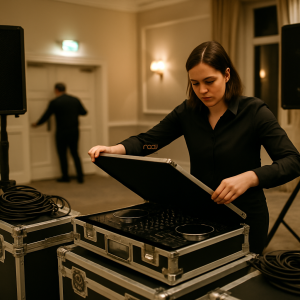
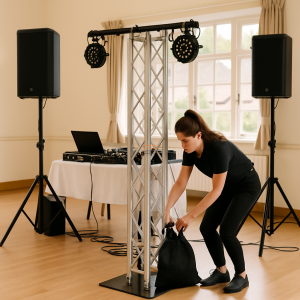
This is where day-to-day professionalism counts more than social media hype. Keep your libraries organised. Test your gear. Rehearse transitions. Prepare edits and clean versions where needed. Build habits that make you dependable as well as visible.
Lesson 2: A clear musical identity helps people remember you
Walker’s sound is not built on constant reinvention for its own sake. Instead, it leans into a melodic, cinematic style that gave audiences something consistent to latch on to. For DJs, that raises an important question: what do people associate with you after the set has finished?
You do not need to sound like Alan Walker. In fact, you should not. But you do need enough consistency for promoters, clients and audiences to describe what you do. That might mean a focus on open-format crowd work, a refined house sound, a specialist wedding service or a harder-edged club identity. The important part is clarity.
If your brand changes every time you post or perform, it becomes harder for people to book you. By contrast, a stable musical identity helps with repeat work, word-of-mouth referrals and stronger positioning in your local market.
Lesson 3: Visual branding is part of the product
One reason Alan Walker stands out is that his visual presentation is intentionally simple and highly consistent. The hoodie-and-mask image became a recognisable part of his act and helped create a clear visual shorthand. That does not mean every DJ should disguise themselves. It does mean that visual identity deserves serious thought.
For UK DJs, visual branding can be as basic as consistent colours, a well-designed logo, strong photography, tidy booth presentation and polished online profiles. A coherent look helps when a client compares suppliers quickly. It also helps on short-form video, where audiences make decisions in seconds.
If you are building a business, your branding should work across your website, directory listing and social channels. NADJ members may already use resources such as the NADJ Directory to improve discoverability. A profile there can support your visibility, especially when combined with a clear message and professional presentation.
Lesson 4: Performance is about audience connection, not ego
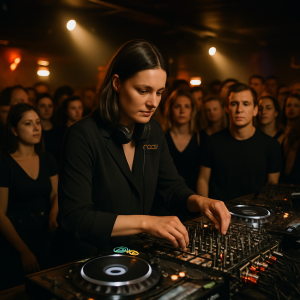
Walker’s live profile has grown with large-scale shows and festival appearances, but the underlying lesson remains relevant at every level. A DJ is there to create a response. That means reading the room, building momentum and understanding what the audience needs in the moment.
In practice, that can mean different things in different parts of the UK. A crowd in central London may expect a faster-paced, more club-focused approach. A private event in the Midlands may need broader musical range and smoother pacing. A student crowd in Manchester or Leeds may react differently to a set in Bristol, Cardiff or Glasgow. Good DJs adjust without losing their identity.
Walker’s career also reminds us that performance is not only about technical skill. Stage presence, confidence and pacing all shape how a set lands. Even if you are working smaller rooms, your body language, communication and energy affect the room’s response.
Lesson 5: Build a system, not just a set list
One reason high-profile acts scale successfully is that they rely on repeatable systems. That may include production workflows, content planning, performance prep and branding rules. DJs at any level can use the same idea.
Ask yourself: how do you prepare for a gig, manage requests, file your music, update your promotional material and follow up after a booking? These are not glamorous questions, but they are the questions that turn a hobby into a business.
For practical support, NADJ members often look for guidance that helps with both presentation and day-to-day operation. If your work depends on long sessions or live performance, essentials such as reliable headphones matter too. You can read more in NADJ’s guide to top DJ headphones for professional mobile DJs in the UK.
Brand, professionalism and business sense
Walker’s career shows that a strong public image can open doors, but it does not replace professionalism. Promoters, venues and private clients still value punctuality, preparedness and clear communication. In other words, the brand gets attention; the service keeps the work coming.
That is especially important for mobile DJs and freelancers working across England, Scotland, Wales and Northern Ireland. If you are booking private events or public venues, check the practical requirements of each job carefully. For example, if public liability cover is relevant to your work, review the live details on DJ public liability insurance and cover requirements and make sure you understand what a client or venue may ask for.
Likewise, if you are developing your career, it is worth understanding the membership support available through NADJ membership tiers and the wider resources at NADJ and the NADJ Hub.
Why Alan Walker remains relevant to UK DJs
Walker is not relevant simply because he is successful. He is relevant because he illustrates a modern truth about DJ careers: music, branding and performance are now tightly linked. A good track can still get attention, but a recognisable identity helps you stay in the conversation.
For UK DJs trying to grow in competitive cities such as Manchester, Birmingham, London, Glasgow or Nottingham, the message is not to become a clone of a global act. The message is to be deliberate. Decide what you stand for. Present it consistently. Work hard enough that your brand has substance behind it.
That is the Alan Walker approach in practical terms: disciplined output, a clear visual identity and performances built around the audience rather than the ego. It is a useful reminder that DJ success is rarely accidental. More often, it is designed.
If you are looking for bookings or exposure, it may also help to keep an eye on gig listings and related opportunities. As ever, check live details carefully and use the tools available to support your business in a professional way.
AI transparency note
NADJ uses artificial intelligence as an editorial assistant. Articles produced through this publisher begin with a human-selected idea, source, brief or editorial direction, and AI may be used to research, structure, draft or improve the wording. AI does not set NADJ editorial policy or operate free-range: people acting for NADJ set the instructions and publishing framework, monitor the output and retain editorial responsibility.
Images used by NADJ may include stock photography or AI-generated visuals where appropriate. NADJ is volunteer-led and editorial time is limited; much of our available time is currently absorbed by governance and management, a substantial data audit and membership-system transfer, and planning 12 Tea & Test days across the UK. You can help strengthen member-led content by sending article ideas or completed submissions to hello@nadj.org.uk.






 Avtar Thethy
 Fabio Capozzi
 Alastair Craig
 Dave Mills