
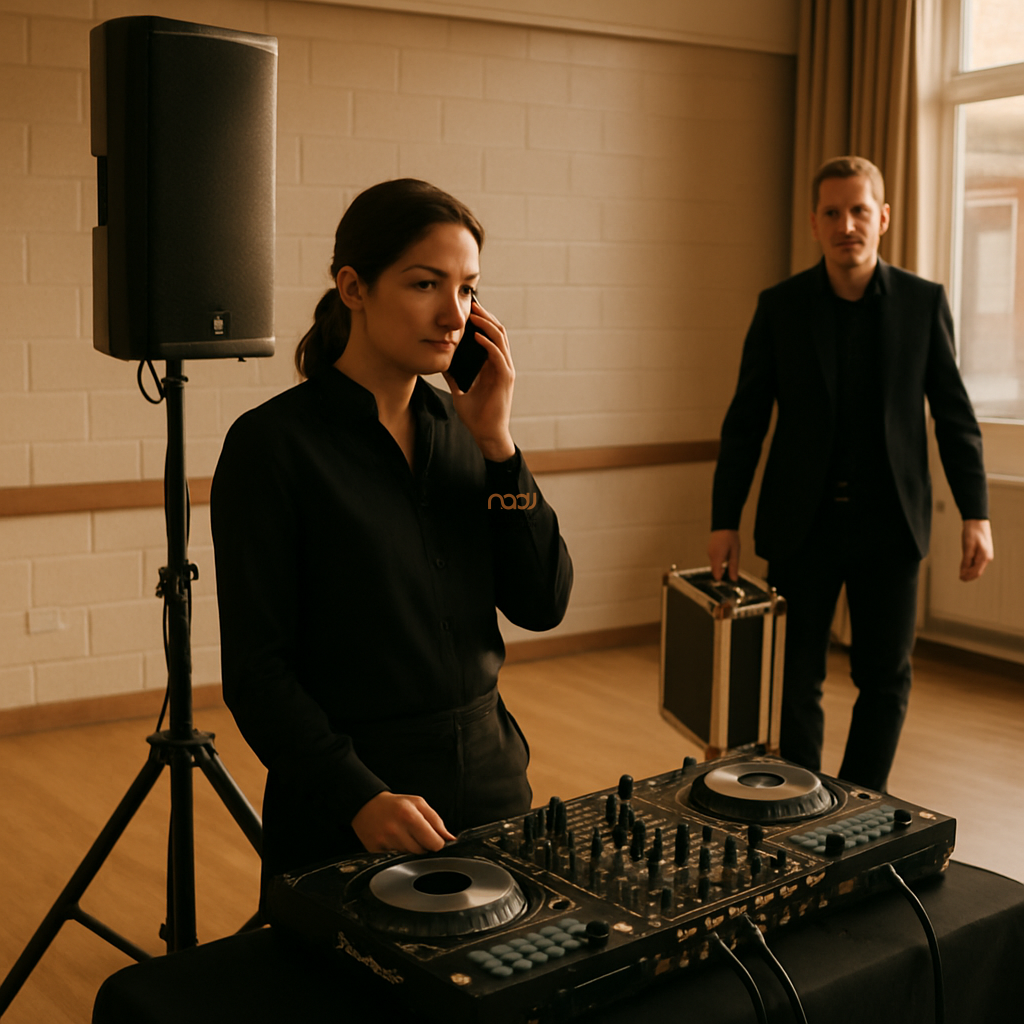
Mutual emergency cover agreements can be a practical safeguard for working DJs, especially in a busy UK market where one cancellation can affect clients, venues and your reputation. A proper cover arrangement should help everyone involved: the original DJ, the cover DJ, and the customer. It should not become a shortcut for discounting work or quietly competing on price.
For NADJ members, this is not just about goodwill. It is about running a professional service with clear standards, sensible communication and respect for the wider DJ community across England, Scotland, Wales and Northern Ireland. Whether you work in London, Manchester, Birmingham, Leeds, Bristol, Cardiff, Glasgow, Liverpool, Nottingham, Leicester, Coventry or across the Midlands, the principle is the same: cover should be fair, documented and transparent.
What a mutual emergency cover agreement is
A mutual emergency cover agreement is an informal or formal arrangement between DJs to step in when one cannot fulfil a booking due to illness, injury, family emergency, transport failure or equipment issues. It is not the same as a booking agency, and it should not be treated as a way to pass work around at a reduced rate.
The best agreements are simple. They set expectations before anyone needs cover, so nobody has to negotiate in a crisis. That clarity helps protect the client experience and reduces stress for everyone involved.
Why undercutting happens — and how to avoid it
Undercutting usually appears when a cover DJ is asked to work for less than they would normally charge, or when the original DJ takes a cut simply for making the introduction. In the short term, that may seem convenient. In the long term, it can damage trust and create a race to the bottom.
To avoid this, agree a fair principle in advance. For example, the cover DJ should either receive their usual fee or a pre-agreed minimum rate that reflects the job type, timing and travel. The original DJ may decide to pass the full fee to the cover DJ and handle the handover professionally, or to retain only an agreed administration amount where this has been discussed upfront. The important point is that nobody should be pressured into working below their normal commercial value simply because a booking is urgent.
Set the agreement before you need it
The biggest mistake DJs make is trying to arrange emergency cover at the last minute with no framework. Instead, create a written agreement or at least a shared checklist with your trusted contacts. It does not need to be complicated.
Include the essentials
- What counts as an emergency: illness, accident, bereavement, vehicle breakdown or equipment failure.
- How notice will be given: phone first, then text or email with booking details.
- How fees are handled: normal rate, minimum rate, or another clearly agreed structure.
- Who owns the client relationship: usually the original DJ remains the point of contact unless agreed otherwise.
- What equipment is included: music, microphones, lighting, backups and any venue-specific kit.
- What happens if the cover DJ also cannot attend: a second line of contact, where possible.
Keep this practical. A short written note is often more useful than a long legal document, provided both sides understand it.
Choose the right DJs for the agreement
Not every DJ is the right fit for mutual cover. The strongest agreements tend to exist between DJs with similar standards, similar equipment expectations and a broadly comparable level of experience. That does not mean everyone must charge the same, but it does mean you should avoid pairing DJs whose service styles are completely mismatched.
For example, a wedding specialist in London may not be the right cover for a late-night club room in Manchester, and a children’s entertainer in Bristol may not be suitable for an after-party in Birmingham. Likewise, a corporate DJ in Leeds may need different presentation and music handling from a mobile DJ covering a birthday in Nottingham.
The aim is not to clone each other. It is to ensure that if one of you steps in, the client still receives a professional service at the standard they booked. If you are looking for trusted contacts, the NADJ directory and NADJ hub are sensible places to build your professional network.
Agree the commercial terms clearly
Money should never be the awkward afterthought. Be upfront about what happens if one DJ covers for another. If you are creating a mutual arrangement, your terms should protect both sides from resentment and accidental price erosion.
A sensible approach is to agree that cover work is booked at the cover DJ’s normal rate, or at a predefined figure that both parties consider fair. If travel, parking, late finish times or additional equipment are involved, those should be considered too. The cover DJ should not feel obliged to accept a lower rate simply because the original DJ is in a difficult position.
Also think about deposits, client balances and refunds. If a client has already paid part of the fee, you should agree in advance whether that money is transferred, retained, or adjusted. For anything uncertain, check your own accounting practice and, where appropriate, speak to a qualified professional.
Protect standards, not just bookings
Mutual cover only works if standards stay high. That means turning up on time, dressing appropriately, knowing the venue setup, and being able to deliver the kind of event the client expected. A cover DJ should be briefed properly on music preferences, first dance details, announcements, timings and any restrictions at the venue.
Good preparation also includes backup planning. If you rely on specific headphones, microphones or playback devices, make sure your cover contacts know your setup. If you need gear advice or want to review your kit choices, NADJ’s guide to professional mobile DJ headphones is a useful starting point for thinking about reliability and spares.
Keep insurance, contracts and licensing in view
Emergency cover does not remove your responsibility to check your own policies, client contracts and venue requirements. Public liability insurance, equipment cover and performance terms should all be reviewed carefully. NADJ’s guidance on DJ public liability insurance is a helpful reminder, but you should always check live policy wording and exclusions directly with your insurer.
Similarly, if music licensing, venue access rules or local restrictions are relevant to the booking, confirm them before the cover DJ arrives. This is especially important for weddings, school events, licensed venues and larger corporate functions.
Make the agreement work for the whole DJ community
NADJ exists to support professionalism in the UK DJ industry. That means encouraging cooperation without price damage. A mutual emergency cover agreement should strengthen your reputation, not weaken the market around you. When DJs in the same town or region cooperate sensibly, clients benefit from continuity and working DJs benefit from fewer crisis-driven compromises.
If you are looking to join or review your professional standing, it may be worth understanding the differences between NADJ membership tiers and how they support your development. You can also keep an eye on local opportunities and networking via the gig listings, or review broader services through NADJ Media Ltd.
In short, the best mutual emergency cover agreements are built on trust, clarity and fair pay. They protect your clients, preserve standards and help prevent the sort of undercutting that damages the wider profession. Set the terms early, keep the communication honest, and treat cover work as a professional responsibility rather than a bargain hunt.
AI transparency note
NADJ uses artificial intelligence as an editorial assistant. Articles produced through this publisher begin with a human-selected idea, source, brief or editorial direction, and AI may be used to research, structure, draft or improve the wording. AI does not set NADJ editorial policy or operate free-range: people acting for NADJ set the instructions and publishing framework, monitor the output and retain editorial responsibility.
Images used by NADJ may include stock photography or AI-generated visuals where appropriate. NADJ is volunteer-led and editorial time is limited; much of our available time is currently absorbed by governance and management, a substantial data audit and membership-system transfer, and planning 12 Tea & Test days across the UK. You can help strengthen member-led content by sending article ideas or completed submissions to hello@nadj.org.uk.









 Avtar Thethy
 Fabio Capozzi
 Alastair Craig
 Dave Mills