
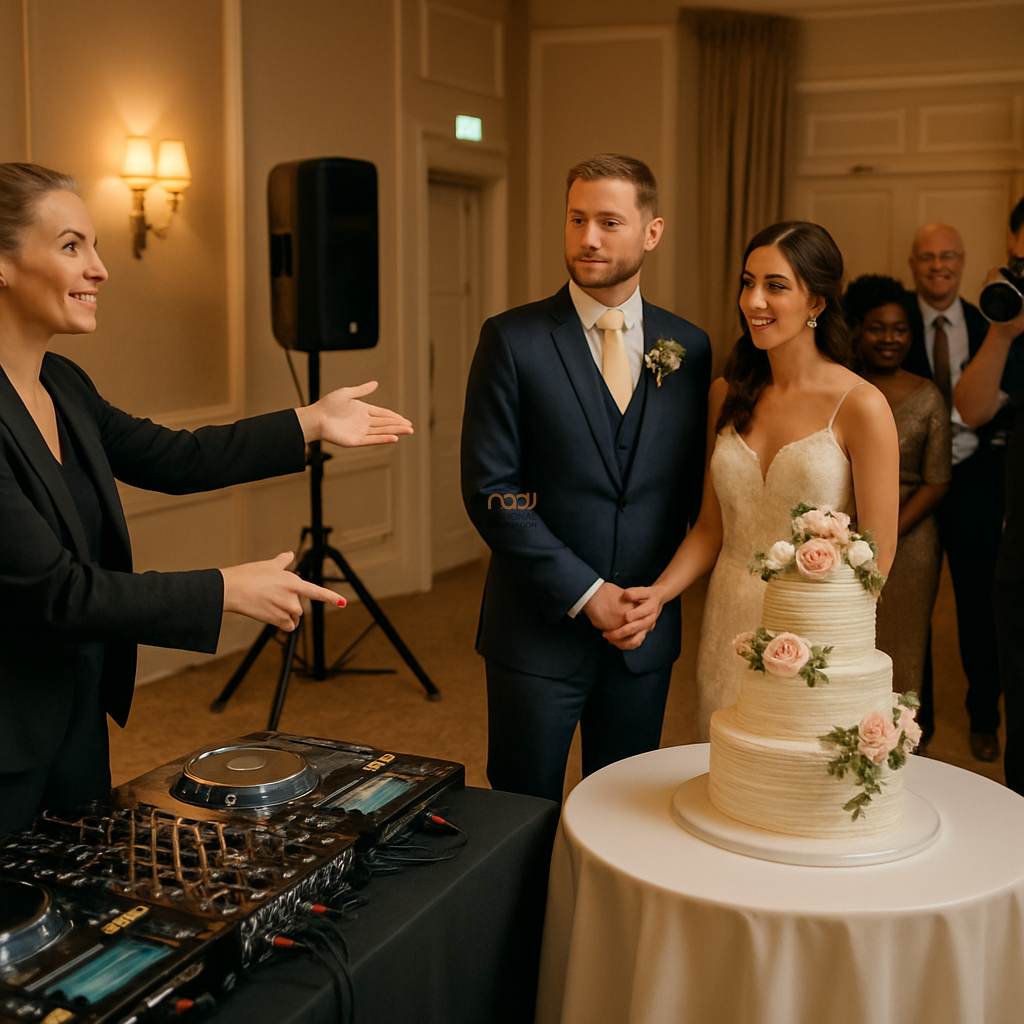
Knowing how to introduce cake cutting without making it feel like a formality is a small skill that makes a big difference to the pace of a wedding or celebration. For mobile DJs across the UK, from London and Manchester to Birmingham, Leeds, Bristol, Cardiff, Glasgow, Liverpool, Nottingham, Leicester and Coventry, the aim is simple: keep the room warm, keep the moment moving, and let the couple or host enjoy it without turning it into a scripted ceremony.
The best cake cutting moments feel like part of the party, not a pause in it. That does not mean being casual to the point of careless. It means using clear, confident guidance, reading the room, and matching your tone to the event. A polished DJ introduction can help the photographer, support the venue team, and keep guests engaged in England, Scotland, Wales and Northern Ireland alike.
Set the tone before you mention the cake
The cake cutting should not arrive as a surprise interruption. Build towards it. If the meal has just finished and guests are still seated, you can tease the next key moment with a short, natural announcement. If the room is already standing and socialising, keep the wording lighter and move quickly.
What matters most is confidence. A hesitant, over-scripted announcement can make the moment feel awkward before anyone has even picked up a knife. Instead, speak as if the cake cutting is one of the night’s highlights, because it is.
Use simple, conversational wording
Keep your language human. Avoid phrases that sound like a formal master of ceremonies unless the event genuinely calls for that style. For example, a straightforward cue such as: “We’re ready for one of the nicest moments of the evening, so if you’d like to gather near the cake, now’s the time,” is often enough.
If the hosts want a traditional announcement, you can certainly give them one. However, many modern wedding receptions, especially in creative venues in the Midlands or city-centre spaces in Birmingham and Manchester, feel better with a relaxed, upbeat prompt rather than a ceremonial build-up.
Coordinate with the couple or host in advance
Good cake-cutting introductions start before the event. Ask the couple or organiser how they want the moment handled. Some will want a big call to attention; others will prefer you to keep it discreet. Clarify whether they want guests invited in, whether photographs will be taken first, and whether the cake cutting should happen before or after a particular song.
This kind of pre-event planning is part of professional service, which is why many DJs value ongoing support, training and networking. If you are building your business, it can help to review membership tiers explained and make use of the resources available through the NADJ Hub.
Make the moment feel natural, not staged
The most common mistake is announcing the cake cutting as though it is a formal obligation. That instantly raises pressure and can empty the room of energy. Instead, present it as a shared moment. Invite guests to come closer, but do not over-instruct them. A little direction is useful; too much can make everyone feel like extras in a rehearsal.
Where possible, keep the music under control. A gentle build or familiar instrumental bed can work well, but avoid tracks that fight the moment. The purpose is to support the atmosphere, not dominate it.
Read the room before you speak
If guests are deep in conversation, you may need a slightly firmer cue. If the room is already attentive, keep it light. This is where experienced DJs earn their fee: not by using one perfect script, but by adjusting tone and pace in real time.
In a lively Liverpool reception, for example, a brisk, upbeat introduction may suit the energy. In a more intimate Cardiff or Glasgow wedding, a warmer and softer approach may land better. The same principle applies whether you are working a village hall in Wales or a hotel function suite in central London.
Keep the practical details out of the spotlight
The cake moment should stay focused on the couple or host. If there are venue timings, cake knife handovers, or photographer instructions, handle those quietly with the event team beforehand. The guests do not need a running commentary.
Similarly, if there is any risk of spillages near dancefloors, lighting or cables, sort your setup in advance. Professional standards matter. For DJs considering wider operational responsibilities, it is sensible to review live requirements and check the latest guidance on matters such as public liability insurance via DJ public liability insurance UK. That page should be treated as a starting point only; always confirm current cover terms and venue expectations directly.
Use the cake cutting to transition into the next part of the evening
One of the best ways to avoid a formal feel is to treat the cake cutting as a bridge, not a standalone event. Once the cutting is complete and photos are done, move smoothly into the next phase of the night. That might be a welcome song, the first dance, a family set, or the opening of the dancefloor.
A confident transition keeps momentum alive. Guests should feel that the evening is unfolding, not stopping and starting.
Practical tips for a better cake cutting announcement
- Keep it short: one clear announcement is usually better than several reminders.
- Avoid jargon: guests do not need technical phrasing or event-production language.
- Match the venue: a barn wedding in the Midlands will feel different from a modern hotel in Leeds or a city venue in Bristol.
- Watch the photographer: give them a moment to position themselves before you cue the hosts.
- Stay flexible: if the room is not ready, delay briefly rather than forcing it.
Why this matters for working DJs
These details may seem small, but they shape the overall impression of your service. A well-handled cake cutting tells guests that the DJ is in control without being overbearing. It also reassures clients that the night is being guided by someone who understands flow, etiquette and timing.
That professionalism is central to the wider role of NADJ: supporting DJs who want to work better, present better, and serve events more effectively. If you are looking to connect with other professionals or discover local opportunities, you may also find the NADJ directory and gig listings useful. For business support and digital services, visit NADJ Media Ltd, which offers a range of services for the industry.
And if you are building your kit or tightening up your preparation for busy wedding seasons, it is worth keeping an eye on practical equipment guidance too, such as top DJ headphones for professional mobile DJs in the UK. Good prep across all areas of the job helps you deliver a smoother event.
Final thought
To introduce cake cutting without making it feel like a formality, stay brief, stay warm and stay aware of the room. Plan the cue, speak naturally, and move the event on with confidence. Done well, the cake cutting becomes exactly what it should be: a pleasant, memorable part of the celebration, not an interruption to it.
AI transparency note
NADJ uses artificial intelligence as an editorial assistant. Articles produced through this publisher begin with a human-selected idea, source, brief or editorial direction, and AI may be used to research, structure, draft or improve the wording. AI does not set NADJ editorial policy or operate free-range: people acting for NADJ set the instructions and publishing framework, monitor the output and retain editorial responsibility.
Images used by NADJ may include stock photography or AI-generated visuals where appropriate. NADJ is volunteer-led and editorial time is limited; much of our available time is currently absorbed by governance and management, a substantial data audit and membership-system transfer, and planning 12 Tea & Test days across the UK. You can help strengthen member-led content by sending article ideas or completed submissions to hello@nadj.org.uk.









 Avtar Thethy
 Fabio Capozzi
 Alastair Craig
 Dave Mills