
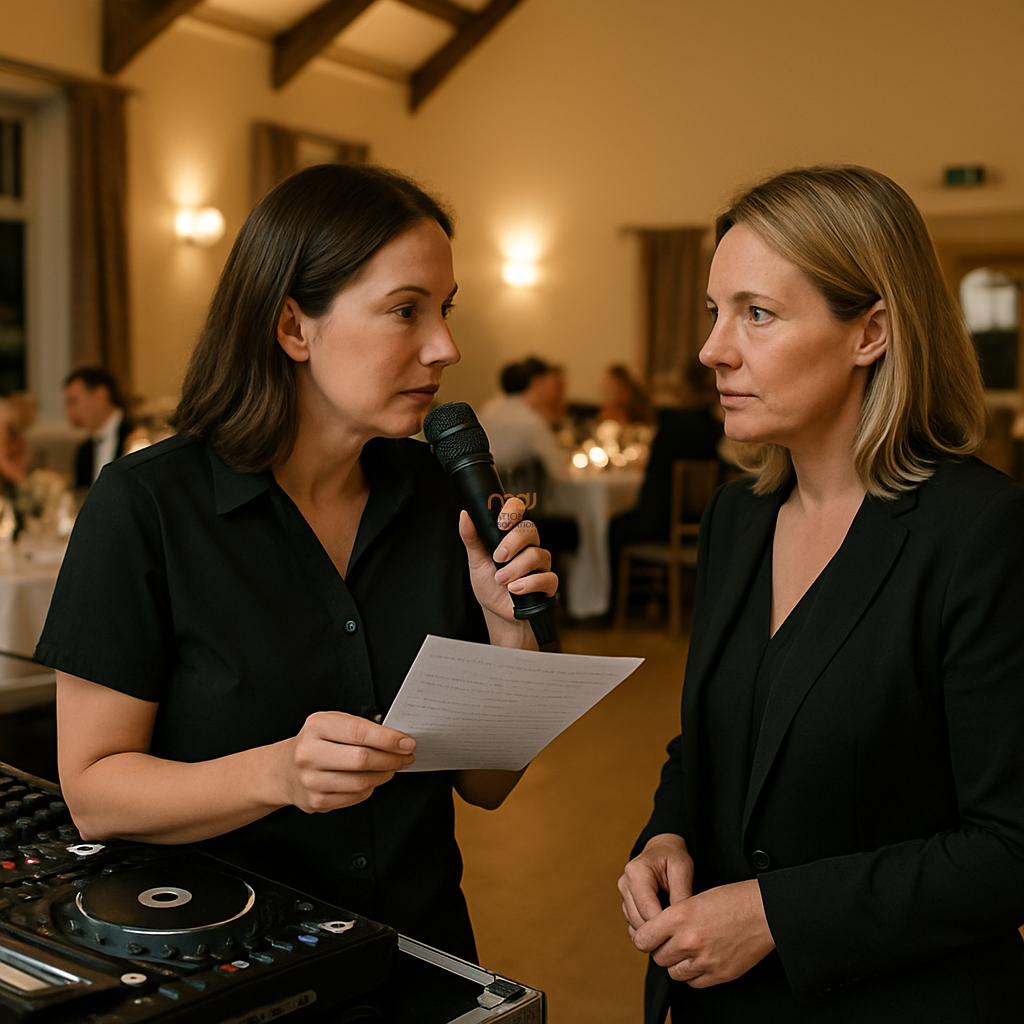
Manage multiple speeches is a skill every mobile DJ should have, because in the real world event timings are often less organised than the venue brochure suggests. Weddings, corporate functions, awards nights and private parties across the UK can all begin with one common problem: nobody has confirmed the running order, yet several people are expected to speak.
When that happens, the DJ is often the person everyone looks to for structure. The good news is that you do not need a perfect timetable to keep the room under control. You do, however, need a clear process, confident communication and a sensible fallback plan.
Start by getting the basics, not the perfect plan
If the running order is missing, do not wait passively for it to appear. As soon as you realise there may be multiple speeches, identify one responsible contact and gather the essentials:
- Who is speaking
- Their preferred order, if any
- Rough length of each speech
- Whether speeches need to happen before or after food
- Any VIPs, dignitaries or key guests who must not be missed
Keep the questions short and practical. You are not trying to produce a full production schedule on the spot; you are trying to create enough structure to avoid delays and confusion.
Confirm who is making the decisions
One of the biggest problems at weddings and corporate events is multiple people giving instructions. If you are hearing different versions from the bride’s father, the venue manager, the best man and an organiser from Manchester or Birmingham, pause and ask who has final say on the order of proceedings.
That does not mean you are being awkward. It means you are protecting the event from crossed wires. A single point of contact is far more reliable than trying to interpret instructions from five directions at once.
Use a simple on-the-night system
When there is no confirmed running order, simplicity wins. Write the names down in the order agreed, even if it is only a rough order, and keep the list where you can see it. If appropriate, share the order verbally with the key organiser and the venue team.
A useful approach is:
- Open with your own microphone announcement if required.
- Call the first speaker clearly.
- Check each speech has finished before bringing the next person up.
- Leave a short pause between speeches so guests can applaud, return to drinks or settle.
In many cases, the most important job is simply making the handovers smooth. Guests usually forgive a short delay; they notice confusion much more than they notice a five-minute adjustment.
Build in time for speeches to overrun
Speeches nearly always take longer than expected. Even the best speaker in Leeds, Glasgow or Cardiff can drift off plan once emotions, anecdotes and thank-yous start flowing. So, when nobody has confirmed the running order, assume each speech may run longer than promised.
That means you should avoid scheduling tightly around the first announced speech. If you are also responsible for background music, dinner calls or later dancefloor management, leave yourself breathing space. A little slack in the evening is far safer than promising something you cannot realistically deliver.
Keep the microphone control disciplined
Multiple speeches can quickly become messy if guests start helping themselves to the microphone. That is where a calm, clear approach matters. Remind the host, organiser or venue team that the microphone should only be passed to the next approved speaker.
If you are using a wireless microphone, keep control of the unit between speeches. If there is a wired microphone, ensure it is positioned so guests are not tempted to grab it early. This is basic event management, but it makes a huge difference in busy rooms from London hotels to function suites in Nottingham and Liverpool.
Have a polite way to manage late changes
Late changes are common. Someone may suddenly want to add a speech, swap the order, or speak before dessert rather than after. Your role is to stay flexible without losing authority.
A simple phrase works well: “I can accommodate that if we make the change now and agree the new order.” This keeps the door open while also making it clear that the change must be confirmed, not merely suggested.
If the revised timing affects the rest of the evening, explain the impact in plain language. For example, a longer speech block may push back food service, the first dance, awards presentation or evening entertainment. You are not refusing the request; you are helping the organiser make an informed decision.
Protect the atmosphere, not just the timetable
Good DJs do more than read names off a list. They manage pace, mood and confidence. When the running order is unclear, the atmosphere can quickly feel unsettled, especially if guests begin asking each other what is happening next.
Use calm, concise announcements. Avoid sounding flustered. If a delay occurs, explain it briefly and positively: “We’ll make sure everyone important gets their moment, and we’ll be back on track shortly.” That kind of tone reassures guests in Scotland, Wales, Northern Ireland and across England alike.
Work with the venue and the wider event team
Venues often have more information than the DJ does, especially at larger functions in the Midlands, Bristol, Leicester or Coventry. Check in with the venue manager or coordinator before the speeches begin. They may know whether food service, room turnover or award logistics will affect the sequence.
Also, if you are a NADJ member, it is worth keeping your business support and event resources close to hand through the NADJ hub. For member visibility and networking, the NADJ directory can also help demonstrate your professional standing to clients and venues.
Don’t forget the practical kit
Reliable audio matters when speeches are involved. A clear microphone, stable sound levels and proper monitoring reduce the risk of avoidable interruptions. If you are upgrading your setup, you may find NADJ’s guidance on professional DJ headphones useful for monitoring and cueing in busy environments.
For event work, it is also sensible to keep your wider compliance and business arrangements in order. Where relevant, check the latest details on DJ public liability insurance and review your membership tier options if you want to present yourself more professionally to clients.
Final thought: calm beats clever
When nobody has confirmed the running order, the best DJ response is not to improvise wildly. It is to create order quickly, communicate clearly and keep the event moving with minimal fuss. That approach works whether you are in London, Manchester, Birmingham or a village hall in the North West.
If you keep your process simple, ask the right questions and stay composed, you can manage multiple speeches without losing control of the room. In many cases, the client will remember that you made the whole evening feel organised, even when the paperwork was not.
For live opportunities and event planning resources, also check the gig listings and the wider NADJ site at nadj.co.uk.
AI transparency note
NADJ uses artificial intelligence as an editorial assistant. Articles produced through this publisher begin with a human-selected idea, source, brief or editorial direction, and AI may be used to research, structure, draft or improve the wording. AI does not set NADJ editorial policy or operate free-range: people acting for NADJ set the instructions and publishing framework, monitor the output and retain editorial responsibility.
Images used by NADJ may include stock photography or AI-generated visuals where appropriate. NADJ is volunteer-led and editorial time is limited; much of our available time is currently absorbed by governance and management, a substantial data audit and membership-system transfer, and planning 12 Tea & Test days across the UK. You can help strengthen member-led content by sending article ideas or completed submissions to hello@nadj.org.uk.









 Avtar Thethy
 Fabio Capozzi
 Alastair Craig
 Dave Mills