
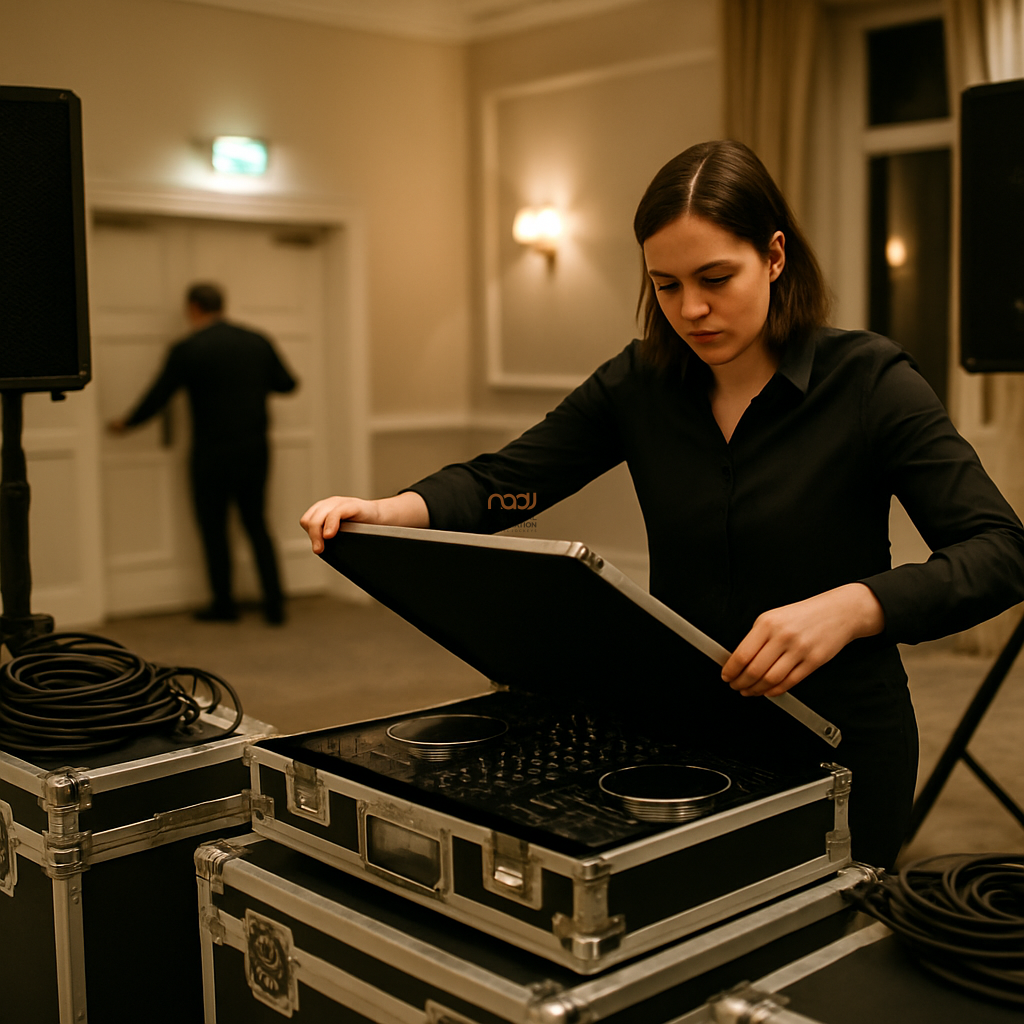
If you need cover for DJ equipment left overnight at a venue, the most important thing is to be clear about what is protected, what is not, and what evidence you should have before and after the gear stays on site. For working DJs across the UK, from London and Manchester to Birmingham, Leeds, Bristol, Cardiff, Glasgow, Liverpool, Nottingham, Leicester and Coventry, leaving kit in place can save time — but it also adds risk.
NADJ’s view is simple: do not rely on assumptions. Whether you are working a wedding, corporate event, club night or private function in England, Scotland, Wales or Northern Ireland, a sensible handover and a proper checklist can reduce avoidable problems. Always check live policy terms, venue procedures and any local requirements that may apply.
Why overnight cover needs a separate check
Some DJs assume that if equipment is present for the event, it is automatically covered until collection. That is not always the case. Overnight storage, unattended kit, security arrangements and who has control of the room can all affect the position. The exact details vary by insurer, venue, contract and circumstance, so it is important to confirm them in advance rather than after a loss or damage claim issue arises.
If you are part of a professional DJ business, this is especially relevant when equipment is left in function rooms, staging areas, locked stores or behind locked bars. The more hands-off the setup, the more important the paperwork becomes.
What to check before leaving equipment overnight
1. Venue security arrangements
Ask how the room will be secured after the event. Check whether the venue uses locks, alarms, CCTV, on-site security staff or overnight patrols. Do not assume a “locked venue” means every access point is secure. Side doors, fire exits, goods entrances and shared loading bays are often overlooked.
If possible, get the name and role of the person responsible for securing the room or building. A brief written confirmation by email is better than a verbal reassurance.
2. Exact storage location
Find out where the kit will be kept overnight. A locked room inside the venue is usually preferable to a public-facing space or open stage area. Avoid leaving expensive items in places with easy guest access, visible windows or shared corridors.
If the venue asks you to leave gear in a specific area, make sure you understand whether that area is genuinely restricted and how entry is controlled.
3. Item list and serial numbers
Create an up-to-date inventory before the event. Include the main items, accessories and serial numbers where available. This can help with identification, condition checks and any later reporting. Photographs are also sensible: take clear images of each item at setup and, if possible, before leaving it overnight.
A full inventory is particularly useful for mobile DJs carrying mixers, speakers, lighting, laptops and controllers. If you are reviewing or replacing kit, our guide to the top 10 DJ mixers for mobile wedding DJs may help with planning and specification decisions.
4. Power down and isolate safely
Check what needs to remain powered and what should be fully switched off. Do not leave equipment running unless there is a genuine reason and the venue has agreed to it. Secure cables properly and reduce trip hazards before you go.
If you are unsure about battery charging, heat build-up or laptop sleep settings, deal with those issues before the end of the night. A few minutes spent tidying the setup can reduce the chance of damage or dispute later.
5. Who has access overnight
Clarify whether venue staff, cleaners, contractors or event planners will enter the space before you return. If others need access, ask how the area will be monitored and whether your equipment can be moved without your knowledge.
Good communication matters here. A simple handover note can prevent confusion about what belongs to whom and who is responsible for the room.
What to check when you collect the gear
When you return, do a proper inspection before loading out. Do not rush this step, even if you are heading to another job.
- Check for obvious physical damage, dents, cracked screens, broken connectors and missing parts.
- Look for signs of liquid ingress, heat damage, dust contamination or tampering.
- Test key functions before you leave if the venue allows it.
- Compare the items against your inventory and confirm that all accessories are present.
- Take fresh photos if there is any concern about condition or missing items.
If you discover a problem, report it promptly to the venue and keep a record of the time, date and person spoken to. Stick to the facts. Avoid guessing about cause until you have checked the equipment properly.
Paperwork that makes life easier
For professional DJs, the strongest protection is often good administration. Keep a standard checklist for overnight storage, a signed or emailed venue handover note, and an item list for each show. If you work with contractors or assistants, make sure everyone follows the same process.
It is also wise to make sure your public-facing business details are current, especially if venues or clients need to contact you after an incident. NADJ members and non-members alike may find the NADJ directory useful for visibility, while the wider NADJ website and NADJ Hub are useful places to keep up with sector guidance and member information.
Do not assume insurance will fill every gap
Insurance arrangements can differ widely, and cover may depend on the security conditions, location, unattended periods and the wording of the policy. For that reason, it is important to read your documentation carefully and speak to your broker or insurer if overnight storage is common in your work.
If you are also checking broader DJ business compliance, NADJ’s guide to DJ public liability insurance in the UK is a useful starting point, but it should not replace live policy advice. Likewise, if you are looking at wider membership benefits and support, the membership tiers explained page can help you compare options.
A practical final checklist
Before leaving equipment overnight at a venue, ask yourself five questions:
- Is the storage area locked and genuinely restricted?
- Do I know who is responsible for the room after I leave?
- Have I listed and photographed the kit?
- Have I powered down and secured the equipment properly?
- Do I know what to do if something is missing or damaged on collection?
If the answer to any of those is unclear, pause and get confirmation. That small step can save a great deal of time and stress later.
Finally, if you regularly work at venues and want to explore more event opportunities, you may also want to review the NADJ gig listings. Good habits, reliable communication and clear records are part of professional DJing, whether you are working in the Midlands, Scotland, Wales or anywhere else in the UK.
In short: when it comes to cover for DJ equipment left overnight at a venue, the real protection is preparation. Know the venue, document the kit, confirm the access arrangements and check everything again when you collect it.
AI transparency note
NADJ uses artificial intelligence as an editorial assistant. Articles produced through this publisher begin with a human-selected idea, source, brief or editorial direction, and AI may be used to research, structure, draft or improve the wording. AI does not set NADJ editorial policy or operate free-range: people acting for NADJ set the instructions and publishing framework, monitor the output and retain editorial responsibility.
Images used by NADJ may include stock photography or AI-generated visuals where appropriate. NADJ is volunteer-led and editorial time is limited; much of our available time is currently absorbed by governance and management, a substantial data audit and membership-system transfer, and planning 12 Tea & Test days across the UK. You can help strengthen member-led content by sending article ideas or completed submissions to hello@nadj.org.uk.







 Avtar Thethy
 Fabio Capozzi
 Alastair Craig
 Dave Mills