

CamelPhat are widely associated with the Liverpool electronic scene, and their breakthrough came after years of steady work rather than an overnight leap. Their 2017 track Cola became a major global club record and helped move them onto larger stages. Since then, they have remained active as producers and performers, with releases and headline appearances keeping their name in circulation. That combination of persistence and visibility is exactly what many DJs aim for, whether they are working in Manchester, Birmingham, Leeds, Bristol, Cardiff, Glasgow, London or local circuits across the Midlands.
Start with a sound people can recognise
One of the clearest lessons from CamelPhat is the value of musical identity. Their productions tend to sit in a space where house, deep groove and club energy meet, but they have not spread themselves so thinly that they become hard to define. That matters. Working DJs often feel pressure to play everything for everyone, especially when building a following in competitive markets such as Nottingham, Leicester or Coventry. Yet a stronger brand usually comes from being known for something specific.
This does not mean staying rigid. CamelPhat have shown that you can evolve without losing the thread. For DJs, the practical takeaway is simple: develop a sound that reflects your taste, test it in rooms, and refine it based on real crowd response. If your set is memorable because it has an identifiable mood, structure or energy curve, audiences are more likely to return.
Consistency beats short-term attention
Many DJs chase one viral moment. CamelPhat’s career suggests that a single big record can open doors, but it does not sustain a brand on its own. A lasting career needs follow-through: more music, more appearances, better networking and a continued presence in the places where your audience discovers you.
For UK DJs, that means turning each gig into part of a wider plan. A solid wedding run in the North West, a club residency in London or regular bookings in Scotland can all support long-term growth if they are approached professionally. Update your profile, keep your mixes current, and make sure promoters can quickly find reliable information about you. NADJ’s DJ directory is one example of how a professional listing can support discoverability, while gig listings can help you spot opportunities across the UK.
Live performance still matters
CamelPhat are not just a studio act. Their reputation has also been built on how their music works in front of a crowd. That is important for DJs at every level. A strong brand is not only what people hear on a stream or radio edit; it is what they experience when you are in the booth.
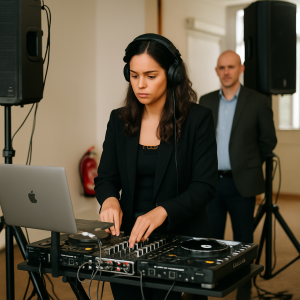
Good performance discipline remains essential. Read the room, manage energy carefully and know when to hold back rather than forcing the peak too early. Also, make sure your technical basics are in order: dependable headphones, tidy cueing and a set-up that you know well. If you are upgrading your kit, NADJ’s guide to top DJ headphones for professional mobile DJs in the UK may help you compare options before you buy.
For mobile and club DJs alike, professionalism in the booth feeds directly into reputation. If your sound is strong but your delivery is inconsistent, the brand will suffer. CamelPhat’s success underlines a familiar truth: great records get attention, but dependable performances build trust.
Brand building is also about the business side
Working DJs sometimes treat branding as a purely creative exercise. CamelPhat’s career suggests otherwise. A long-term brand is also shaped by release strategy, team support, visual presentation and how often you appear in the right places. You do not need major-label backing to understand that principle; you do need organisation.
That may include keeping your marketing consistent, making sure your online presence is current, and thinking carefully about where your time is spent. If you are new to professional DJ work, it may also be sensible to review your membership options and support services. NADJ’s membership tiers explained page is a useful starting point for understanding the different levels available to DJs at different stages of their careers. NADJ also works more broadly to support professional standards across the industry through resources, community and its wider services at nadj.co.uk and hub.nadj.org.uk.
It is also sensible to keep your business risk management in view. For example, if you are performing publicly, you should check current requirements and suitable cover for your own work. NADJ’s page on DJ public liability insurance in the UK explains the topic in general terms, but live policy terms and venue expectations can change, so always confirm details directly before relying on them.
Why CamelPhat’s story resonates across the UK
Part of CamelPhat’s appeal is that they do not feel detached from the club ecosystem that shaped them. That matters in a UK market where authenticity still counts. Whether you are playing in Liverpool, Leeds, Bristol, Cardiff, Glasgow, Manchester, Birmingham or smaller towns across Wales, Scotland, England and Northern Ireland, audiences usually respond to DJs who appear grounded in the scene rather than above it.
The duo’s profile also shows that geography is not a barrier to international relevance. A strong regional base can be an advantage, not a limitation. Many successful DJs build first in a local scene, then widen their reach through repeat bookings, support slots, online presence and releases that travel. If you are based outside London, that lesson is especially relevant: you do not need to abandon your local identity to build a national or even international reputation.
Practical lessons working DJs can apply now
So what should a working DJ take from CamelPhat’s career? First, choose a sound you can stand behind for years, not weeks. Second, keep showing up: in clubs, at events, online and in professional networks. Third, take performance seriously, because the booth is part of the brand. Fourth, treat your DJ work like a business as well as a creative outlet.
None of this guarantees a breakthrough. But it does create the conditions for a career that can last. CamelPhat’s trajectory shows that recognition grows when creative identity, work ethic and audience understanding move in the same direction. For UK DJs building their own path, that is a reminder worth taking seriously.
In a crowded market, memorable brands are rarely built by accident. They are built by consistency, and then protected by professionalism. That is as true for a Saturday night club resident in London as it is for a mobile DJ working weddings in the Midlands or a producer-DJ developing a sound in Manchester, Glasgow or Cardiff. CamelPhat’s career illustrates that clearly: make something distinctive, keep improving it, and make sure people can rely on you when it matters.
AI transparency note
NADJ uses artificial intelligence as an editorial assistant. Articles produced through this publisher begin with a human-selected idea, source, brief or editorial direction, and AI may be used to research, structure, draft or improve the wording. AI does not set NADJ editorial policy or operate free-range: people acting for NADJ set the instructions and publishing framework, monitor the output and retain editorial responsibility.
Images used by NADJ may include stock photography or AI-generated visuals where appropriate. NADJ is volunteer-led and editorial time is limited; much of our available time is currently absorbed by governance and management, a substantial data audit and membership-system transfer, and planning 12 Tea & Test days across the UK. You can help strengthen member-led content by sending article ideas or completed submissions to hello@nadj.org.uk.






 Avtar Thethy
 Fabio Capozzi
 Alastair Craig
 Dave Mills