

DJ PLI and property damage is one of the most important topics for working DJs in the UK, yet it is also one of the most misunderstood. If you perform at weddings, clubs, bars, corporate events or private parties, you are working around other people’s equipment, venues and personal property. When something gets broken, the question is not just who caused it, but whether any insurance in place is likely to respond.
At NADJ, we regularly remind DJs that public liability insurance is there to help protect your business when a third party claims you were legally responsible for injury or damage. However, it is not a catch-all policy. Different insurers define cover in different ways, and the details matter. If you are unsure, always check the live wording of your policy and speak to the provider before you rely on it.
What DJ PLI is designed to do
Public liability insurance, often shortened to PLI, is generally intended to respond if your work as a DJ causes accidental injury to someone else or accidental damage to someone else’s property. In practice, that could mean a speaker stand falls and damages a venue floor, a cable trip leads to a broken light fitting, or an item of your equipment is involved in a damaging incident at a gig.
For DJs working across the UK — whether in London, Manchester, Birmingham, Leeds, Bristol, Cardiff, Glasgow, Liverpool, Nottingham, Leicester or Coventry — venue managers often ask for proof of PLI before allowing you to load in. That is because venues, councils and clients want reassurance that there is a route to deal with third-party claims if something goes wrong.
What property damage may be covered
Damage to a venue’s fixtures and fittings
If a claim is made that you accidentally damaged a venue’s property, a public liability policy may be relevant. Examples could include a scratched dancefloor, a broken mirror, or damage to a wall, door, table or built-in fixture caused by your equipment or activity. The key point is usually whether the damage was accidental and whether you were legally liable.
Damage to someone else’s equipment
In some situations, DJ PLI may relate to damage to property belonging to a client, venue or other third party. That said, this is an area where policy wordings can differ significantly. Some policies may deal with certain types of third-party property damage, while others may exclude items in your care, control or custody. Do not assume every damaged item is covered just because it was on site when the incident happened.
Claims arising from your set-up and teardown
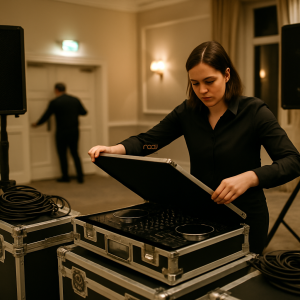
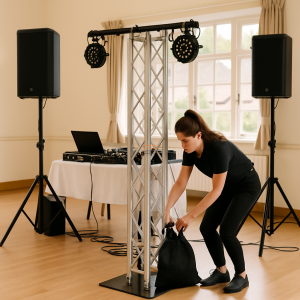
Many risks happen before the first track is played or after the last guest leaves. Loading in, rigging, positioning speakers, running power, and packing down all create opportunities for accidental damage. A policy may still be relevant during those phases, but only if the circumstances fall within the cover and any conditions have been met.
What DJ PLI usually does not cover
Just as important as cover is the list of exclusions. DJs should be clear that public liability insurance is not the same as equipment cover, professional indemnity, or a guarantee against every loss.
Your own equipment
PLI is generally not designed to cover damage to your own kit. If your controller, laptop, lighting, speakers or cases are damaged, lost or stolen, that is usually a separate matter. You would normally need a different policy section or a separate equipment insurance arrangement, subject to the insurer’s terms.
Items in your care, control or custody
Many policies exclude damage to property that is under your care, control or custody. In plain English, that means if you are responsible for holding, moving or using something directly, the policy may not respond in the way you expect. This is a common area of misunderstanding for DJs who are asked to handle venue items, microphones, AV gear or hired accessories.
Deliberate, reckless or preventable behaviour
No responsible policy should be treated as a licence for poor practice. Damage caused deliberately, or through conduct that is outside policy conditions, may not be covered. Likewise, repeated safety failures, unsafe cabling or ignoring venue rules could affect any claim. Good practice matters.
Common examples DJs should think about
Here are a few realistic scenarios to consider:
- A guest trips over unsecured cabling and the venue claims for repair to a damaged unit or fitting.
- A speaker or stand is knocked and scratches a polished surface.
- You accidentally damage a venue’s wall while moving flightcases through a tight doorway.
- Someone else’s item is damaged during set-up, but the policy wording excludes property in your care.
These examples are not a substitute for policy wording, but they show why DJ PLI and property damage must be read carefully, not assumed.
What UK DJs should check before booking a job
Before each event, confirm the basics:
- What exactly does your policy define as property damage?
- Are you covered at the kind of venue you are working in?
- Does the policy cover set-up, performance and pack-down?
- Are there exclusions for care, control or custody?
- What excess applies if a claim is accepted?
- Do you need any additional cover for equipment, hired gear or business interruption?
If you are building your DJ work into a sustainable small business, insurance should sit alongside contracts, risk awareness and proper record-keeping. NADJ has guidance on how DJs can build a sustainable small business, which is a useful place to start if you want to reduce avoidable risk rather than simply react to it.
Why membership and industry support matter
Many DJs join professional bodies because they want more than a policy number; they want practical support, standards and access to useful information. If you are comparing membership options, it is worth reviewing NADJ membership tiers explained so you understand what support is available and how it fits your work.
You can also use the NADJ directory to help clients and venues find professional DJs, while the gig listings page may help you keep an eye on opportunities. For wider member resources, visit the NADJ hub. For our main site and the latest information, see nadj.co.uk.
Final word: read the policy, not the assumption
DJ PLI and property damage are closely connected, but the cover is only as good as the wording and the way you work. A sensible DJ does not just ask, “Do I have insurance?” The better question is, “What exactly is covered, what is excluded, and what do I need to do to stay within the terms?”
That approach protects your business, your reputation and your relationships with venues across England, Scotland, Wales and Northern Ireland. If you are uncertain about any element of cover, check with your insurer or broker before the next gig. NADJ encourages all DJs to stay informed, stay professional and treat insurance as one part of a wider, well-run business.
DMX Lighting Software for DJs: The Complete Guide
Introducing the NADJ Power Planner — Know Your Load Before You Plug In





 Avtar Thethy
 Fabio Capozzi
 Alastair Craig
 Dave Mills