

Fire safety awareness for DJs is not something to leave to the venue or assume has been covered by someone else. If you work in the UK mobile DJ industry, every booking brings a different room, a different layout and a different risk profile. Whether you are in London, Manchester, Birmingham, Leeds, Bristol, Cardiff, Glasgow, Liverpool, Nottingham, Leicester or Coventry, the basics stay the same: know how to spot hazards, ask sensible questions and keep your setup from adding avoidable risk.
This guide focuses on one practical part of the wider subject covered in DJ Equipment, Safety and Compliance for Mobile DJs: what to check at every venue. It is intended as a working checklist, not a substitute for venue procedures, manufacturer guidance or live local rules.
Start with the room, not the rig
Before you unload the van, take a slow look around. Most fire-related issues for mobile DJs begin with how a room is used, not with the equipment itself. Ask yourself where people will queue, where cables will run and how quickly the audience could leave if needed.
Check the exits
Make sure you can identify all marked exits, including any secondary or emergency routes. Exits should be visible and usable, not blocked by staging, chairs, drapes, gift tables or stacked cases. If you are setting up for a wedding, birthday party or corporate event, remember that room layouts often change after your arrival. Re-check the exits once the final furniture is in place.
Look for signage and instructions
Every venue should have its own fire procedure. Look for notices about evacuation points, alarm call points and what to do if you hear the alarm. If anything is unclear, ask the duty manager or venue contact before soundcheck. A short conversation at this stage is better than trying to work it out in a live situation.
Know what you are plugging into
Electrical faults are not the same as fire safety, but they are closely linked. Overloaded sockets, damaged leads and poor cable management can all increase heat and create hazards. This is one reason many DJs treat fire safety and equipment compliance as part of the same process.
Inspect sockets and extensions
Check that wall sockets are not cracked, loose or visibly damaged. If you are using extension leads or power distribution, make sure they are suitable for the load, fully unwound where required and kept away from heat sources. Avoid daisy-chaining multiple extension blocks unless you know exactly what you are doing and the kit is designed for that use.
Keep cables clear
Cables should not cross walkways where they can be crushed, snagged or overheated under flooring and carpet edges. Use proper cable covers where needed and tidy loose runs so they do not sit against hot fixtures, heaters or lighting equipment. Good cable discipline is not just about presentation; it helps reduce wear, trip risk and potential heat build-up.
Check for venue fire equipment around your DJ area
It is helpful to know what fire equipment is nearby, even if you never need to use it. You are not expected to become the venue’s fire officer, but you should be aware of your surroundings.
Extinguishers and alarms
Locate any extinguishers close to your setup, and make sure they are not hidden behind cases or decorative items. Do not move or use venue fire equipment unless you are trained and it is appropriate to do so. Similarly, note the nearest alarm call point if one is visible.
Heat sources and restricted areas
Some rooms have kitchens, candle displays, decorative fabrics, pyrotechnics, or fixed lighting that can create heat. Keep your kit well clear of these areas. If a venue asks you to avoid a specific section of the room, follow that instruction and build your setup around it.
Think about what you bring into the room
Mobile DJs often focus on the playlist, but the physical materials we bring on site matter just as much. Cases, drapes, backdrops, tablecloths and décor can all contribute to the fire load of a room.
Flame-retardant does not mean fireproof
If you use drapes, booth wraps, starcloths or props, check the manufacturer’s guidance and any relevant venue requirements. If a venue asks for evidence of flame-retardant treatment or certification, be ready to provide what you actually have on file. Do not assume a fabric is compliant because it looks professional or was bought recently.
Avoid unnecessary clutter
Keep your performance area neat. Cases, spare stands, packaging and soft goods left behind your booth can obstruct exits or reduce access if staff need to respond to an alarm. A clean working area is safer and easier to evacuate.
During the event: keep watching
Fire safety awareness for DJs is not a one-time arrival check. Rooms change during the night, especially at weddings, Christmas parties and school events. Guests may move furniture, open doors, add candles or bring in decorations that were not there at load-in.
Re-check after announcements or room changes
If you pause for speeches, awards or meal service, use that time to glance around the room again. Has someone moved a table in front of an exit? Has a decorative item been placed close to your speaker stack? Has a cable been pulled loose or left exposed? Small changes can create real problems later.
Stay alert to warning signs
If you notice the smell of overheating plastic, a buzzing connector, a tripped circuit or a fixture running unusually hot, stop and investigate safely. Do not keep working through a fault just because the dancefloor is busy. If in doubt, ask the venue team to assist.
Pack-down matters too
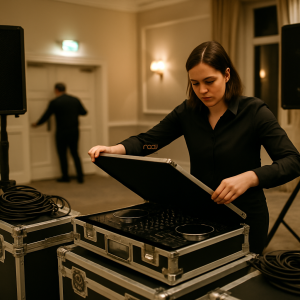
Many DJs lower their guard once the final track finishes, but fire safety does not end with the encore. Hot lighting, powered speakers and chargers can still be active while you pack away.
Before you leave, switch off and isolate your equipment in a controlled order, allow hot items to cool where possible and ensure nothing is left plugged in unnecessarily. Check the floor for damaged leads, burnt plugs or melted connectors, as these should be investigated before the next job.
Keep your wider compliance in order
Venue fire checks sit alongside the rest of your professional setup: safe equipment, sensible risk awareness and appropriate cover. If you are reviewing your overall compliance, it may help to read the broader NADJ guidance on DJ equipment, safety and compliance for mobile DJs, as well as the page on DJ public liability insurance. Insurance terms and venue requirements can change, so always check the live details rather than relying on assumptions.
For support with professional development and membership options, visit membership tiers explained. You can also use the NADJ directory to connect with industry services and the gig listings page for relevant opportunities. Additional member resources are available via hub.nadj.org.uk, and wider NADJ information and services can be found at nadj.co.uk.
A simple venue fire safety checklist for DJs
- Identify all exits and confirm they are unobstructed.
- Find the venue’s fire procedure and alarm points.
- Inspect sockets, leads and extensions before powering up.
- Keep cables clear of walkways, heaters and hot fixtures.
- Note the location of extinguishers without moving them.
- Watch for room changes throughout the event.
- Cool down and check equipment properly at pack-down.
Used consistently, these checks take only a few minutes but can make a significant difference. Good DJs do not just turn up with music; they arrive prepared, alert and ready to work safely in any venue.
AI transparency note
NADJ uses artificial intelligence as an editorial assistant. Articles produced through this publisher begin with a human-selected idea, source, brief or editorial direction, and AI may be used to research, structure, draft or improve the wording. AI does not set NADJ editorial policy or operate free-range: people acting for NADJ set the instructions and publishing framework, monitor the output and retain editorial responsibility.
Images used by NADJ may include stock photography or AI-generated visuals where appropriate. NADJ is volunteer-led and editorial time is limited; much of our available time is currently absorbed by governance and management, a substantial data audit and membership-system transfer, and planning 12 Tea & Test days across the UK. You can help strengthen member-led content by sending article ideas or completed submissions to hello@nadj.org.uk.





 Avtar Thethy
 Fabio Capozzi
 Alastair Craig
 Dave Mills