

If you want more wedding DJ bookings, wedding fairs and expos can still be one of the most effective face-to-face marketing channels in the UK. For DJs working across England, Scotland, Wales and Northern Ireland, these events put you in front of couples who are actively planning and ready to compare suppliers. However, success rarely comes from simply turning up with a banner and some lights.
The DJs who convert best at wedding fairs in places such as London, Manchester, Birmingham, Leeds, Bristol, Cardiff, Glasgow, Liverpool, Nottingham, Leicester and Coventry tend to do three things well: they make their offer easy to understand, they collect useful leads, and they follow up quickly and professionally. That approach matters whether you are new to the market or already filling dates through recommendations.
Why wedding fairs still work for wedding DJ bookings
Wedding fairs and expos are valuable because they create direct access to engaged couples at a point when they are building a shortlist. Unlike general social media advertising, these events allow you to show your personality, answer questions in real time and demonstrate the quality of your presentation.
For a wedding DJ, this is particularly important. Couples are not only booking music; they are booking confidence. They want to know you will manage announcements, timings, room energy and the overall flow of the evening. A good fair stand gives them a quick sense of how you work.
That said, fairs are not magic. Some venues attract larger numbers than others, and some are better for premium weddings while others suit volume enquiries. Always assess the event, the audience and the cost before committing. Results will vary by region and by your own follow-up process.
Build a stand that sells the outcome, not just the kit
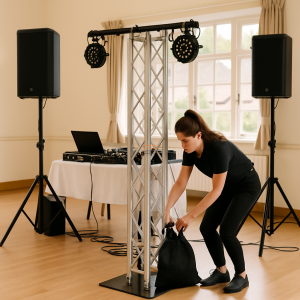
One common mistake is over-focusing on equipment. Couples may be interested in your setup, but they are buying the result: a full dance floor, a smooth schedule and a good atmosphere. Your stand should reflect that.
Make your branding clear
Use a clean banner, strong logo placement and consistent colours. Keep your name visible from a distance. Avoid clutter. In a busy hall, you may have only a few seconds to catch attention.
Show the wedding experience
Use images that feel like real weddings, not just dark club shots. If you have photos from venues in the Midlands, London or other local areas, include them. This helps couples imagine you in their setting. If you can, display testimonials that mention reliability, communication and dance-floor energy.
Keep the conversation simple
Prepare a short explanation of what you do and who you are best suited for. For example: “I provide modern, professional wedding DJ services with planning support, tailored music and a polished evening presentation.” That is easier for couples to remember than a long list of technical features.
Use the right lead capture system
A successful fair stand needs a reliable way to collect enquiries. A paper list is better than nothing, but it is easy to lose details or miss consent requirements. A tablet form or QR code linked to a simple enquiry page is often more efficient, provided it works properly on the day.
Only ask for the essentials: name, email, wedding date, venue and a preferred contact method. You may also want to note whether they are looking for a DJ only, a DJ with lighting, or a package that includes extras. Keep your approach proportionate and transparent, and make sure any data capture method fits current UK data protection expectations. If in doubt, check the live guidance before the event.
It can also help to offer something useful at the stand, such as a printed wedding music checklist or a short planning guide. The aim is not to give away everything for free, but to start a helpful conversation that encourages a second contact.
Follow up quickly, then follow up properly
Many DJs lose wedding DJ bookings because they wait too long after the fair. Couples will often speak to several suppliers in the same day, so your timing matters.
Ideally, send a short, personalised follow-up within 24 to 48 hours. Reference something specific from the conversation and include a clear next step, such as a brochure, availability check or consultation call. Keep the tone warm and professional rather than overly sales-driven.
If a couple does not respond, do not assume they are uninterested. A second polite follow-up a few days later can be effective. Just avoid flooding inboxes. Your aim is to stay present, not pushy.
Position yourself correctly for your market
Not every wedding fair has the same audience. In some areas, couples are looking for value and simplicity. In others, especially in competitive markets, they may expect a highly polished premium service. Your messaging should match the event and the likely client base.
If you serve multiple areas, make that clear without sounding generic. A DJ covering the North West, the Midlands and South Wales, for example, should explain how travel, venue familiarity and planning support work in practice. Local relevance matters because couples often prefer suppliers who know their region and can respond easily.
This is also where your wider online presence helps. Make sure your website, directory listing and social channels present the same tone and service level. NADJ members can use the NADJ directory to strengthen visibility, while broader business support and promotional services are available through NADJ Media Ltd. Consistency across channels builds trust.
Use fairs as part of a wider booking strategy
Wedding fairs work best when they sit alongside other lead sources. Your stand may generate the first conversation, but your website, testimonials, social proof and inbox process turn that conversation into a booking.
For example, many DJs use fairs to drive enquiries into a structured follow-up journey, then support that with content, search visibility and clear pricing guidance where appropriate. If you are reviewing your wider development, NADJ members may also find value in training resources such as the top DJ training courses article, or in checking membership tiers explained to see how membership benefits can support your business profile.
It is also worth reviewing practical business basics before the busy season. For example, if you are discussing public liability insurance with venues or organisers, ensure you understand what is currently required and what your own cover does and does not include. For general guidance, see NADJ’s public liability insurance information. Always check live policy details and event requirements rather than relying on assumptions.
Practical checklist for your next fair
- Confirm the event audience and typical wedding budget range.
- Use a stand that looks clean, professional and easy to approach.
- Lead with outcomes: atmosphere, reliability and planning support.
- Capture leads with a simple, consent-aware system.
- Follow up within 24 to 48 hours.
- Keep your website, directory profile and social media aligned.
- Review what worked after each event and refine your approach.
Final thoughts
Wedding fairs and expos can absolutely produce more wedding DJ bookings, but only if you treat them like a structured sales channel rather than a passive showcase. The most successful DJs in the UK do not rely on luck. They prepare properly, communicate clearly and follow up consistently.
If you want to improve your results, start with your stand message, then tighten your lead capture and follow-up process. Those small changes often make the biggest difference. For booking opportunities beyond fairs, members and visitors can also keep an eye on the NADJ Hub and gig listings for additional industry insight and work-related opportunities.




 Avtar Thethy
 Fabio Capozzi
 Alastair Craig
 Dave Mills