
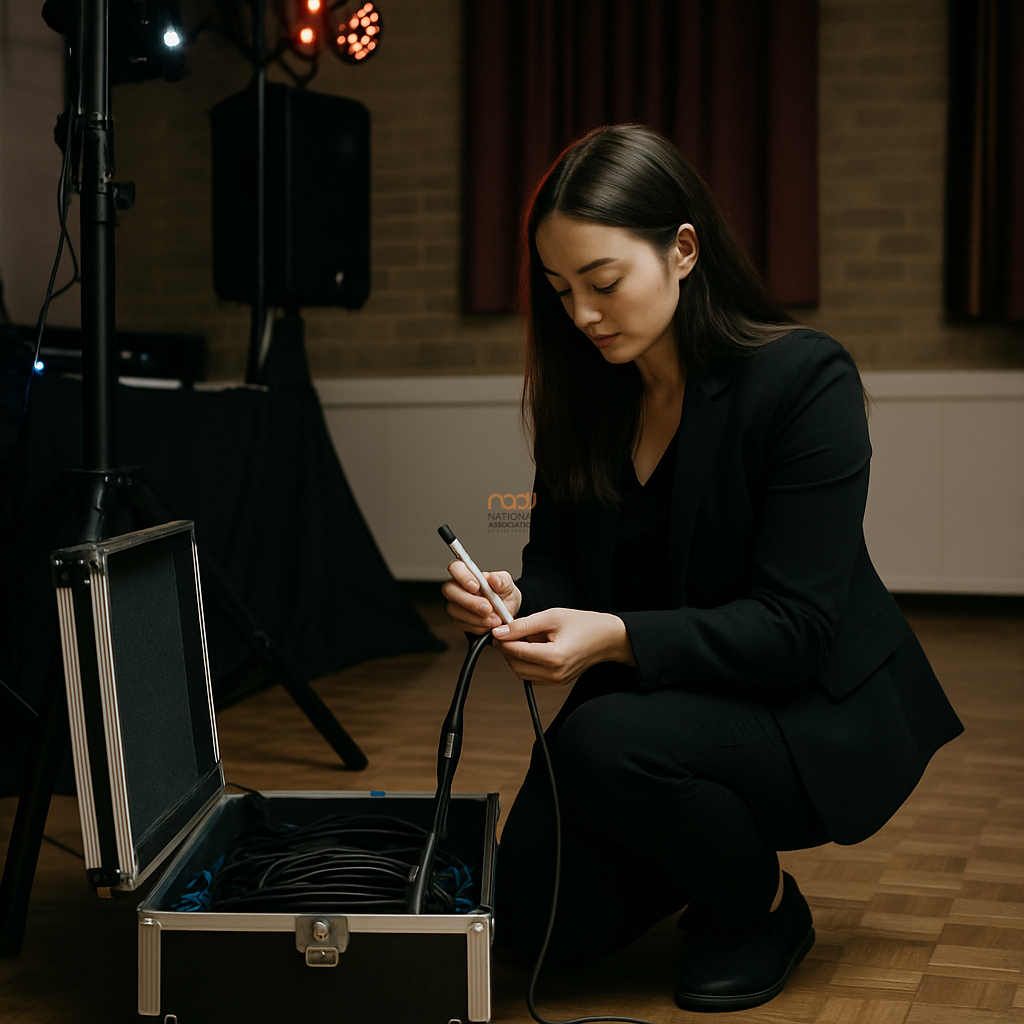
When you label DJ cables properly, you save time every single week. In a dark function room, behind a booth, or under pressure at a wedding, being able to identify a cable instantly can be the difference between a quick fix and a stressful delay.
At NADJ, we regularly speak to working DJs across the UK who want their setups to be faster, tidier and easier to troubleshoot. The good news is that cable labelling does not need to be expensive or complicated. With a simple system, you can reduce guesswork, improve fault-finding and keep your rig more professional.
In this guide, we explain a practical approach that suits mobile DJs, club DJs and event DJs in England, Scotland, Wales and Northern Ireland. Whether you work in London, Manchester, Birmingham, Leeds, Bristol, Cardiff, Glasgow, Liverpool, Nottingham, Leicester or Coventry, the principles are the same: make every cable obvious before the music starts.
Why cable labels matter
Cables are one of the most common causes of confusion during setup and breakdown. A lead that looks fine at first glance may be faulty, swapped, or simply connected to the wrong place. If you have a clear label system, you can answer key questions quickly:
- What does this cable do?
- Where should it go?
- Has it been tested?
- Is it a spare, a replacement, or in active use?
That matters because most event problems are not solved by owning more kit. They are solved by knowing your kit well enough to isolate the issue fast. Good labels also help if another DJ, technician or assistant needs to step in and understand your setup.
Start with a simple cable naming system
The best system is the one you will actually use. Keep it short, consistent and easy to read in poor lighting. For example:
- MIC 1 for your main vocal microphone lead
- R-OUT for right channel output
- SUB for subwoofer feed
- SPK A / SPK B for speaker runs
- POWER for IEC or mains leads
Some DJs prefer colour coding as well as text labels. That can work well, provided the colours mean the same thing every time. For example, red for audio outputs, blue for microphone lines, and yellow for power. Just remember that colour alone is not enough in low light or for colour-blind users, so always add text too.
Use labels that stay put
There is little value in using a label that falls off after two events. For live work, choose materials that are designed to withstand handling, coiling and transport. Common options include:
- Heat-shrink tubing printed or marked before shrinking
- Self-laminating cable labels
- Industrial-style wraparound labels
- Durable write-on tags for thicker mains or power cables
For most mobile DJs, heat-shrink and self-laminating labels are reliable choices. They look neat, resist scuffs and are less likely to peel in transit. If you use handwritten labels, choose a permanent marker and protect the writing with clear tape or a label sleeve where possible.
Label both ends where it helps
In practice, some cables benefit from labels at both ends. This is especially useful for longer runs or patch leads that may be routed behind stands, through truss, or across a room. When you can see the cable ends immediately, you waste less time tracing them back to the source.
However, avoid over-labelling every cable in a messy way. The aim is clarity, not clutter. For short leads that are always used in the same place, one clear label may be enough. For touring-style or larger event setups, double-ended labelling can be a genuine time-saver.
Make your labels part of a wider fault-finding routine
Labels work best when they are part of a proper system. For example, you might combine labelled cables with numbered cases, marked adapters and a basic pre-gig check. That way, if sound drops out, you can work logically instead of swapping random items.
A useful habit is to label not just the cable type, but also its role in the rig. For instance, a spare lead might be marked SPARE XLR, while a preferred cable for the main mixer output could be marked MAIN OUT LEFT. This helps you avoid plugging the wrong cable into the wrong role during a rushed changeover.
Keep a spare-label kit in your case
Cable labels are easy to improve on the road if you carry a small label kit. A simple pouch with a marker, a few spare labels, scissors and some clear tape can save a lot of trouble. If a label is damaged, you can replace it between bookings rather than leaving a mystery cable in the box.
It is also worth reviewing your labels after a major change to your rig. If you upgrade your mixer, change speaker layout or add new lighting control, update the labels straight away. Out-of-date labels create the very confusion you were trying to avoid.
What to do if a cable is still suspect
A label is not a substitute for testing. If a cable is crackling, intermittent or dead, isolate it and test it properly. If you use PAT testing within your business, or need to understand what applies to your equipment and working environment, follow the relevant current guidance and use qualified services where appropriate. NADJ members can also refer to our wider support and resources through the NADJ Hub.
If you need to source better cables, compare the specifications carefully and avoid buying on price alone. A well-made cable with a durable label is usually better value over time than a cheap lead that fails repeatedly.
Why this matters for professional presentation
Clear labelling is about more than speed. It shows clients, venues and fellow professionals that you run a disciplined operation. That is especially important for mobile DJs who are representing themselves at weddings, corporate events and private functions.
If you are reviewing other areas of your setup, it may also help to look at the equipment you rely on most. For example, our guide to the top 10 DJ mixers for mobile wedding DJs in 2026 can help you think about workflow, connectivity and reliability. You may also want to review practical business support through NADJ membership tiers, explore the NADJ directory, or check the latest gig listings.
For business-facing support, you can also visit NADJ Media Ltd. And if you want to connect with the wider community and member resources, the Hub remains a useful place to start.
Final thoughts
If you label DJ cables well, fault-finding becomes a quick, calm process instead of a frantic one. The aim is not perfection; it is consistency. Choose a simple naming system, use durable labels, and keep your kit organised in a way that makes sense in real working conditions.
That small bit of preparation can save you minutes on every job. Over a season, that adds up to less stress, faster turnarounds and a more professional service for clients across the UK.
AI transparency note
NADJ uses artificial intelligence as an editorial assistant. Articles produced through this publisher begin with a human-selected idea, source, brief or editorial direction, and AI may be used to research, structure, draft or improve the wording. AI does not set NADJ editorial policy or operate free-range: people acting for NADJ set the instructions and publishing framework, monitor the output and retain editorial responsibility.
Images used by NADJ may include stock photography or AI-generated visuals where appropriate. NADJ is volunteer-led and editorial time is limited; much of our available time is currently absorbed by governance and management, a substantial data audit and membership-system transfer, and planning 12 Tea & Test days across the UK. You can help strengthen member-led content by sending article ideas or completed submissions to hello@nadj.org.uk.









 Avtar Thethy
 Fabio Capozzi
 Alastair Craig
 Dave Mills