
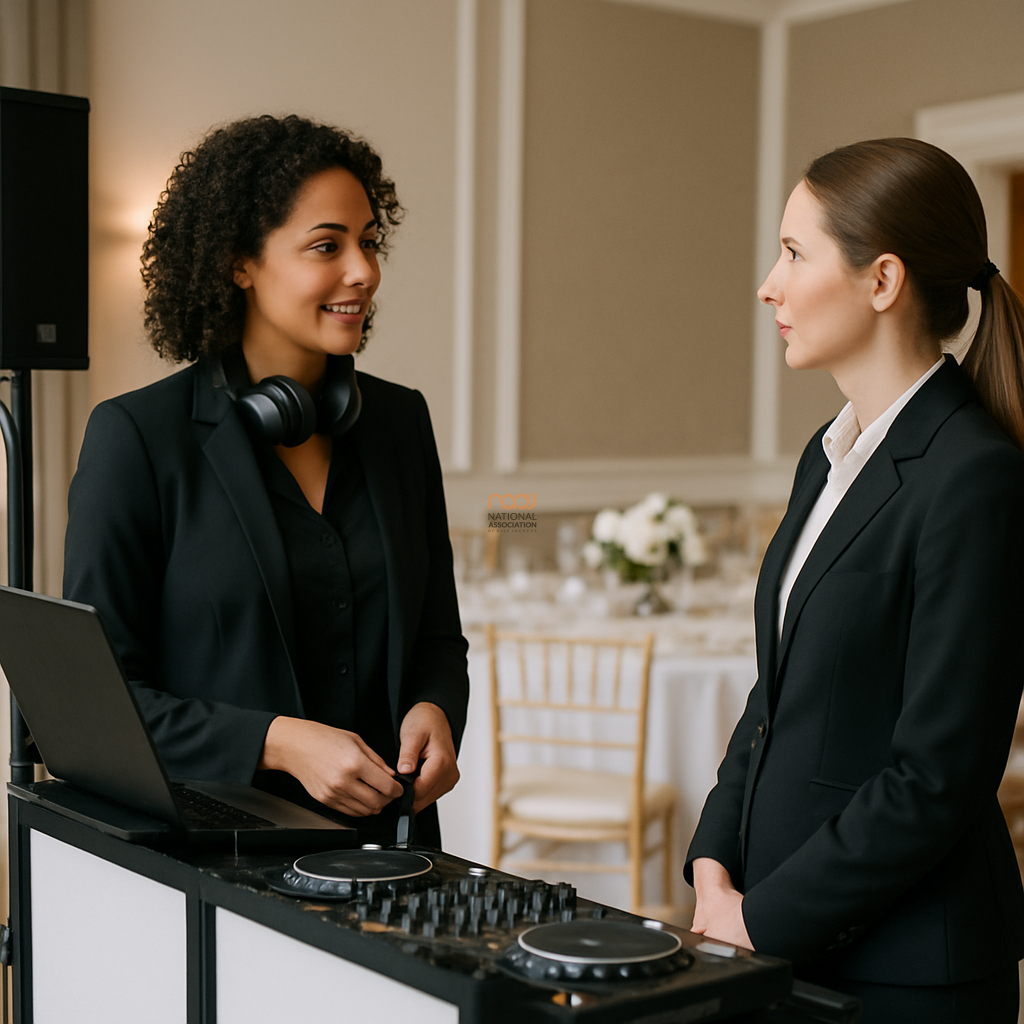
Professional DJ presentation starts long before the first song is played. For venues and clients, the first impression is often formed by how you reply to an enquiry, the way you write a quote, and whether you arrive prepared and easy to work with. In other words, professional DJ presentation is a business habit, not just a dress code.
This article focuses on one practical part of the NADJ cornerstone on Professional Standards for Mobile DJs in the UK: how to present yourself in a way that helps venues, private clients and event organisers trust you. It is written for working DJs across the UK, whether you perform in London, Manchester, Birmingham, Leeds, Bristol, Cardiff, Glasgow, Liverpool, Nottingham, Leicester, Coventry or anywhere else in England, Scotland, Wales and Northern Ireland.
Why presentation matters to venues and clients
Venues and clients are not only booking music. They are booking reliability, professionalism and low stress. A venue manager wants a DJ who will arrive on time, work safely, respect the site and keep the event on schedule. A private client wants someone who communicates clearly, looks the part and delivers what was promised.
That means presentation is judged across the whole booking journey. If your emails are vague, your quote is unclear or your arrival is disorganised, people may assume the same will be true on the night. On the other hand, a tidy process makes you easier to recommend and easier to rebook.
Start with the first contact
Professional DJ presentation begins with the first response. Reply promptly, use correct spelling, and keep your tone confident but friendly. Avoid slang, rushed one-line replies and copied-and-pasted messages that do not answer the actual enquiry.
Good first contact should quickly cover:
- your name and business name
- confirmation that you can help
- brief details of what is included
- what information you need next
- when they can expect a full quote
This simple approach shows that you are organised. It also reduces back-and-forth and helps clients feel looked after from the outset.
Make your written materials look and sound professional
Before anyone sees your setup, they may see your website, social media, quote, contract or email signature. Keep these materials consistent. Use a clear business name, a professional logo if you have one, and contact details that are easy to verify. If you use a mobile number, make sure voicemail and messaging are set up properly.
Your quote should be clear and readable. Avoid clutter and make sure the client can understand what they are paying for. A polished quote does not have to be fancy, but it should be accurate. Include event date, venue, timings, payment terms, and any important assumptions. If your service changes depending on the venue, explain that up front.
Where relevant, you can direct venue contacts to your listing in the NADJ Directory so they can find out more about your business. For DJs looking to connect with opportunities, the gig listings section may also be useful.
Look the part without overdoing it
Appearance is still part of professional DJ presentation, especially in weddings, corporate events and venue residencies. You do not need to dress like a celebrity act. However, you should look deliberate, clean and suitable for the event.
For many mobile DJs, smart dark clothing is a sensible default because it is neat and practical. For other events, the brief may suggest a different standard. The key point is to match the occasion. A black polo and trousers may suit a club bar, while a wedding or awards night may call for something more formal. When in doubt, ask the client or venue what they expect.
Personal grooming matters too. A professional look is undermined by creased clothing, worn footwear or visible signs that you have rushed from another job. Pack spare garments where possible, especially for multi-venue days.
Arrive prepared, calm and easy to work with
How you arrive says a great deal. Aim to be early enough to check access, unloading, parking and setup conditions without creating pressure for the venue team. If you are delayed, communicate immediately. Silence creates frustration very quickly.
When you arrive, introduce yourself clearly to the right person. Check where you should park, where you can load in, where your power source is, and who to speak to if there is a problem. This is especially important in hotels, country houses, city-centre venues and busy late-night spaces where multiple suppliers may be working at once.
Keep your language courteous and concise. Venue teams appreciate DJs who can fit in without drama. If a last-minute change is needed, handle it professionally and avoid complaining within earshot of staff or guests.
Let your setup reflect your standards
A tidy setup is part of your presentation. Cable management, clean equipment, sensible booth placement and a considered front-of-house appearance all help create a professional impression. Even if a client is not technically minded, they will notice whether your rig looks intentional or improvised.
That does not mean every booth must look expensive. It means your setup should look safe, orderly and fit for purpose. Keep bags, cases and packaging out of sight as soon as practical. Avoid visual clutter around the performance area. If you use lighting, make sure it enhances the room rather than overwhelms it.
And if you are presenting a public-facing professional image, make sure your wider business standards are consistent too. For example, some clients and venues may ask about insurance. You can refer them to NADJ guidance on DJ public liability insurance, but always encourage them to check current cover details and requirements directly before booking.
Communicate like a professional before, during and after the event
One of the strongest signals of professionalism is communication. Confirm the booking in writing. Reconfirm the key details near the event date. If the venue changes timings or the client adjusts the plan, acknowledge it clearly and update your notes.
During the event, avoid broadcasting confusion. If there is a schedule problem, solve it discreetly. If a client asks for something outside the brief, be honest about whether it is possible. Clear communication is better than agreeing to something you cannot deliver.
After the event, a short thank-you message can make a real difference. It is a small gesture, but it reinforces that you value the booking and the relationship. Many repeat bookings and referrals come from this kind of consistent behaviour rather than from flashy marketing alone.
Match your presentation to your membership and your goals
If you are building a business around professionalism, it helps to align your public image with the standards you want to be known for. NADJ membership options and support can be a useful part of that journey, particularly if you are developing your business or refining your service levels. You can explore the membership tiers explained page to understand the options available.
For DJs seeking resources, services and wider industry support, visit NADJ.co.uk and the member hub at hub.nadj.org.uk.
The practical test: would a venue recommend you?
A simple way to judge your own presentation is to ask one question: if a venue manager had to recommend a DJ to another client tomorrow, would your name come up? If the answer is yes, your presentation is likely doing its job. If the answer is uncertain, focus on the basics first: clear communication, reliable paperwork, neat appearance, punctuality and respectful conduct.
Professional DJ presentation is not about pretending to be something you are not. It is about making it easy for venues and clients to trust you. Do that consistently, and your reputation will grow for the right reasons.
AI transparency note
NADJ uses artificial intelligence as an editorial assistant. Articles produced through this publisher begin with a human-selected idea, source, brief or editorial direction, and AI may be used to research, structure, draft or improve the wording. AI does not set NADJ editorial policy or operate free-range: people acting for NADJ set the instructions and publishing framework, monitor the output and retain editorial responsibility.
Images used by NADJ may include stock photography or AI-generated visuals where appropriate. NADJ is volunteer-led and editorial time is limited; much of our available time is currently absorbed by governance and management, a substantial data audit and membership-system transfer, and planning 12 Tea & Test days across the UK. You can help strengthen member-led content by sending article ideas or completed submissions to hello@nadj.org.uk.









 Avtar Thethy
 Fabio Capozzi
 Alastair Craig
 Dave Mills