

Understanding professional DJ requirements is essential for any venue that regularly hosts discos, live music, weddings, private parties or corporate events. Yet in practice, many venues only see the finished performance, not the preparation, technical standards and operational planning that sit behind it. This is where industry associations can play a valuable role.
For working DJs across the UK, from London and Manchester to Glasgow, Cardiff, Birmingham, Leeds, Bristol and beyond, a clear, shared understanding between venue and performer can reduce confusion, improve safety and make events run more smoothly. Associations such as NADJ help explain what a professional DJ typically needs, why those needs matter, and where venue teams should check current rules and site-specific procedures.
Why venues sometimes misread DJ requirements
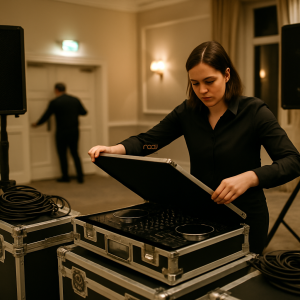
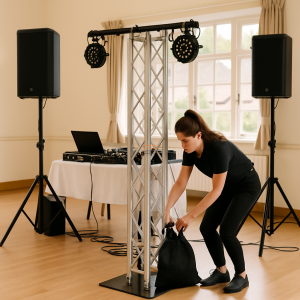
From the outside, a DJ setup may look simple: a controller, speakers, lighting and a microphone. In reality, a professional mobile DJ often arrives with multiple cases, cabling, backup items and a structured load-in process. That means venues need to think beyond “where will the DJ stand?” and consider practical points such as access, timing, power, noise management and post-event breakdown.
Misunderstandings often arise when a venue hosts a wide mix of events. A wedding in the Midlands may have very different expectations from a student night in Leeds or a corporate function in Nottingham. Likewise, smaller venues in places such as Coventry or Leicester may not have an in-house technical team, so they rely on the DJ to explain what is needed and when.
What a professional association can clarify
Industry associations help translate the DJ’s side of the conversation into venue-friendly guidance. They do this by setting out common expectations in plain English, backed by sector knowledge and experience from working DJs.
1. Access and load-in
One of the most overlooked professional DJ requirements is practical access. Does the venue have a step-free route? Is there a lift? Can a vehicle park close enough for unloading? Is there a time limit on loading in before guests arrive? Associations can encourage venues to ask these questions early, so the DJ can plan appropriately and avoid delays.
2. Power and technical provision
Most DJs need a reliable power supply and a sensible layout for equipment. While the exact requirement will vary depending on the setup, the venue should know whether the socket positions are suitable, whether extension leads are permitted, and whether there are any restrictions on cable routing. Associations can help venues understand that “plug in and go” is rarely a complete plan.
3. Sound management and event etiquette
Noise control is another area where clear guidance helps. A professional DJ will usually work within the venue’s rules, local expectations and event format. However, venues should also make sure they communicate any curfews, limiter systems, or restrictions on bass-heavy output in advance. This is especially relevant in city centres such as London, Liverpool and Bristol, where neighbouring premises may be close by.
4. Insurance and compliance questions
Venues often ask DJs about public liability insurance, equipment condition and related compliance matters. These are sensible questions, but they should be handled carefully and consistently. NADJ’s guide on DJ public liability insurance and cover requirements is a useful starting point, though venues and DJs should always check live policy wording and current requirements for themselves. Associations do not replace legal advice, and they should not be used as a shortcut for venue risk assessment.
How NADJ supports better venue understanding
NADJ’s broader purpose is to support professional standards across the DJ industry and to help DJs present themselves clearly and confidently. That matters because when a venue sees a DJ as a professional operator rather than just an entertainment supplier, the whole event benefits.
Our membership tiers help explain the different ways DJs engage with the association, while the NADJ directory gives venues a simple way to find DJs who are connected to a recognised industry body. For venue teams, that can be a practical first step when looking for a supplier who understands expectations around setup, communication and event delivery.
We also use our wider platform to share industry-focused resources through the NADJ Hub. That information can help both DJs and venues keep pace with best practice, especially when event formats, equipment standards and customer expectations continue to evolve.
What venues should ask before the event
Industry associations are most effective when their guidance is used in advance, not after a problem has already happened. A venue can make life easier for everyone by asking a few practical questions early:
- What equipment is being brought in?
- How much space is available for setup?
- What time can the DJ arrive and load out?
- Are there stairs, narrow corridors or parking restrictions?
- Is there a house sound limiter or noise policy?
- Are there any site rules about PAT status, insurance or public access?
These questions are not about creating bureaucracy. Rather, they help create a professional standard that protects the event experience for the client, guests and venue team.
Better communication means better events
Good venues already know that a successful event depends on more than a good playlist. It depends on planning, shared expectations and clear communication. When venues understand professional DJ requirements, they can support the DJ properly and avoid last-minute problems that disrupt the schedule.
That is why industry associations matter. They help set a common language, reduce assumptions and promote consistent standards across the UK, whether the event is in Scotland, Wales, Northern Ireland or England. They also encourage professionals to present information clearly, so venue staff can make informed decisions without guesswork.
For DJs, the lesson is equally clear: communicate early, document your needs, and point venues towards reliable guidance where needed. A well-prepared venue is more likely to welcome repeat bookings and recommend you to future clients.
If you are building your professional profile, it is also worth looking at practical kit advice such as our guide to the top 10 DJ headphones for professional mobile DJs in the UK, and the wider services available through NADJ Media Ltd. For DJs seeking work, the gig listings page may also be useful.
A practical standard that benefits everyone
In the end, professional DJ requirements are not about making events complicated. They are about making them predictable, safe and efficient. Industry associations help venues understand what is needed, why it matters and how to work with DJs in a constructive way.
That shared understanding is good for business, good for customer satisfaction and good for the reputation of the UK DJ sector as a whole.
AI transparency note
NADJ uses artificial intelligence as an editorial assistant. Articles produced through this publisher begin with a human-selected idea, source, brief or editorial direction, and AI may be used to research, structure, draft or improve the wording. AI does not set NADJ editorial policy or operate free-range: people acting for NADJ set the instructions and publishing framework, monitor the output and retain editorial responsibility.
Images used by NADJ may include stock photography or AI-generated visuals where appropriate. NADJ is volunteer-led and editorial time is limited; much of our available time is currently absorbed by governance and management, a substantial data audit and membership-system transfer, and planning 12 Tea & Test days across the UK. You can help strengthen member-led content by sending article ideas or completed submissions to hello@nadj.org.uk.




 Avtar Thethy
 Fabio Capozzi
 Alastair Craig
 Dave Mills