
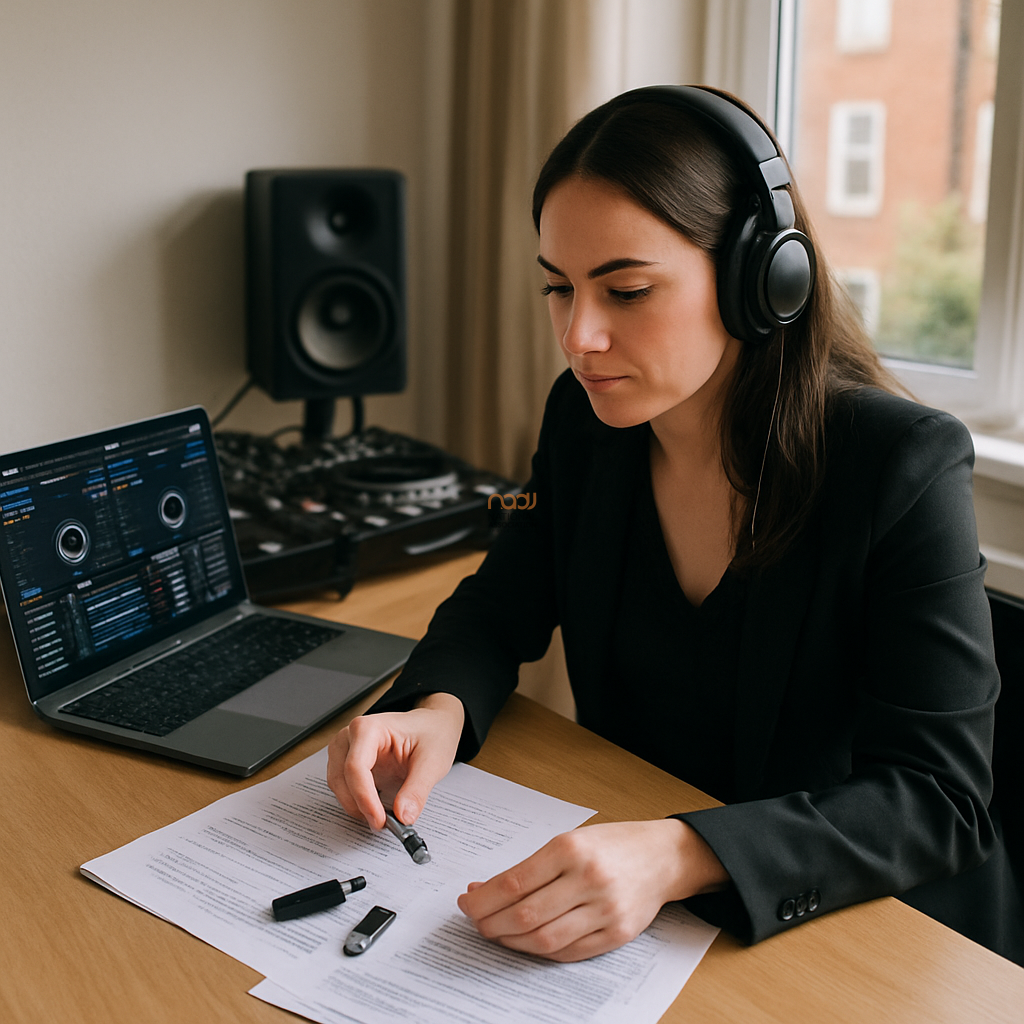
For many working DJs, Loopmasters and sample libraries are the point where “playing music” starts to overlap with “making music”. A well-chosen loop pack, vocal phrase or drum toolkit can transform a set, help with edits and intros, and even support original productions for mixes, promos or social content. But once you start building new material from samples, you are no longer dealing only with track selection. You are moving into producer territory, and that brings extra copyright and licensing questions.
This satellite article sits alongside NADJ’s cornerstone guide to Legal Sources of Music for DJs in the UK. If you have not read that page yet, it is the best place to start for the wider picture of lawful music sourcing. Here, we are focusing on one specific area: what happens when sample packs, loops and construction kits become part of your DJ workflow.
Why sample libraries matter to DJs
Sample libraries are popular because they are fast, affordable and creative. In practice, they can help with:
- creating custom intros, outros and transitions;
- making radio edits or social clips feel more polished;
- building mash-ups or hybrid DJ/live sets;
- adding percussion, risers, FX and vocals to your own productions;
- building branded audio for online content, mixes and promo videos.
That flexibility is exactly why many DJs in the UK, from London and Birmingham to Glasgow, Cardiff and Belfast, end up using them. The same applies whether you are mobile, club-focused or wedding-based. However, once you start releasing, distributing or publicly performing your own edited material, the details of the licence matter.
Not every “royalty-free” pack is the same
One of the biggest misunderstandings is that “royalty-free” means “anything goes”. It does not. In most cases, it means you do not pay ongoing royalties for the use allowed by the licence, provided you stay within the terms. Those terms can differ between suppliers and between products from the same supplier.
Before using any pack, check the EULA or licence wording carefully. In particular, look for rules on:
- commercial use;
- broadcast and streaming use;
- distribution of edits, remixes or derivative works;
- uploading content to social platforms;
- reselling or sharing individual samples;
- using sounds in items that are intended to be standalone products.
Some libraries are designed for broad creative use. Others are restricted in ways that are easy to overlook. A loop that is fine for a private practice edit may not be fine if you later upload a full mix to YouTube, issue a promotional reel, or send a polished mix to a venue, event client or radio outlet.
When DJs cross into producer territory
There is no single legal line that says “at this point you are a producer”. In practical terms, you are drifting into producer territory when you begin creating a new audio work that relies on sampled material rather than simply playing recorded tracks. That may include bootleg edits, mash-ups, re-works, background beds for video, or original tracks assembled from loops.
That is not a problem in itself. In fact, many successful DJs in the UK do exactly this. The important point is to recognise that the rules can change once you move from DJ playback to content creation. If you are creating something new from sample libraries, you should treat it as a production workflow, not just a library search.
Practical examples
A few common scenarios help to show the difference:
- Playing a purchased track in a set: ordinary DJ use, subject to venue and performance context.
- Using a drum loop to build a mix intro for your own channel: likely within producer-style use, so the licence wording matters.
- Uploading a mash-up built from sample vocals and looped percussion: this may be allowed, limited, or prohibited depending on the pack.
- Passing a constructed intro to another DJ or a client: check whether redistribution is permitted.
If in doubt, go back to the supplier’s terms rather than relying on forum advice or assumptions from other products.
What to check before you use any pack
NADJ recommends a simple workflow for any DJ working with samples and loops:
- Identify the source. Save the supplier name, pack title and purchase record.
- Read the licence. Do not rely on marketing language alone.
- Check intended use. Private rehearsal, live performance, social content and commercial release may be treated differently.
- Keep evidence. If a supplier later changes terms or removes a pack, having your receipt and licence details helps.
- Separate creative tools from finished assets. A sample pack is not the same as a finished track in your library.
This is especially relevant for DJs working across multiple income streams. A DJ in Leeds may use the same loop pack for a club remix, a wedding montage, a TikTok clip and a client highlight reel. Those uses can trigger different permissions, even if the source material is the same.
How this links to insurance, business and professionalism
Sample use is often discussed as a copyright issue, but it is also a professionalism issue. If you are presenting yourself as a working DJ or content creator, clients will expect you to know where your material came from and whether you are entitled to use it. Good record-keeping is part of running a safer business.
That matters alongside the other basics of the trade, including DJ public liability insurance in the UK, the right membership level for your stage of business, and keeping your operation visible through trusted industry networks. If you are building your presence, NADJ’s membership tiers explained page is a useful next step. You can also use the NADJ directory to connect with other professionals, and the gig listings area to keep an eye on opportunities across the UK.
The bottom line for UK DJs
Loopmasters and sample libraries are powerful tools, and they have a legitimate place in modern DJ culture. Used properly, they can help you sound sharper, work faster and develop your own identity. Used carelessly, they can create avoidable rights problems that are easy to miss until a platform, client or rights-holder queries your content.
The safest approach is simple: buy from reputable sources, read the licence terms, keep proof of purchase, and treat every sample-based edit as a creative work that may have its own rules. If your workflow is moving from DJing into production, that is not a problem — but it is a shift worth recognising. For the wider legal landscape, return to the cornerstone guide on legal sources of music for DJs in the UK.
AI transparency note
NADJ uses artificial intelligence as an editorial assistant. Articles produced through this publisher begin with a human-selected idea, source, brief or editorial direction, and AI may be used to research, structure, draft or improve the wording. AI does not set NADJ editorial policy or operate free-range: people acting for NADJ set the instructions and publishing framework, monitor the output and retain editorial responsibility.
Images used by NADJ may include stock photography or AI-generated visuals where appropriate. NADJ is volunteer-led and editorial time is limited; much of our available time is currently absorbed by governance and management, a substantial data audit and membership-system transfer, and planning 12 Tea & Test days across the UK. You can help strengthen member-led content by sending article ideas or completed submissions to hello@nadj.org.uk.









 Avtar Thethy
 Fabio Capozzi
 Alastair Craig
 Dave Mills