
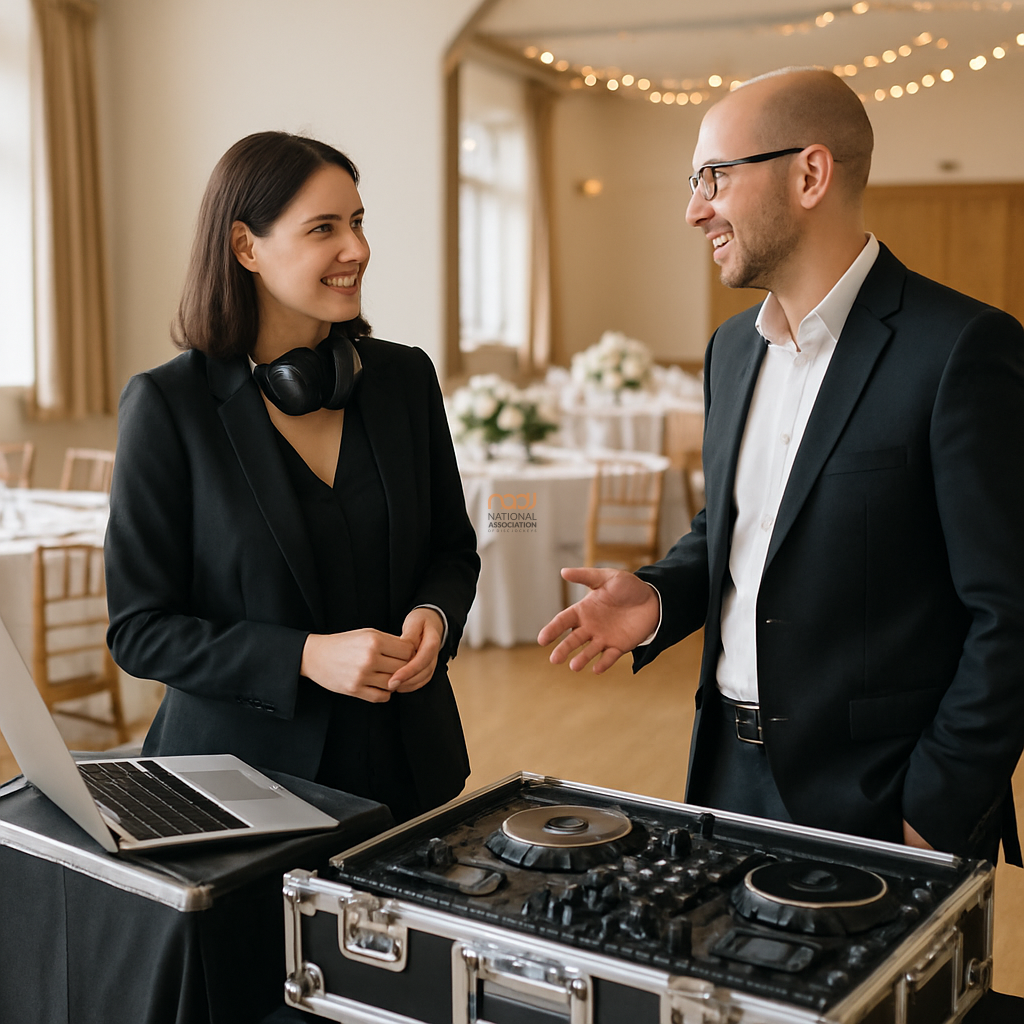
For UK DJs, real-world incident learning is one of the most useful forms of professional development available. It turns an awkward setup, a venue issue, a damaged lead, a difficult client conversation or a crowd-management problem into something the wider DJ community can learn from. That matters whether you work in London, Manchester, Birmingham, Leeds, Bristol, Cardiff, Glasgow, Liverpool, Nottingham, Leicester, Coventry or anywhere else across England, Scotland, Wales and Northern Ireland.
NADJ has always existed to support working DJs with practical, relevant guidance. That includes helping the industry raise standards, share experience and make better decisions. Recording and sharing real-world incidents, in a careful and anonymous way, would strengthen that mission. It would also give members and non-members alike a clearer view of the issues that actually happen on the ground, rather than relying only on theory or hearsay.
Why incident learning matters for working DJs
Most DJ problems are not dramatic headline events. They are smaller, repeatable issues: a guest tripping over a cable, a van arriving too late for load-in, a venue refusing the expected access route, a client changing the brief at the last minute, or a speaker fault that could have been caught earlier. These situations may not make a formal report elsewhere, but they can still have real consequences for safety, reputation and the smooth running of a booking.
When those events are shared properly, other DJs can plan better. They can check their kit more carefully, speak to venues earlier, adjust their set-up time, carry the right spares, or clarify expectations in writing. In other words, incident learning converts experience into prevention.
What NADJ could capture
A useful incident-learning approach does not need to be complicated. In fact, it works best when it is simple, consistent and easy to use. NADJ could invite DJs to submit short, anonymised accounts that explain:
- what happened
- the type of event or venue
- what went well
- what could have been done differently
- what practical lesson other DJs should take away
The key is to avoid blame. The point is not to name and shame a venue, client or fellow supplier. It is to understand the conditions that led to the issue and share the learning in a way that helps others. That approach is especially important in a sector built on relationships, referrals and repeat work.
How shared learning helps the whole industry
When DJs only hear about incidents informally, the same mistakes can happen again in different parts of the UK. A problem seen by a mobile DJ in the Midlands may be exactly the same issue that affects a wedding DJ in Cardiff or a corporate DJ in Glasgow a month later. Shared learning breaks that cycle.
It also helps newer DJs. Someone starting out may not yet know what to ask a venue about access, noise limits, power, parking or timing. Reading about real incidents makes those questions feel concrete rather than optional. For experienced DJs, it is a reminder that even a long career does not remove risk. Good habits still matter.
There is another benefit too: incident learning reinforces professionalism. A DJ who can explain how they responded to an issue, what they changed afterwards and how they now prevent repetition is demonstrating judgement. That is valuable to clients, venues and fellow professionals.
What to share, and what to protect
Any NADJ incident-sharing process would need sensible boundaries. Personal data, venue-sensitive details and anything that could unfairly identify individuals should be removed or anonymised. Likewise, posts should avoid speculation. If the facts are incomplete, say so clearly.
There is also an important caveat around legal, insurance and regulatory issues. If an incident may involve injury, loss, safeguarding concerns, licensing matters or a complaint, DJs should follow the correct live procedures for their situation and seek appropriate professional advice where needed. NADJ can help highlight good practice, but it should not present general guidance as a substitute for case-specific advice.
Where NADJ can make this practical
NADJ already offers resources that support a more informed working life. Members can use the NADJ Hub for guidance and industry information, while the NADJ directory helps people connect with professional DJs and related services. If a DJ is reviewing their wider business setup, membership tiers explained is a useful starting point for understanding what level of support suits their needs.
Incident learning could sit naturally alongside those resources. For example, a short case study about sound issues might link to practical kit advice such as the top DJ headphones guide, while a post about the importance of public-facing professionalism could complement guidance on DJ public liability insurance. If a DJ is looking to build a stronger online presence or improve how they present themselves to clients, they may also find value in services via NADJ Media Ltd.
A culture of learning, not blame
The most effective industry bodies do not just publish rules; they help members understand how those rules apply in the real world. That is why recorded incident learning would be so valuable. It creates a shared professional memory. It shows that problems are manageable. And it helps DJs move from reacting to situations to anticipating them.
That culture would benefit the entire UK DJ community, from mobile weddings and private parties to corporate work and club events. It would also support better conversations between DJs, venues and suppliers. Over time, the result would be a more resilient, better-informed industry.
Conclusion
NADJ should record and share more real-world incident learning because it is practical, credible and genuinely useful. It gives working DJs insights they can apply immediately, while strengthening professionalism across the trade. Done well, it would not add bureaucracy; it would add value.
If you are a DJ with a useful lesson from a real gig, consider whether it could help someone else. The right story, shared in the right way, may prevent another problem before it starts. That is exactly the kind of knowledge exchange a modern DJ association should encourage.
AI transparency note
NADJ uses artificial intelligence as an editorial assistant. Articles produced through this publisher begin with a human-selected idea, source, brief or editorial direction, and AI may be used to research, structure, draft or improve the wording. AI does not set NADJ editorial policy or operate free-range: people acting for NADJ set the instructions and publishing framework, monitor the output and retain editorial responsibility.
Images used by NADJ may include stock photography or AI-generated visuals where appropriate. NADJ is volunteer-led and editorial time is limited; much of our available time is currently absorbed by governance and management, a substantial data audit and membership-system transfer, and planning 12 Tea & Test days across the UK. You can help strengthen member-led content by sending article ideas or completed submissions to hello@nadj.org.uk.









 Avtar Thethy
 Fabio Capozzi
 Alastair Craig
 Dave Mills