
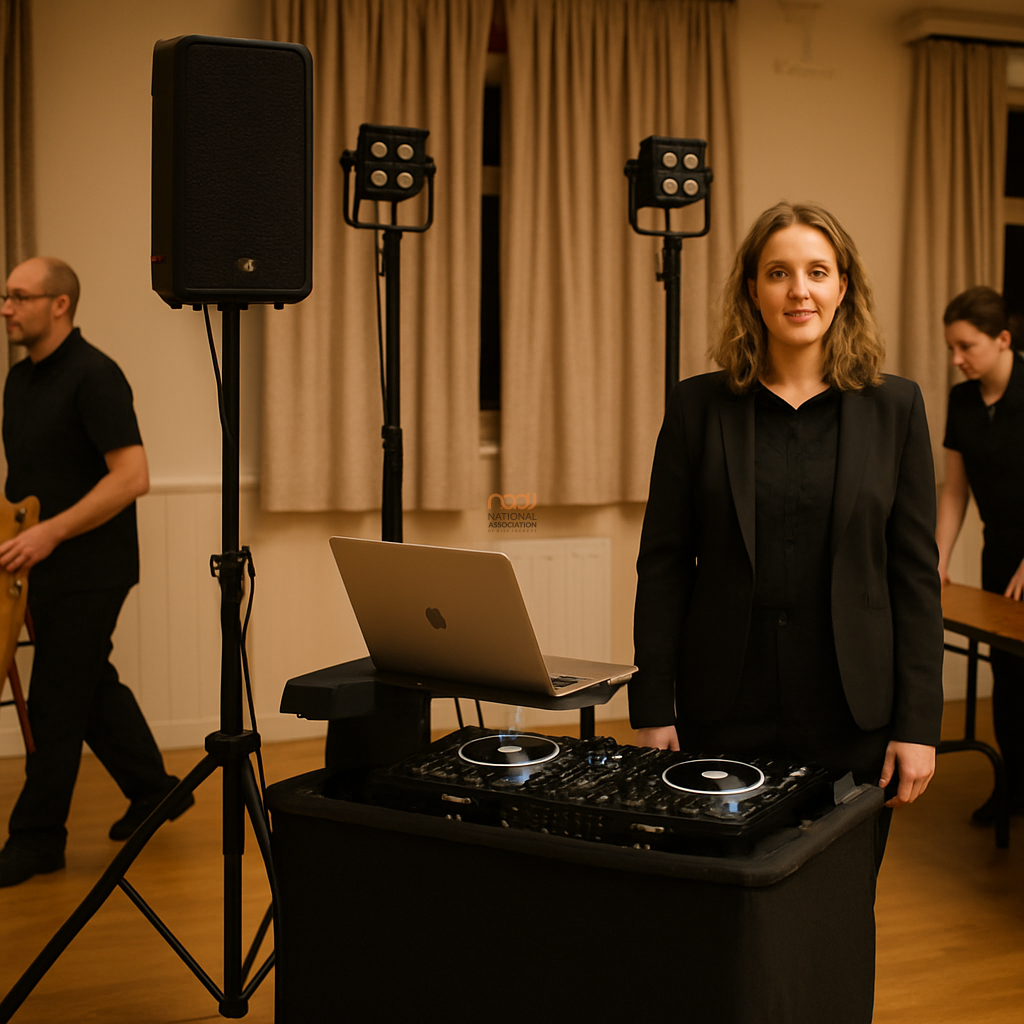
Wedding DJs and venue turnarounds are now a routine part of the UK wedding market. In many venues, the room that hosted the ceremony, meal or drinks reception must be quickly transformed for an evening celebration, which means DJs often work alongside staff, caterers and venue managers in a busy, changing environment.
That overlap can be handled smoothly, but only if everyone understands the plan. The aim is simple: keep the turnaround efficient, protect guests and staff, and make sure the DJ can continue working safely without creating avoidable hazards. For NADJ members, this is part of the wider professional standard we encourage across the industry: prepared, reliable and considerate working practices.
Why venue turnarounds need extra care
During a turnaround, the room is often crowded with people moving tables, clearing glassware, rolling in linen, laying dancefloor sections or shifting décor. At the same time, the DJ may still be playing background music, running announcements or preparing for the first dance. That creates a real risk of blocked walkways, trip hazards, accidental unplugging and confusion over who is responsible for which area.
The pressure is higher in venues with tight schedules, particularly in busy cities such as London, Manchester, Birmingham, Leeds, Bristol, Cardiff, Glasgow, Liverpool, Nottingham, Leicester and Coventry. The same applies across the Midlands, England, Scotland, Wales and Northern Ireland: the more people working in the room, the more important clear boundaries become.
Start with a pre-agreed plan
The best time to manage a turnaround is before the wedding day. If possible, ask the venue what their reset process looks like and where they want your setup positioned. Confirm access times, unloading arrangements, parking, lift access and whether your equipment will need to be moved before staff begin rearranging the room.
It also helps to establish a named contact. A venue manager, events coordinator or duty supervisor can make decisions quickly if the schedule changes. When you arrive, check in with that person and confirm the expected handover points. A five-minute conversation can prevent a lot of friction later.
Keep cables, cases and bags out of the path
Most turnaround issues are not dramatic; they are ordinary hazards that develop because the room is busy. Loose mains leads, audio cables, laptop bags, flight cases and adapter boxes should never be left where staff need to carry furniture or where guests may be walking. Use cable covers where appropriate, tape where suitable for the surface, and keep a compact footprint.
If you need to leave gear temporarily in place, make sure it is stable and clearly visible. This is especially important when children are present or when guests are moving between the bar, toilets and dancefloor. A tidy setup is not just professional; it reduces the likelihood of accidents.
Protect your own working area
Venue staff have their own job to do, and DJs should not assume that equipment will be protected automatically. During a room reset, cases can be knocked, drinks can be carried nearby and chair stacks can shift unexpectedly. Position your booth so you have a safe working lane and a clear view of anyone approaching your rig.
Where possible, avoid leaving valuable items unattended in open view. A laptop, controller, microphone and tablet should be supervised, especially during busy moments. If you need a break, arrange it with the venue so someone knows your position and your gear is not left vulnerable.
Communicate early and calmly
The best turnarounds are quiet and coordinated. If staff need access behind your booth, or if you need a few extra minutes before they move a particular item, say so early and politely. Clear communication matters more than rank or title. Venue teams usually want the same outcome as the DJ: a smooth, stress-free evening.
Keep your tone professional even if the room becomes hectic. A calm approach is particularly important when timings slip, because guests take their cues from the people around them. If you remain composed, the event is more likely to stay under control.
Think about guest movement as well as staff movement
During a reset, guests may leave their seats to visit the bar, check their table plans or step outside for fresh air. Children may wander, and relatives may try to help by moving items themselves. A good DJ watches the room as a whole, not just the booth.
If your microphones are still live, be careful with announcements. A brief, clear message about where guests should sit or wait can help. Just avoid turning a practical update into a long interruption. The event is still about the couple, not the logistics.
Safety first: what DJs should check
Every venue is different, so use judgement rather than assumptions. Check that your equipment is stable, your ventilation is adequate and your working area is not being compressed by moving furniture. If anything creates an immediate hazard, pause and resolve it before continuing.
Insurance, licensing and health and safety responsibilities can vary depending on the venue and the nature of the event. NADJ recommends that DJs check live details with the venue and their own insurers where relevant. For guidance on DJ public liability insurance, see our explainer here: DJ Public Liability Insurance UK. The right cover depends on your circumstances, so always confirm what is currently required.
Use the right kit for a compact, mobile setup
Venue turnarounds are easier when your kit is compact, reliable and easy to reposition. Lightweight cases, tidy power management and well-organised accessories reduce clutter and speed up setup and breakdown. The same logic applies to monitoring: if you rely on headphones while working in a noisy room, choosing the right model can make a real difference. Our guide to top DJ headphones for professional mobile DJs may be useful when reviewing your kit list.
If you are reviewing your wider business setup, it may also be worth looking at the support available through NADJ membership tiers, the NADJ directory, and the wider resources on NADJ Hub. For members seeking work, the gig listings area can also be relevant.
A practical standard for a professional industry
Wedding DJs and venue turnarounds are not unusual, and they do not need to be stressful. With planning, tidy cabling, respectful communication and an awareness of changing room conditions, you can keep working safely while the venue resets around you.
That professionalism reflects well on the whole mobile DJ sector, from the UK’s major cities to smaller local markets. It also supports the broader aims of NADJ: raising standards, sharing useful working guidance and helping DJs run safer, better-organised businesses. If you are strengthening your operation further, you may also find services from NADJ and NADJ Media Ltd useful as part of your wider business development.
AI transparency note
NADJ uses artificial intelligence as an editorial assistant. Articles produced through this publisher begin with a human-selected idea, source, brief or editorial direction, and AI may be used to research, structure, draft or improve the wording. AI does not set NADJ editorial policy or operate free-range: people acting for NADJ set the instructions and publishing framework, monitor the output and retain editorial responsibility.
Images used by NADJ may include stock photography or AI-generated visuals where appropriate. NADJ is volunteer-led and editorial time is limited; much of our available time is currently absorbed by governance and management, a substantial data audit and membership-system transfer, and planning 12 Tea & Test days across the UK. You can help strengthen member-led content by sending article ideas or completed submissions to hello@nadj.org.uk.









 Avtar Thethy
 Fabio Capozzi
 Alastair Craig
 Dave Mills