
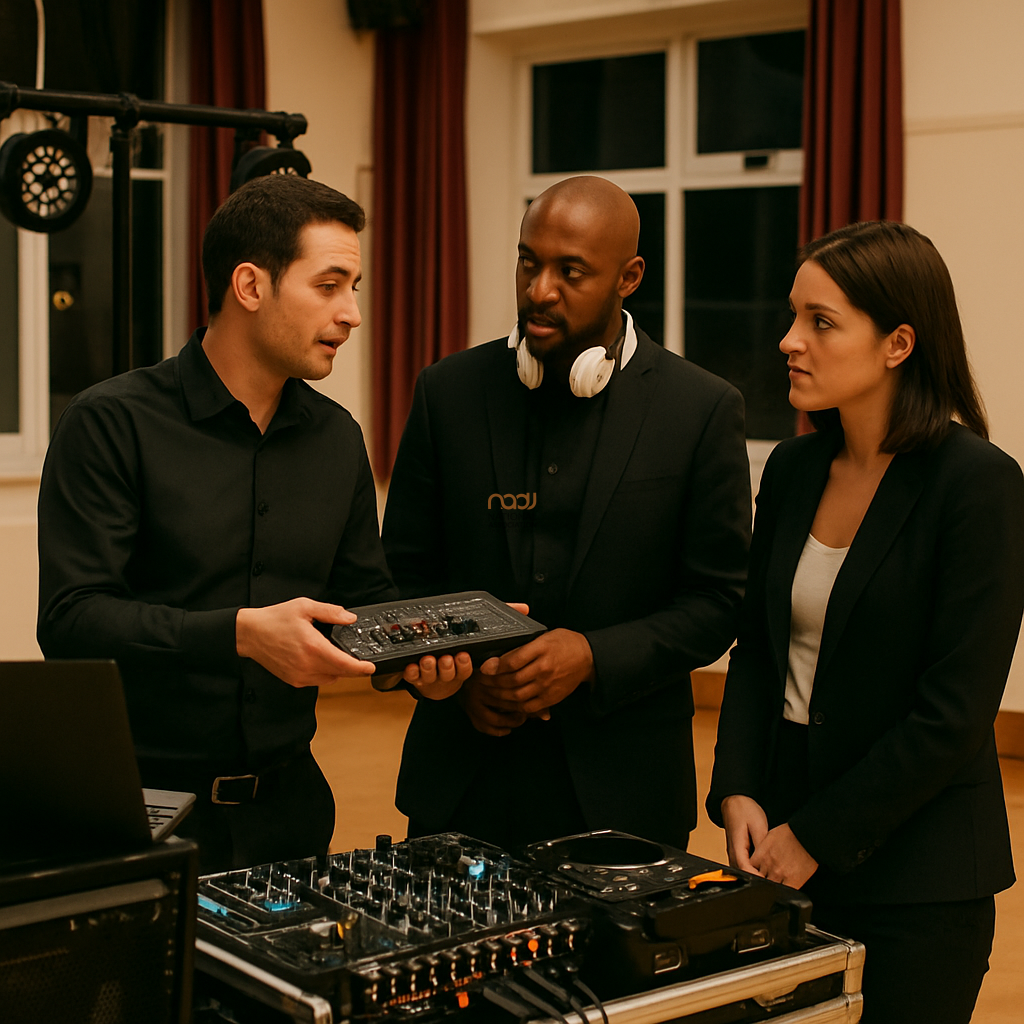
Useful peer review for mobile DJs is not about applause, brand loyalty or scoring points online. It is about giving other working DJs information they can actually use. In a trade that spans weddings in Cardiff, corporate work in London, birthday parties in Birmingham and community events across Scotland, England, Wales and Northern Ireland, the best feedback is practical, specific and honest.
That matters whether you are comparing lighting, microphones, headphones, software, business tools or even venue handling. A good peer review should help another DJ decide what to buy, what to try, what to avoid and what to keep in their kit. Anything less is just noise.
What peer review should do for a mobile DJ
At its best, peer review helps you make better decisions before you spend money or commit to a workflow. It should answer simple questions: Who is this for? What problem does it solve? Where does it genuinely work well? Where does it fall short?
For example, a review of DJ headphones is more useful if it explains comfort over a four-hour set, isolation in a loud function room, durability in a flight case and whether the cable or earcups feel suitable for regular travel. That is far more valuable than simply saying they “sound great”. If you want a benchmark for the kind of detail that helps, NADJ’s guide to top DJ headphones for professional mobile DJs in the UK is a useful reference point for what working DJs tend to need from a product discussion.
The best peer reviews are built on context
Context is everything. A product that suits a club resident DJ in Manchester may be a poor match for a solo mobile DJ working weddings in the Midlands. Likewise, equipment that is ideal for one person’s setup may be awkward in a busy van, a compact booth or a marquee in wet weather.
So, a useful review should state:
- the type of work the DJ does most often
- the size and style of events they play
- the rest of the setup the item sits alongside
- whether the review is based on a first impression, a season’s use or long-term experience
Without that context, even a genuine opinion can mislead. A speaker that is “fine for small rooms” may be exactly what a children’s party DJ in Leicester needs, but nowhere near enough for a larger wedding reception or corporate event in Glasgow.
What makes feedback useful rather than promotional
Good peer review sounds measured, not theatrical. It separates manufacturer claims from what the reviewer has actually seen in day-to-day work. It avoids “game-changer” language unless there is a clear reason why. It also admits uncertainty where needed.
Useful feedback tends to include:
- clear pros and cons
- examples from real gigs
- specific observations on reliability, setup time and usability
- any hidden costs, accessories or learning curve
- comparison with similar products or alternatives
That last point is important. A review that says a controller is good means very little on its own. A review that says it is good for DJs who want a compact backup rig, but less suitable for those who rely on larger jog wheels or extensive standalone features, is much more useful.
How to spot weak peer reviews
Not every review deserves equal weight. Watch for three common problems. First, there is the “new toy” review: overly positive, written too soon, and based on excitement rather than evidence. Second, there is the brand-fan review: enthusiastic but unwilling to mention flaws. Third, there is the one-line dismissal: it tells you what the person liked or disliked, but not why.
As a working DJ, you need detail. You need to know whether a microphone handled speech clearly at a noisy event, whether a bag protected the kit during transport, or whether a lighting system is realistic for a one-person setup. If the reviewer does not explain the circumstances, their opinion should be treated cautiously.
Why peer review matters beyond equipment
Peer review is not only for kit. It also helps with business decisions. For example, feedback from experienced DJs can help you judge whether a supplier is responsive, whether a booking platform is worth using, or whether a certain admin process saves time in practice.
That is why forums, industry groups and directories still matter. NADJ’s wider network, including the NADJ directory, can help DJs find fellow professionals, while the NADJ Hub supports members looking for practical industry information. For those building bookings and visibility, the gig listings area can also be a useful place to understand the shape of the market.
How to give a better peer review yourself
If you are reviewing gear or a service, keep it simple and useful. Start with what you used it for. State how long you have used it. Then describe what happened in practice.
A strong structure is:
- What the item or service is
- What type of DJ work it was used for
- What worked well
- What did not work so well
- Who it suits best
- What you would choose instead, if relevant
That approach is especially helpful for mobile DJs in busy areas such as London, Manchester, Leeds, Bristol, Liverpool, Nottingham, Coventry and beyond, where working conditions can vary widely from venue to venue.
Balance, not hype
A useful peer review is balanced enough to trust. It does not pretend every product is perfect, and it does not assume every criticism is a deal-breaker. It helps another DJ decide whether a weakness matters in their own situation.
That balanced approach also supports responsible buying and better professionalism across the sector. If you are checking whether your public-facing business information is in order, or if you are comparing services and membership options, it is worth understanding the wider support available, including NADJ membership tiers and the association’s public-facing services at nadj.co.uk. If you are reviewing operational requirements such as public liability insurance, always check live details carefully; our guide on DJ public liability insurance requirements is a useful starting point, but it should not replace up-to-date provider information or professional advice.
The bottom line
For mobile DJs, the best peer review is specific, grounded and honest. It tells you what something is like in real work, not just in theory. It recognises that a product may suit one style of DJing in one part of the UK and be less suitable elsewhere. Most of all, it respects the time and money of the reader.
That is what useful peer review looks like: a tool for better decisions, better purchases and a stronger DJ community.
AI transparency note
NADJ uses artificial intelligence as an editorial assistant. Articles produced through this publisher begin with a human-selected idea, source, brief or editorial direction, and AI may be used to research, structure, draft or improve the wording. AI does not set NADJ editorial policy or operate free-range: people acting for NADJ set the instructions and publishing framework, monitor the output and retain editorial responsibility.
Images used by NADJ may include stock photography or AI-generated visuals where appropriate. NADJ is volunteer-led and editorial time is limited; much of our available time is currently absorbed by governance and management, a substantial data audit and membership-system transfer, and planning 12 Tea & Test days across the UK. You can help strengthen member-led content by sending article ideas or completed submissions to hello@nadj.org.uk.









 Avtar Thethy
 Fabio Capozzi
 Alastair Craig
 Dave Mills