
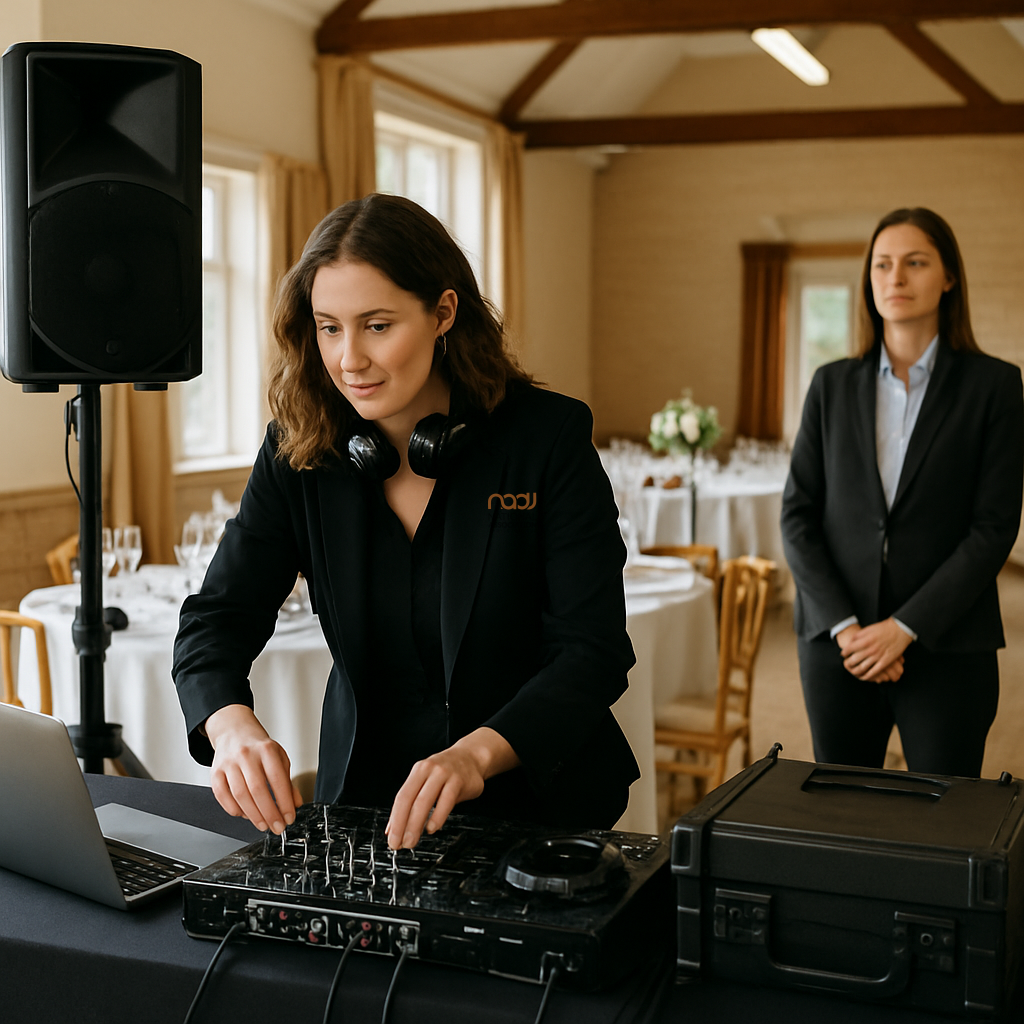
For many working DJs, working with overly sensitive sound limiters is less about volume and more about control. A limiter that reacts too quickly can interrupt a set in venues from London and Birmingham to Glasgow, Cardiff and Belfast, especially where the system is already installed and the DJ has little say over the room. The good news is that a careful approach to gain staging can make a real difference.
This satellite guide focuses on one practical area: how to set up your DJ system so it is less likely to trigger a limiter unnecessarily. If you want the broader overview, read the NADJ cornerstone article here: Working with Overly Sensitive Sound Limiters: A Practical Guide for UK DJs.
Why gain staging matters more than master volume
Many DJs assume the master fader is the main risk point. In reality, the limiter may be reacting to sudden peaks much earlier in the signal path. That means a kick drum, a vocal drop, a hot controller output, or an overdriven mixer channel can trip the system even when your overall level looks reasonable.
Good gain staging aims to keep every part of the chain at a sensible level. Your controller, mixer, media player, microphone input, booth output and any external processor should all be balanced so none of them are forced to work too hard. In practice, that usually means avoiding red lights, avoiding clipped inputs, and leaving headroom wherever possible.
Start with the source, not the speakers
Before you touch the venue system, check your own output levels. Set channel gains so the loudest tracks you expect to play sit comfortably below clipping. If you use multiple music sources, test them all. One USB drive may be mastered much hotter than another, and streaming sources can vary too.
It also helps to standardise your own setup before the event. A consistent controller or mixer configuration makes it easier to spot problems quickly at weddings, corporate events and club nights across the Midlands, Manchester, Leeds or Liverpool. If you are part of a DJ team, agree a shared approach so each operator is not starting from scratch.
Practical checks before doors open
- Play a few tracks with very different dynamics, including one with a strong bass line.
- Check microphone levels separately; spoken word can peak faster than music.
- Watch for clip indicators on the controller, mixer and amplifier chain.
- Listen for harshness, pumping or sudden compression that may suggest the limiter is already being worked hard.
- Keep one or two test tracks ready that you know well, so you can judge level changes accurately.
Ask the right questions in advance
The best time to manage a limiter is before you arrive. When you are booking or confirming an event, ask the venue or client a few direct questions: Is there a sound limiter? Is it tied to the mains, the amplifier rack or the room system? Has it been recalibrated recently? Is there a meter or warning light visible to the DJ?
These details matter because not all limiters behave in the same way. Some respond to short peaks, while others measure sound over time. Some are fixed at a level that suits live speech but not a packed dancefloor. In England, Scotland, Wales and Northern Ireland, venue arrangements vary widely, so do not assume last week’s setup will be the same next month.
If you work regularly in venues that use limiters, keep notes in your own booking records. A short log of what happened in a specific room can save time the next time you play there.
Use the room, not just the rig
A limiter is often triggered by overall energy in the room, not just the headline number on the mixer. That is why placement and crowd management are part of the technical solution.
For example, if your speakers are firing directly into a reflective wall in a Leeds basement venue or a smaller Bristol function room, the perceived loudness may increase quickly. A modest angle change, a lower stand height, or moving the cabinets away from corners can reduce the sense of volume without wrecking the mix.
Similarly, avoid fighting the room with unnecessary EQ boosts. Heavy bass lift can eat headroom and make a limiter react earlier. Instead, start flat, make small adjustments, and let the system do less work.
Build a limiter-friendly performance style
Not every crowd needs the same approach. If you know a venue has a sensitive limiter, pace your set so you are not forcing every transition to hit hard. Use musical contrast, not just sheer level, to create impact. A well-timed breakdown or a vocal-led section can feel bigger than a louder drop.
It also helps to keep a closer eye on the microphone. Toasting, announcements and crowd work often cause sudden peaks, especially if a guest speaker grabs the mic unexpectedly. Set a safe mic level early and resist the temptation to turn it up repeatedly during the night.
Remember: the aim is not to defeat the limiter. It is to deliver a professional performance that respects the venue and keeps the event moving.
What to do if the limiter still reacts
If the limiter is still triggering, reduce the most likely cause first. That may be one hot channel, a low-end EQ boost, or the master output from your controller. If needed, lower the overall level slightly and communicate calmly with the venue contact. A measured response is usually better than repeated guesswork.
Where possible, ask for a quick check of the venue system rather than repeatedly changing your own settings in the dark. Sometimes the issue is not your DJ rig at all, but a system that has been set too conservatively for the room and event type. That said, any adjustment to venue equipment should be handled by the appropriate person.
Work professionally and keep your records up to date
Professional preparation is part of running a sustainable DJ business. If you are reviewing your wider setup, it may also be worth checking your DJ public liability insurance requirements, updating your membership level via membership tiers explained, or using the NADJ directory to strengthen your visibility. For members looking for further professional tools and resources, see the NADJ Hub, the main site at nadj.co.uk, and current work opportunities on the gig listings.
Sound limiters are a fact of life in many UK venues, from city-centre hotels in Nottingham and Coventry to community halls in Wales and Scotland. The DJs who handle them best are usually the ones who prepare early, test carefully, and stay adaptable on the night.
AI transparency note
NADJ uses artificial intelligence as an editorial assistant. Articles produced through this publisher begin with a human-selected idea, source, brief or editorial direction, and AI may be used to research, structure, draft or improve the wording. AI does not set NADJ editorial policy or operate free-range: people acting for NADJ set the instructions and publishing framework, monitor the output and retain editorial responsibility.
Images used by NADJ may include stock photography or AI-generated visuals where appropriate. NADJ is volunteer-led and editorial time is limited; much of our available time is currently absorbed by governance and management, a substantial data audit and membership-system transfer, and planning 12 Tea & Test days across the UK. You can help strengthen member-led content by sending article ideas or completed submissions to hello@nadj.org.uk.









 Avtar Thethy
 Fabio Capozzi
 Alastair Craig
 Dave Mills