

Working with wedding photographers is an important part of delivering a polished wedding reception. For UK DJs, the relationship is usually straightforward: when you help the photographer do their job well, you also help the couple, the venue team and the overall pace of the evening.
This is not about taking over another supplier’s role. It is about understanding where your responsibilities overlap, and where a small amount of coordination can prevent delays, missed moments or avoidable stress. At the National Association of DJs, we encourage professional standards that support the wider event team, whether you are working in London, Manchester, Birmingham, Leeds, Bristol, Cardiff, Glasgow, Liverpool, Nottingham, Leicester or Coventry.
Start with a quick introduction
If possible, introduce yourself to the photographer early, ideally before guests arrive or during supplier set-up. A brief conversation can cover the essentials: key formalities, the couple’s priorities, any known timing pressure, and where each of you will need space.
This does not need to be a long meeting. In many cases, two minutes is enough to agree where speeches will happen, when the first dance is likely, and whether there are any planned surprises. That early exchange often saves time later, particularly at busy venues across England, Scotland, Wales and Northern Ireland where multiple suppliers may be working in the same room.
Share the running order where appropriate
The photographer will usually want to know the order of events, especially if the evening includes entrances, speeches, cake cutting, a first dance, parent dances or sparkler moments. If the couple or wedding planner has supplied a schedule, check it and keep it handy.
As a DJ, you are often the person closest to the microphone and therefore the person best placed to keep the evening moving. If timings slip, tell the photographer what is happening as soon as possible. Clear, calm communication is usually more useful than trying to “catch up” in silence.
Think about light, space and angles
Photographers and DJs can clash unintentionally when one person blocks the other’s view. A good rule is simple: avoid stepping into key sightlines when formal photos or big moments are happening. Likewise, if you are using uplighting, strobes or moving effects, consider how they may affect exposure or skin tones in photographs.
Where possible, discuss any lighting effects before the important moments begin. A photographer may ask for a brief pause in certain lights during speeches or the first dance. That is reasonable, and it usually takes very little effort to accommodate.
Keep your setup tidy and predictable
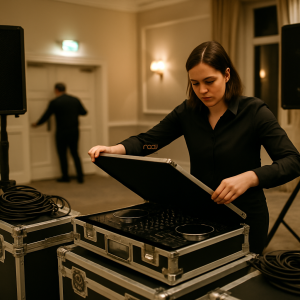
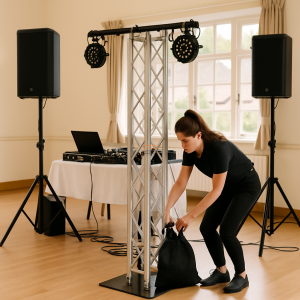
A clean setup helps everyone. Cables should be routed safely, cases kept out of walkways, and spare items stored neatly. Not only does that reduce trip hazards, it also makes it easier for a photographer to move around discreetly.
If you use a compact rig, a modern controller-based setup can help you stay mobile and minimise clutter. For DJs weighing up equipment choices, NADJ’s complete guide to DJ controllers for UK mobile DJs may be a useful reference when planning a more efficient wedding workflow.
Be alert during key photo moments
Some of the most important images of the day happen quickly. Confetti shots, the first kiss after the first dance, cake cutting, group shots and candid reactions all depend on timing. If you are driving the entertainment, you may be the person who can give the photographer a few extra seconds’ notice.
A simple announcement such as “confetti ready in 30 seconds” or “first dance in one minute” can make a real difference. It gives the photographer time to position themselves, brief the couple if needed and prepare for the shot without rushing.
Similarly, if you are about to restart music after a speech or a photo call, wait for a signal where appropriate. Good coordination avoids talking over the photographer, the venue manager or the couple.
Use the microphone with care
Wedding photographers often need quiet during emotional or formal moments. Overuse of the microphone can make it harder for them to work, particularly in smaller rooms or venues with reflective surfaces.
Keep announcements short, clear and purposeful. Avoid unnecessary chatter, and do not extend a cue into a performance unless that is genuinely part of the couple’s plan. The more concise you are, the easier it is for the photographer to capture reactions without distraction.
Respect the photographer’s job, and ask for the same in return
Professional collaboration should go both ways. A photographer should also understand that the DJ is managing the room, the timeline and the energy of the evening. Good colleagues do not compete for attention; they work around each other.
If a photographer needs a short pause for a posed shot, try to accommodate it where it will not disrupt the flow. If you need the couple in place for the next formal event, say so politely and clearly. Most wedding suppliers are happy to work together when expectations are handled early and respectfully.
Why this matters for your reputation
Couples rarely remember every technical detail, but they do remember how smoothly the day felt. A DJ who works well with wedding photographers is more likely to be seen as organised, professional and easy to trust. That can lead to better supplier relationships and stronger word-of-mouth over time.
If you are building your business, it also helps to stay connected to the wider profession. NADJ members can explore support through the NADJ Hub, review the membership tiers explained page, and use the NADJ directory to strengthen their visibility. DJs looking for new opportunities can also check gig listings.
If you are reviewing your wider business set-up, NADJ also signposts useful services through NADJ Media Ltd. And, as always, if you are considering matters such as public liability insurance, check the live details carefully and make sure any cover you choose is suitable for your own work. Our guide on DJ public liability insurance may help you understand the common questions, but it should not replace professional advice.
Final thoughts
Working with wedding photographers is mostly about awareness, timing and courtesy. Keep communication simple, protect sightlines, manage your microphone well and stay flexible when the schedule changes. Do that consistently, and you will make the photographer’s job easier while improving the overall experience for the couple.
In a busy wedding market across the UK, those small professional habits can set you apart just as much as the music you play.




 Avtar Thethy
 Fabio Capozzi
 Alastair Craig
 Dave Mills