

For working DJs across England, Scotland, Wales and Northern Ireland, a website should do three jobs at the same time: show what you offer, prove you are credible, and make the next step obvious. If any of those are missing, you may still get visits, but you are less likely to get bookings.
Start with a homepage that answers the basics
Your homepage should tell people, within seconds, who you are, what kind of events you cover and where you work. Keep the message direct. If you are a wedding DJ in the Midlands, a mobile DJ serving Glasgow and surrounding areas, or a club and event DJ travelling across the UK, say so clearly. Visitors should not have to guess.
Use a strong headline, a short introduction and one clear call to action such as Check availability or Enquire now. Good homepage content also sets expectations: party sizes, event types, music styles, equipment, travel radius and any specialist areas such as schools, corporate events or community functions.
Include a clear services or events page
Most enquiries fail when a visitor cannot quickly see whether the DJ is the right fit. A dedicated services page helps solve that problem. Break your work into straightforward sections, for example:
- Weddings
- Birthdays and private parties
- Corporate events
- School proms and college events
- Club and bar bookings
- Community and charity events
If you cover multiple regions, make that easy to understand. A single sentence can explain that you work in London, the Midlands and selected venues across England, or that you cover Scotland and Wales subject to availability and travel. Avoid long lists of towns if you do not genuinely serve them.
Write an about page that builds trust
People book people, not just playlists. Your about page should explain your experience, approach and style in plain English. This is where you can mention how you prepare for events, how you read the room, and what clients can expect on the day. Keep it honest and specific.
If you are a member of a trade body or directory, mention it accurately. NADJ members, for example, can point visitors towards the NADJ directory to help show professional standing. You can also reference your membership level where relevant, using the information on membership tiers explained. This does not guarantee a booking, but it can support credibility when combined with good content and a professional presentation.
Use testimonials and reviews carefully
Testimonials can be very persuasive, but only if they are genuine and relevant. Choose short quotes that mention the event type, the result and the service. A wedding review should not sit next to a generic party comment without context. If possible, pair each quote with the event type and location, such as a Leicester wedding, a Cardiff birthday party or a Bristol corporate event.
Where reviews are collected from third-party platforms, link to them rather than recreating them in a way that could mislead. Keep them current. A handful of recent, specific reviews usually carries more weight than a long page of vague praise.
Add an FAQ page to remove friction
FAQ content is one of the most useful parts of a DJ website because it answers the objections that stop enquiries. A good FAQ page can cover availability, pricing structure, setup time, music requests, venue requirements, travel, deposits and start times.
Be factual and cautious. For example, if you mention insurance, licensing or legal matters, explain that requirements can vary by venue, event type and location. NADJ has guidance on topics such as DJ public liability insurance, but DJs should always check the latest live details and confirm what a venue requires before an event.
Make the enquiry path simple
Your contact or enquiry page should be easy to use on a phone as well as a laptop. Ask for only the details you need at the first stage: name, event date, venue or area, event type and contact information. A long form can reduce conversions, especially for casual visitors comparing options.
It also helps to provide several contact options. Some clients prefer an enquiry form, others want email or WhatsApp, and some will call directly. If you can, add response-time expectations such as We aim to reply within one working day. Keep this honest and achievable.
Show proof with photos, video and recent work
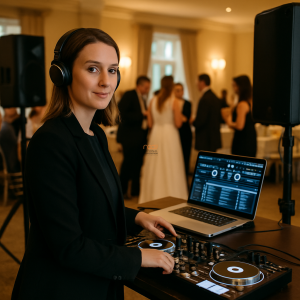
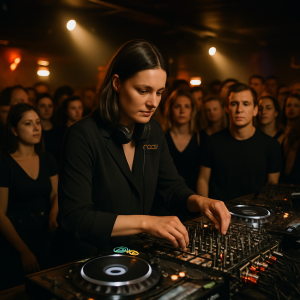
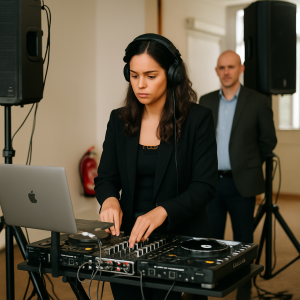
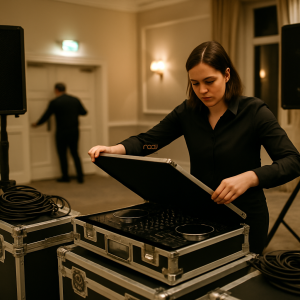
Visual content matters because clients want to see the atmosphere you create. Use images from real events, with permission where required, and focus on clear, well-lit shots that show the setup, crowd and venue type. A short showreel or embedded video can also help, especially for couples and event organisers who want to understand your style quickly.
If you have a gig listings or events section, keep it updated. NADJ’s gig listings area shows how useful it is to present live opportunities and activity clearly. For your own site, recent work signals that you are active and working across the UK market.
Do not forget the trust pages
Some of the most overlooked DJ website essentials are the pages people rarely talk about first: privacy policy, cookies, terms and conditions, and any booking or cancellation information. These pages do not need to be long, but they should exist and be accurate. They can help visitors understand how you handle their data and what happens after they enquire.
There is also value in linking to wider professional resources. NADJ’s main site, nadj.co.uk, and the NADJ Hub can support members looking for guidance, news and development. A website that reflects professional standards can sit neatly alongside that wider ecosystem.
Think like a client, not just a DJ
Good website content is not about listing every piece of kit you own. It is about reducing uncertainty. A visitor wants to know: Are you available? Do you suit my event? Can I trust you? What happens next? If your site answers those questions clearly, you are already ahead of many competitors.
That approach matters across the UK market, from mobile DJs in Liverpool and Nottingham to corporate specialists in London and event DJs in Cardiff or Glasgow. The principle is the same: make the right information easy to find, keep the tone professional, and give people a simple route to enquire.
Final thought
The most effective DJ websites are not necessarily the busiest or most complicated. They are the ones that combine useful information, social proof and a clear call to action. If you get the pages right, your website becomes more than an online flyer; it becomes a reliable booking tool.
For NADJ members and the wider UK DJ community, that is a practical way to present yourself professionally, support stronger enquiries and make it easier for clients to choose you with confidence.




 Avtar Thethy
 Fabio Capozzi
 Alastair Craig
 Dave Mills