

DJ training for other DJs: turning experience into practical value
One of the strongest assets any working DJ can bring to the table is not just kit, music, or branding. It is lived experience. For NADJ members, that experience can become DJ training for other DJs that is genuinely useful, relevant and grounded in the realities of the UK market.
Whether you work in mobile discos, weddings, clubs, schools, corporate events or private functions, you will have learned lessons that are hard to find in a manual. The key is to package those lessons in a way that helps others improve their craft, work more professionally and avoid common mistakes.
That matters across the UK, from London and Manchester to Birmingham, Leeds, Bristol, Cardiff, Glasgow, Liverpool, Nottingham, Leicester and Coventry. DJs in every region face similar pressures: tight turnarounds, changing client expectations, venue restrictions, equipment reliability and the need to deliver consistently.
Start with the problems DJs actually face
Good training begins with real-world problems. Instead of teaching in abstract terms, focus on situations that other DJs will recognise immediately.
Examples of useful topics
- how to read a room and adjust your set without losing flow
- handling requests politely while keeping control of the night
- planning for venue access, load-in times and awkward spaces
- building a reliable backup plan for equipment failure
- managing expectations before the event starts
- working with clients, event organisers and venue staff
This approach works because it is practical. It respects the fact that many DJs do not want theory for theory’s sake; they want advice they can use at their next gig.
Share what you learned the hard way
The most valuable training often comes from mistakes, near-misses and situations that did not go to plan. If a speaker failed mid-set, a client changed the running order at the last minute, or a venue had unexpected restrictions, that experience can become a case study.
The important point is to present it professionally. Keep it factual, avoid unnecessary drama and explain what you changed afterwards. For example:
- what happened
- why it mattered
- how you dealt with it
- what others can do differently
This kind of honest reflection builds credibility. It also helps newer DJs understand that professionalism is not about pretending nothing ever goes wrong. It is about being prepared.
Focus on transfer skills, not just equipment
It is easy to assume that training should centre on gear. Equipment knowledge is useful, of course, but the most transferable lessons are often about judgement, communication and process.
For example, a session on headphone choice may be useful if it is tied to performance and workflow. NADJ already provides member-facing content such as this guide to professional DJ headphones, which can complement your own training by helping members think through practical buying decisions.
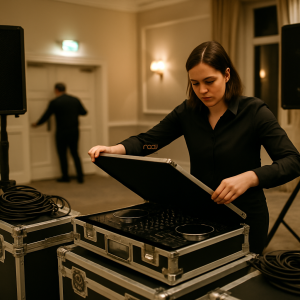
Likewise, if you are teaching set-up routines, focus on the sequence rather than just the components. Show how you check sound, cable management, transport logistics and spares. That makes the lesson more useful across different DJ styles and budgets.
Use your own niche to help other DJs
No single DJ knows everything. That is why training is strongest when it grows out of a clear area of experience. A wedding DJ, club DJ, radio presenter or corporate specialist will each have different insights to share.
This is also where NADJ members can add value to the wider community. If you have worked in schools, LGBTQ+ events, multicultural celebrations, holiday parks, youth clubs or high-end venues, you can help others understand the expectations, etiquette and technical demands involved.
That kind of insight matters because the UK industry is diverse. A technique that works in a Belfast club may not translate directly to a family wedding in the Midlands or a corporate function in Edinburgh. Good training helps DJs adapt rather than copy blindly.
Keep the advice accurate and current
Useful training is built on up-to-date information. That is especially important where public liability cover, venue requirements, music licensing, PAT testing or local rules may be relevant. NADJ members should be careful not to present outdated advice as fact.
If you discuss insurance, for example, make it clear that DJs should check live policy details and venue requirements. For general information on the subject, you can point members towards NADJ’s public liability insurance guidance. The same principle applies to legal or licensing matters: advise, do not overstate.
Accuracy builds trust. It also protects the quality of the training and reinforces NADJ’s wider goal of supporting professional standards across the industry.
Make the training easy to follow
The best trainers keep things simple. That does not mean dumbing things down. It means structuring the material so it is easy to absorb.
A practical format
- Start with the outcome: what should the learner be able to do?
- Explain the context: why does this matter in a live setting?
- Show the process: step by step, without rushing
- Give examples: use real gigs where possible
- End with actions: what should they practise next?
Short demonstrations, checklists and question-and-answer sessions often work better than long lectures. If you are speaking to mixed-experience audiences, keep the language clear and avoid jargon where possible.
Use NADJ channels to reach the right audience
Members do not have to build training opportunities in isolation. NADJ’s wider ecosystem can help connect experienced DJs with those looking to learn. The NADJ Hub is a useful place to share knowledge, while the NADJ directory can help members become more visible to peers and clients.
If you are looking to engage with new work or understand what is active in the market, the gig listings can also provide a helpful view of live opportunities. Used well, these tools can support a training offer that feels relevant rather than generic.
It is also worth understanding the different ways NADJ supports members at various stages of their journey. The membership tiers explained page is a useful reference if you are helping newer DJs decide how to engage with the association and its resources.
Think of training as part of professional stewardship
For experienced DJs, sharing knowledge is not just generosity. It is part of sustaining the industry. When members pass on practical lessons, they help raise standards, reduce avoidable errors and strengthen the reputation of DJs across England, Scotland, Wales and Northern Ireland.
That is directly aligned with NADJ’s purpose: supporting working DJs, encouraging professionalism and helping members develop in ways that are grounded in real practice.
If you have built up years of experience, do not keep it locked away. Turn it into structured advice, clear demonstrations and honest conversation. The result can be training that is genuinely useful to other DJs, whether they are starting out in Leicester or refining a busy event business in London.
Experience has value. Shared properly, it becomes one of the most powerful training tools the industry has.
For more member resources and services, visit NADJ.
AI transparency note
NADJ uses artificial intelligence as an editorial assistant. Articles produced through this publisher begin with a human-selected idea, source, brief or editorial direction, and AI may be used to research, structure, draft or improve the wording. AI does not set NADJ editorial policy or operate free-range: people acting for NADJ set the instructions and publishing framework, monitor the output and retain editorial responsibility.
Images used by NADJ may include stock photography or AI-generated visuals where appropriate. NADJ is volunteer-led and editorial time is limited; much of our available time is currently absorbed by governance and management, a substantial data audit and membership-system transfer, and planning 12 Tea & Test days across the UK. You can help strengthen member-led content by sending article ideas or completed submissions to hello@nadj.org.uk.




 Avtar Thethy
 Fabio Capozzi
 Alastair Craig
 Dave Mills