
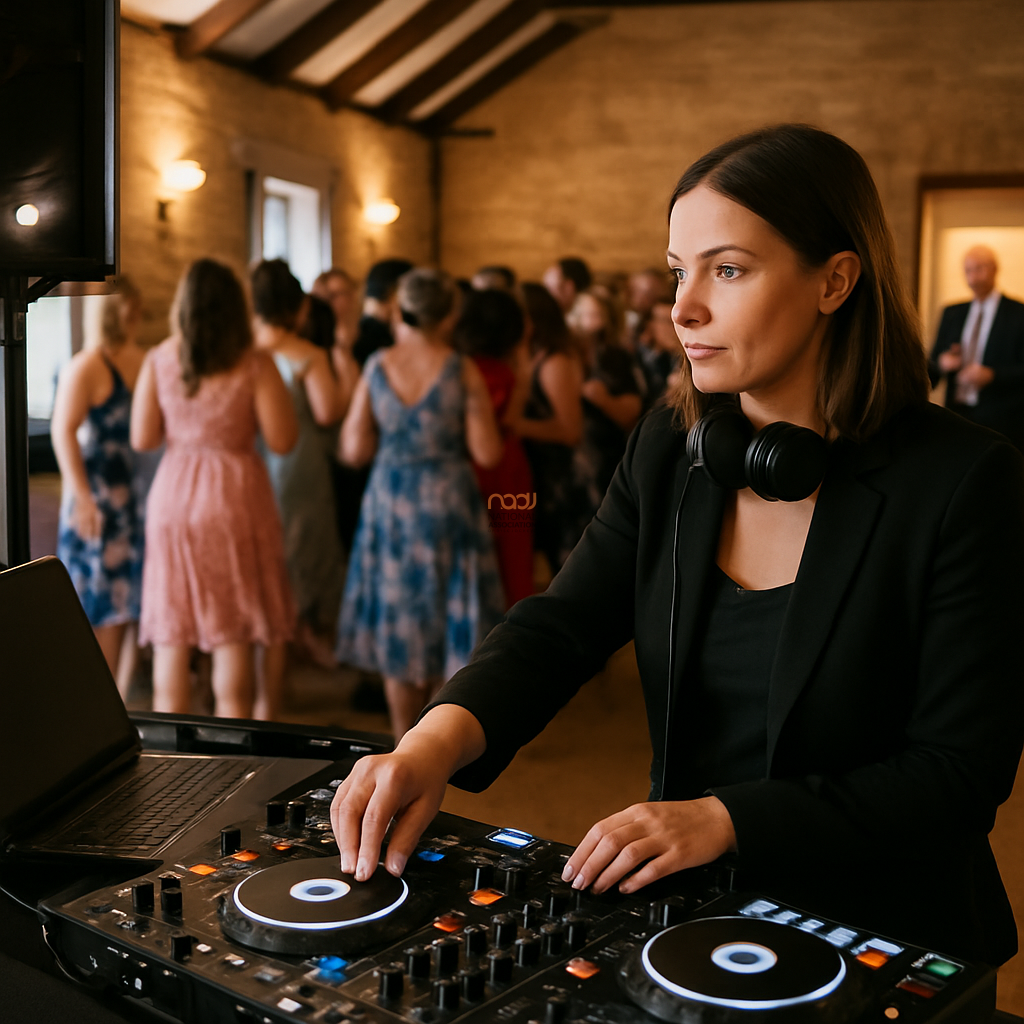
Knowing when a DJ should stop the music for safety is one of the clearest signs of professionalism. Most sets run without incident, but every mobile DJ and club DJ working in the UK will eventually face a moment where continuing to play is no longer the safest option. The right response is not to “keep the dance floor going at all costs”; it is to assess the situation, protect people, and then decide whether the event can continue safely.
This applies across the UK, from weddings in London and Birmingham to corporate events in Manchester, school functions in Leeds, and community nights in Glasgow, Cardiff, Belfast, Bristol, Liverpool, Nottingham, Leicester and Coventry. The venue may be different, but the responsibility is the same: people come first.
Safety always comes before the playlist
A DJ is often one of the last people in the room to notice a developing issue. You may hear a distressed shout, see a crowd surge, notice someone fall, or become aware of equipment overheating. In those moments, carrying on without checking can make a manageable situation worse. A short pause is usually easier to explain than a serious incident is to recover from.
As a general principle, if continuing to play could distract from an emergency, block communication, or encourage people to keep moving when they should be clearing space, stop the music. Then use the venue’s agreed procedures and the staff around you. If you are unsure, err on the side of caution.
Situations where a DJ should stop the music
1. Medical emergencies
If someone collapses, has a seizure, is struggling to breathe, or appears to need urgent help, stop the music so people can hear instructions. Clear sound matters when staff need to ask the crowd to move back, make space, or identify a first aider. Do not attempt to diagnose; simply make room for trained staff and emergency responders.
2. Fire alarms, smoke, or suspicious smells
If a fire alarm activates, the room fills with smoke, or you notice burning smells from equipment, stop immediately. Loud music can delay evacuation and make announcements harder to understand. If the venue has an evacuation plan, follow it. Do not restart until the building has been declared safe by the responsible person or venue management.
3. Electrical faults or equipment overheating
Buzzing, tripping, scorch marks, damaged cabling, or a device that becomes unusually hot are all reasons to pause. In a mobile DJ setup, a fault may start small and become serious quickly. Shut down affected equipment, isolate it if safe to do so, and get help from a competent technician or the venue team before using it again. NADJ members will know that good preparation matters here, including reliable headphones and monitoring tools such as those discussed in our guide to top DJ headphones for professional mobile DJs in the UK.
4. Crowd violence, aggression, or a developing crush
If the dance floor starts to push dangerously, a fight breaks out, or you notice people pinned against barriers or exits, stop the music if that will help staff intervene. In some venues, silence makes it easier for security to give instructions and for the crowd to hear them. Do not escalate the moment with dramatic language. Keep announcements short, calm, and clear.
5. Venue evacuation or serious incident
If the venue manager or security team instructs an evacuation, stop the music and support the process. A DJ is not the incident controller, but you may be able to help by turning down amplification, avoiding unnecessary chatter, and keeping the evacuation route clear. Always follow the venue’s emergency plan and local instructions.
When you may be able to carry on
Not every disruption requires a full stop. A minor technical issue, a brief venue announcement, or a guest request for a quieter moment may simply need a controlled fade and a short pause. The key question is whether people can still move, hear, and act safely. If the answer is no, stop.
That judgement is easier when you have already discussed the venue’s procedures before the event. A quick pre-event chat with the organiser, manager, or security lead can clarify who will make the final call if something goes wrong. It also helps to know where exits, first aid kits, extinguishers, and isolation points are located.
How to stop the music calmly and professionally
When you do stop, do it in a controlled way. Fade out rather than cutting everything abruptly if the situation allows. Keep your announcement brief: say that there is a safety issue, ask people to stay calm, and direct them to follow staff instructions. Avoid speculation, jokes, or blaming language.
If you are using microphones, make sure your message is clear and audible. If not, work with venue staff who can make the announcement. In many cases, the best DJ action is simple: stop the music, create space, and let the right people take over.
What good preparation looks like
Preparation reduces the chance that you will face a difficult decision in the first place. Check cables, power distribution, and load limits before the event. Carry spare leads where appropriate. Keep your performance area tidy so people are less likely to trip. Make sure you can reach your controls quickly if you need to mute or shut down sound.
It is also worth thinking about wider business readiness. NADJ members can review their standing through membership tiers explained, check the NADJ directory, and explore practical industry support through the NADJ hub. If you are looking for work, keep an eye on gig listings.
Insurance, liability and common sense
Every DJ should understand the limits of their own responsibility. Public liability insurance and venue policies can be relevant, but exact cover and requirements vary, so always check the live details that apply to you and your booking. For more on the subject, see NADJ’s guidance on DJ public liability insurance in the UK. If you are a member or exploring membership, this is part of building a safer, more professional business.
Remember that safety decisions are rarely about panic. They are about good judgement, clear communication, and respect for everyone in the room. Whether you work in England, Scotland, Wales or Northern Ireland, that standard should stay the same.
Final thought
A professional DJ does not measure success only by how long the music keeps playing. Real professionalism shows when you can recognise a risk, stop at the right time, and help the room get back on track safely. If stopping the music protects people, it is the right call.
For DJs building a stronger business behind the decks, NADJ and NADJ Media Ltd continue to support the trade with advice, resources and services designed for working DJs in the UK.
AI transparency note
NADJ uses artificial intelligence as an editorial assistant. Articles produced through this publisher begin with a human-selected idea, source, brief or editorial direction, and AI may be used to research, structure, draft or improve the wording. AI does not set NADJ editorial policy or operate free-range: people acting for NADJ set the instructions and publishing framework, monitor the output and retain editorial responsibility.
Images used by NADJ may include stock photography or AI-generated visuals where appropriate. NADJ is volunteer-led and editorial time is limited; much of our available time is currently absorbed by governance and management, a substantial data audit and membership-system transfer, and planning 12 Tea & Test days across the UK. You can help strengthen member-led content by sending article ideas or completed submissions to hello@nadj.org.uk.









 Avtar Thethy
 Fabio Capozzi
 Alastair Craig
 Dave Mills