
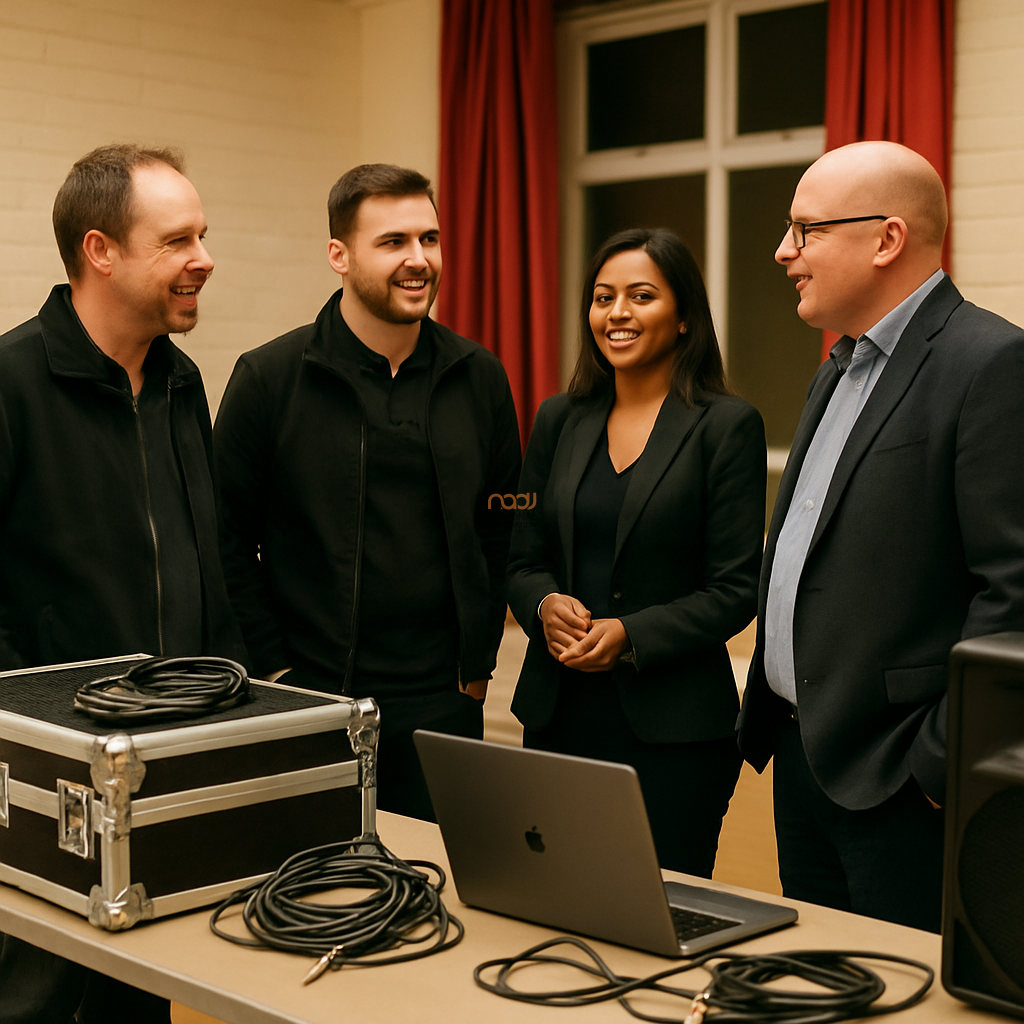
Local DJ meetings can play a valuable role in the UK DJ industry. When they are run well, they help new entrants learn faster, avoid common mistakes and understand what professional service really looks like. Just as importantly, they can do this without encouraging price cutting. That balance matters, because the long-term health of the trade depends on skill, trust and consistent standards, not a race to the bottom on fees.
For NADJ, the objective is straightforward: support working DJs, encourage professionalism and help the wider industry move forward in a practical, informed way. Local meetings are one of the most useful ways to do that, provided the emphasis stays on quality, not undercutting.
Why local meetings matter
In many parts of the UK, especially across busy local scenes in the Midlands, London, Manchester, Birmingham, Leeds, Bristol, Cardiff, Glasgow, Liverpool, Nottingham, Leicester and Coventry, new DJs often enter the market with more enthusiasm than structure. They may know how to mix, host, or manage a playlist, but still be unsure about client communication, setup planning, backup equipment or how to present themselves professionally.
Local meetings can bridge that gap. A good meeting gives newer entrants a place to ask sensible questions in a safe environment. It can cover topics such as transport, sound checks, first consultations, presentation, public liability insurance considerations, and the realities of working weddings, parties and corporate events across England, Scotland, Wales and Northern Ireland.
That kind of support benefits everyone. Well-prepared newcomers are less likely to make avoidable mistakes, and that helps improve the reputation of the wider DJ community.
How to support new DJs without setting low-price expectations
The mistake some groups make is to focus too heavily on pricing. If every conversation becomes “what do you charge?” it can quickly normalise the idea that the cheapest quote is the most useful one. That is not good business advice, and it does not help new entrants build sustainable careers.
Instead, meetings should focus on value. Explain what goes into a proper job: planning time, equipment investment, travel, setup, insurance arrangements, administration, contingency planning and client support. New DJs need to understand that a fair fee is not just about the number of hours they are on site. It reflects the whole service they provide.
A practical meeting format might include:
- short talks on setup standards and customer service
- equipment discussions, including reliability and maintenance
- case studies from real events, with lessons learned
- Q&A sessions about bookings, contracts and expectations
- networking with experienced operators who model good practice
Notice what is missing: no pressure to publish rates, no suggestion that undercutting competitors is a growth strategy, and no implication that low prices are the same as good value.
Promote professionalism, not rivalry
Local DJ meetings work best when experienced DJs act as mentors rather than gatekeepers. That means being honest about the effort involved in professional DJ work, while also being open enough to help newcomers improve. It also means setting the tone carefully. Friendly advice is welcome; public comparisons of fees usually are not.
If a meeting organiser wants to address pricing, it is better to talk about structure than figures. For example, discuss how DJs build a quote, what overheads they need to consider, and why different events require different levels of preparation. That gives new entrants a framework without pushing them towards a market-wide price race.
It is also worth reminding DJs that one operator’s price may reflect many variables: the type of event, the distance travelled, the size of the setup, the level of interaction expected and whether additional services are included. In other words, price alone rarely tells the full story.
Use meetings to signpost reliable resources
Local meetings are a good place to point newer DJs towards trusted industry resources. For example, NADJ membership options are explained on the membership tiers page, which can help DJs understand what level of support may suit them as they develop.
If a newcomer is building a business presence, it may also be helpful to explore the wider support available through NADJ Hub and the commercial services listed by NADJ Media Ltd at nadj.co.uk. Likewise, the NADJ directory can be a practical way to discover other professionals and understand how established DJs present themselves.
For those looking to build bookings, the gig listings section may also be useful, though DJs should always check the details carefully and assess whether an opportunity fits their own business model.
Build confidence through standards
Confidence grows when new DJs understand standards. Meetings can cover areas such as event preparation, equipment choice and customer-facing professionalism. For example, discussions about dependable headphones or backup gear can be surprisingly useful, especially for mobile DJs who work across changing venues. NADJ has published practical guidance such as top DJ headphones advice, which can support conversations about kit choices without turning the meeting into a sales pitch.
Insurance is another topic that should be handled carefully and responsibly. If public liability insurance is discussed, make clear that DJs should check the live terms, wording and suitability of any cover for their own circumstances. A useful starting point is NADJ’s page on DJ public liability insurance, but readers should always verify current details directly before relying on them.
The right message for the next generation
The next generation of DJs does not need to be told to charge less. It needs to be shown how to deliver more: more reliability, more preparation, more professionalism and more value for the client. Local DJ meetings can make a real difference when they are designed around that principle.
That is good for new entrants, good for experienced DJs and good for the industry as a whole. If meetings support learning, networking and better standards, they strengthen the market. If they drift into price gossip, they weaken it.
For NADJ, the answer is clear: welcome new talent, share knowledge openly, and keep the focus on standards that help DJs build sustainable businesses across the UK.
AI transparency note
NADJ uses artificial intelligence as an editorial assistant. Articles produced through this publisher begin with a human-selected idea, source, brief or editorial direction, and AI may be used to research, structure, draft or improve the wording. AI does not set NADJ editorial policy or operate free-range: people acting for NADJ set the instructions and publishing framework, monitor the output and retain editorial responsibility.
Images used by NADJ may include stock photography or AI-generated visuals where appropriate. NADJ is volunteer-led and editorial time is limited; much of our available time is currently absorbed by governance and management, a substantial data audit and membership-system transfer, and planning 12 Tea & Test days across the UK. You can help strengthen member-led content by sending article ideas or completed submissions to hello@nadj.org.uk.









 Avtar Thethy
 Fabio Capozzi
 Alastair Craig
 Dave Mills