
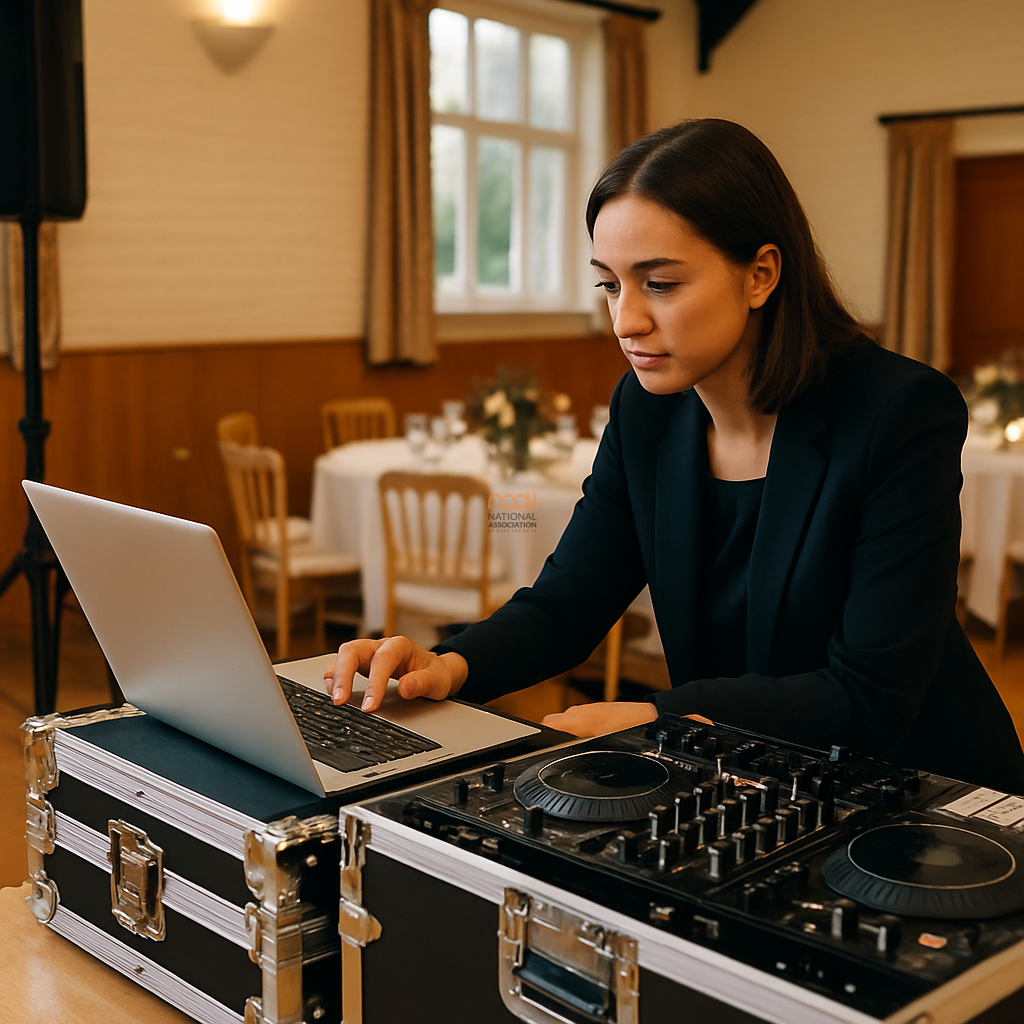
If you are researching a DJ Event Planner review, the key question is not whether it has lots of features, but whether it actually suits the way UK mobile DJs work. A booking system can look impressive on paper and still feel awkward when you are juggling enquiries, deposits, reminders and client expectations across weddings, birthdays and corporate events. In this review, we focus on practical fit for DJs in England, Scotland, Wales and Northern Ireland rather than marketing claims.
If you want the wider context first, read our cornerstone guide to Best DJ CRM Software in 2026: The Complete Guide. This article zooms in on one platform and asks a narrower question: is DJ Event Planner the best CRM for UK mobile DJs, or simply one of the better known options?
What DJ Event Planner is designed to do
DJ Event Planner is positioned as an all-in-one booking and client management system for DJs. In broad terms, that usually means handling enquiries, quotations, contracts, payments, automated messages and event details in one place. For a working DJ, the appeal is obvious: fewer spreadsheets, fewer missed follow-ups and a clearer view of your upcoming diary.
That workflow is especially relevant if you are operating in busy local markets such as London, Manchester, Birmingham, Leeds, Bristol, Cardiff, Glasgow, Liverpool, Nottingham, Leicester and Coventry, where response speed can influence whether you win the booking. A CRM that helps you reply quickly, send consistent information and track a lead from first enquiry to final payment can save real admin time.
Where it can work well for UK mobile DJs
The strongest case for DJ Event Planner is usually organisation. Many mobile DJs do not need a huge enterprise system; they need something that helps them move a client smoothly from enquiry to confirmed event. If the system keeps booking details centralised, it can reduce the risk of losing notes in email threads or on a phone.
Another potential advantage is professionalism. Clients often appreciate clear communication, structured documents and a straightforward process for confirming their event. A CRM can help present a more polished operation, particularly for DJs who handle weddings and premium private events where the booking experience matters as much as the performance itself.
For sole traders and small teams, there is also value in standardisation. A repeatable process for sending quotes, collecting event details and issuing reminders can be helpful when you are busy at weekends and answering messages in gaps between gigs.
Points UK DJs should check before committing
Although the core idea is attractive, UK buyers should look closely at fit rather than assuming a system built for DJs elsewhere will map neatly onto the British market. For example, you should check how well it handles UK currency, tax presentation, local payment preferences and the style of wording you use in customer-facing documents. A CRM may be powerful but still require some adjustment to feel natural for UK clients.
It is also worth considering the level of flexibility you need. Some DJs want simple automation and do not want to spend hours configuring templates. Others prefer a deeper system with more custom fields, workflows and messaging rules. If you only need basic booking control, a more complex platform may be unnecessary. If, however, you manage a high volume of events or multiple brands, the extra structure could be useful.
Another practical point is support. Before choosing any CRM, check how responsive the help team is, whether onboarding is straightforward, and whether the platform is actively maintained. A booking tool becomes much more valuable when you can rely on it during a busy season.
How it compares with the wider CRM picture
DJ Event Planner should not be judged in isolation. The best CRM for one DJ may be the wrong choice for another. Some businesses need strong automation and lead tracking. Others need simple invoicing, calendar visibility and client communication. That is why our wider guide exists: to help DJs compare options based on actual workflow rather than hype.
For newer businesses, it can also be useful to look beyond the software itself and consider how the rest of your operation is set up. Good CRM software is only part of the picture. You still need reliable contracts, sensible admin processes and professional standards across the business. If you are reviewing your wider setup, you may also want to read about membership tiers explained and explore the NADJ directory for industry connections and visibility.
Who is DJ Event Planner likely to suit?
- Mobile DJs who want a single place to manage bookings, notes and communication.
- Wedding DJs who value structured client information and a more polished booking journey.
- Small DJ businesses that want to reduce manual follow-up and stay organised in peak season.
- DJs who are comfortable adapting software to their own process.
It may be less suitable if you want the simplest possible system, if you dislike subscription software, or if you need a platform built very specifically around UK-only business habits from day one.
NADJ view: a sensible option, but not an automatic winner
Our editorial view is that DJ Event Planner looks like a sensible option for many mobile DJs, but it is not automatically the best CRM for everyone in the UK. The real test is whether its workflow matches your business model. A busy wedding specialist in the Midlands may want more automation than a part-time DJ servicing local birthdays and school events. Likewise, a multi-op company in London may have different needs from a solo operator in Scotland or Wales.
That is why a trial, demo or feature check is essential before you commit. Make a list of your must-haves: enquiry capture, quote speed, document quality, event notes, reminder messages, diary clarity and ease of use. Then compare the platform against that list rather than the other way round.
Final verdict
DJ Event Planner has the potential to be a strong CRM for UK mobile DJs, particularly those who want structure, consistency and a more professional booking process. However, whether it is the best choice depends on your workload, technical comfort and the way you present your business to clients.
If you want to compare it with other systems before deciding, start with our full guide to Best DJ CRM Software in 2026: The Complete Guide. For broader business support, you can also visit NADJ Hub, review DJ public liability insurance guidance, and check current opportunities on the gig listings page.
Used well, the right CRM should save time, improve customer communication and help you run a more dependable DJ business. The best choice is the one that fits how you actually work.
AI transparency note
NADJ uses artificial intelligence as an editorial assistant. Articles produced through this publisher begin with a human-selected idea, source, brief or editorial direction, and AI may be used to research, structure, draft or improve the wording. AI does not set NADJ editorial policy or operate free-range: people acting for NADJ set the instructions and publishing framework, monitor the output and retain editorial responsibility.
Images used by NADJ may include stock photography or AI-generated visuals where appropriate. NADJ is volunteer-led and editorial time is limited; much of our available time is currently absorbed by governance and management, a substantial data audit and membership-system transfer, and planning 12 Tea & Test days across the UK. You can help strengthen member-led content by sending article ideas or completed submissions to hello@nadj.org.uk.









 Avtar Thethy
 Fabio Capozzi
 Alastair Craig
 Dave Mills