
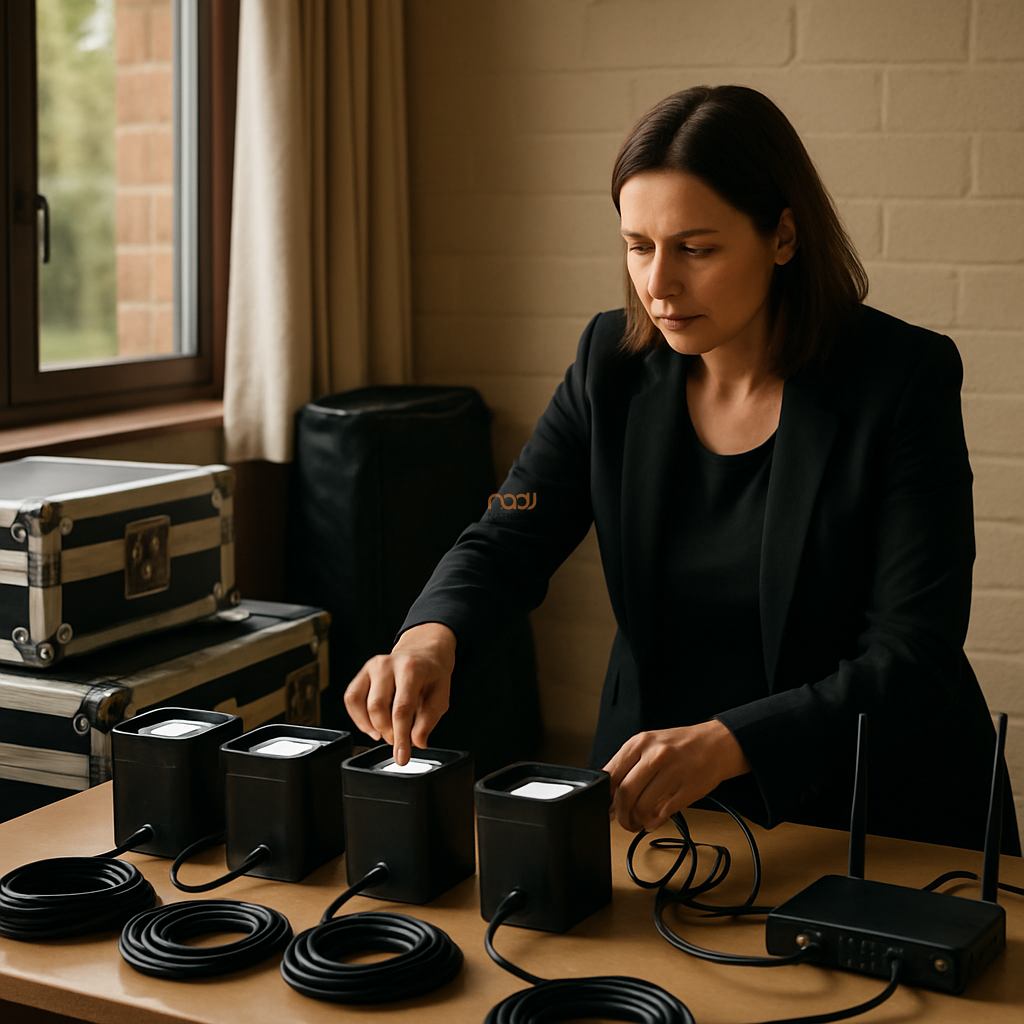
Safe battery charging for wireless DJ equipment is now a routine part of modern mobile DJ work. Wireless microphones, battery uplighters, battery-powered speakers and compact controllers help us build cleaner setups and move faster between weddings, parties and corporate events. However, the charging side of that convenience deserves the same care as the performance side.
At NADJ, we regularly remind members that good equipment practice is not just about presentation. It is also about reliability, risk reduction and professionalism. A well-managed charging routine can help you avoid nuisance failures, protect battery life and reduce the chance of damage during storage or transport. The key is to use the manufacturer’s guidance, keep your charging area organised and check your equipment regularly.
Why battery charging needs a proper routine
Lithium-ion batteries are common in wireless DJ gear because they are compact and offer useful runtime. That said, they can be damaged by poor charging habits, physical knocks, heat, damp or unsuitable power supplies. In most cases, problems arise not from the battery itself, but from how it is used, stored and charged.
For working DJs across the UK, this matters. Whether you are gigging in London, Manchester, Birmingham, Leeds, Bristol, Cardiff, Glasgow, Liverpool, Nottingham, Leicester or Coventry, the same principles apply. A battery that is charged in a safe, predictable way is less likely to cause disruption on the night.
Start with the manufacturer’s instructions
The first rule is simple: follow the instructions supplied with the equipment. That includes the charger, cable, docking station, charging case and any advice on storage temperature or battery percentage. Some units need to be charged only with the original charger. Others may support USB-C, but still require a specific power rating. If in doubt, check the manual or the manufacturer’s support pages before improvising.
It is also worth remembering that not every battery-powered DJ product behaves the same way. A wireless microphone receiver, an uplighter and a battery PA may each have different charging requirements. Treat them individually, not as if they were interchangeable.
Set up a safe charging area
Good charging practice starts with the space you use. Choose a dry, well-ventilated area away from direct heat, soft furnishings and clutter. Avoid charging equipment on top of flight cases, under covers or in spaces where heat can build up. If you are charging several units at once, keep them arranged neatly so cables do not get crushed or pulled.
It is also sensible to keep charging gear away from liquids and from heavy foot traffic. That may sound basic, but many damage incidents happen because a charger is left on the floor behind a stand, in a busy office corner or in a van with loose kit stacked on top.
Use the correct charger and cables
One of the most common mistakes is using the wrong charger because it happens to fit. A cable that physically connects is not always a safe or suitable option. Incorrect voltage, poor-quality adapters and worn connectors can all create overheating, unreliable charging or premature battery wear.
Where possible, use the original charger supplied with the unit, or an approved replacement from the manufacturer. Check cables for damage before use: fraying, bent pins, loose plugs and obvious heat marks are all warning signs. If a charger runs unusually hot, make a note of it and investigate rather than assuming it is normal.
Do not overpack charging cases or storage bags
Many DJs charge kit in the same cases used for transport. That can be convenient, but only if the case is suitable and the equipment has room to dissipate heat. Never place charging batteries where they are pressed tightly together with no airflow. Likewise, avoid covering powered units with clothing, foam or accessories.
When charging in a van, avoid leaving the equipment in direct sunlight or in a sealed vehicle for long periods. Heat is one of the fastest ways to shorten battery life. In colder months, allow kit to warm gradually after transport before charging if it has been exposed to low temperatures.
Build a simple charging checklist
Working DJs benefit from a repeatable routine. A short checklist can prevent unnecessary risk and save time before a show:
- Inspect batteries, chargers and cables for damage.
- Charge on a flat, stable, ventilated surface.
- Use the correct charger for each device.
- Do not cover equipment while charging.
- Check that indicator lights and charge levels behave as expected.
- Disconnect and store kit once charging is complete.
For teams and multi-op businesses, this kind of routine helps everyone work to the same standard. It is especially useful if you lend kit to staff, subcontractors or resident DJs.
Know when a battery should come out of service
No battery lasts forever. If a unit swells, leaks, smells unusual, charges erratically, loses capacity quickly or becomes excessively hot, stop using it and follow the manufacturer’s disposal advice. Do not puncture, crush or attempt makeshift repairs. If a battery is visibly damaged, isolate it safely and seek proper guidance on disposal through your local waste service or retailer advice.
As with other DJ equipment matters, if you are unsure, pause and check. NADJ members should never feel pressured to keep using a compromised battery just to get through one more booking.
Keep charging practice part of your wider kit care
Safe charging should sit alongside other basic maintenance: cleaning connectors, storing equipment correctly, inspecting cables and keeping records of faults. It also links naturally with wider professional standards, including PAT testing where appropriate for your setup and business model. Our commercial arm, NADJ Media Ltd, provides services that support working DJs, while the NADJ community and hub help members share practical knowledge and stay up to date.
If you are comparing equipment for your next upgrade, it can also help to think about power and runtime alongside performance. For example, our guide to top DJ headphones for professional mobile DJs shows how the right kit choices support day-to-day reliability, not just sound quality.
Where NADJ fits in
NADJ exists to support professional DJs with relevant information, community and business development. That includes practical topics like equipment care, safer working and sensible risk management. If you are reviewing your wider setup, you may also find these pages useful: DJ public liability insurance guidance, membership tiers explained, the NADJ directory, the NADJ Hub and gig listings.
Safe battery charging for wireless DJ equipment does not need to be complicated. Use the right charger, keep temperatures sensible, store equipment properly and act quickly if something looks wrong. Small habits like these protect your kit, support your reputation and help you arrive at every booking ready to perform.
AI transparency note
NADJ uses artificial intelligence as an editorial assistant. Articles produced through this publisher begin with a human-selected idea, source, brief or editorial direction, and AI may be used to research, structure, draft or improve the wording. AI does not set NADJ editorial policy or operate free-range: people acting for NADJ set the instructions and publishing framework, monitor the output and retain editorial responsibility.
Images used by NADJ may include stock photography or AI-generated visuals where appropriate. NADJ is volunteer-led and editorial time is limited; much of our available time is currently absorbed by governance and management, a substantial data audit and membership-system transfer, and planning 12 Tea & Test days across the UK. You can help strengthen member-led content by sending article ideas or completed submissions to hello@nadj.org.uk.









 Avtar Thethy
 Fabio Capozzi
 Alastair Craig
 Dave Mills