
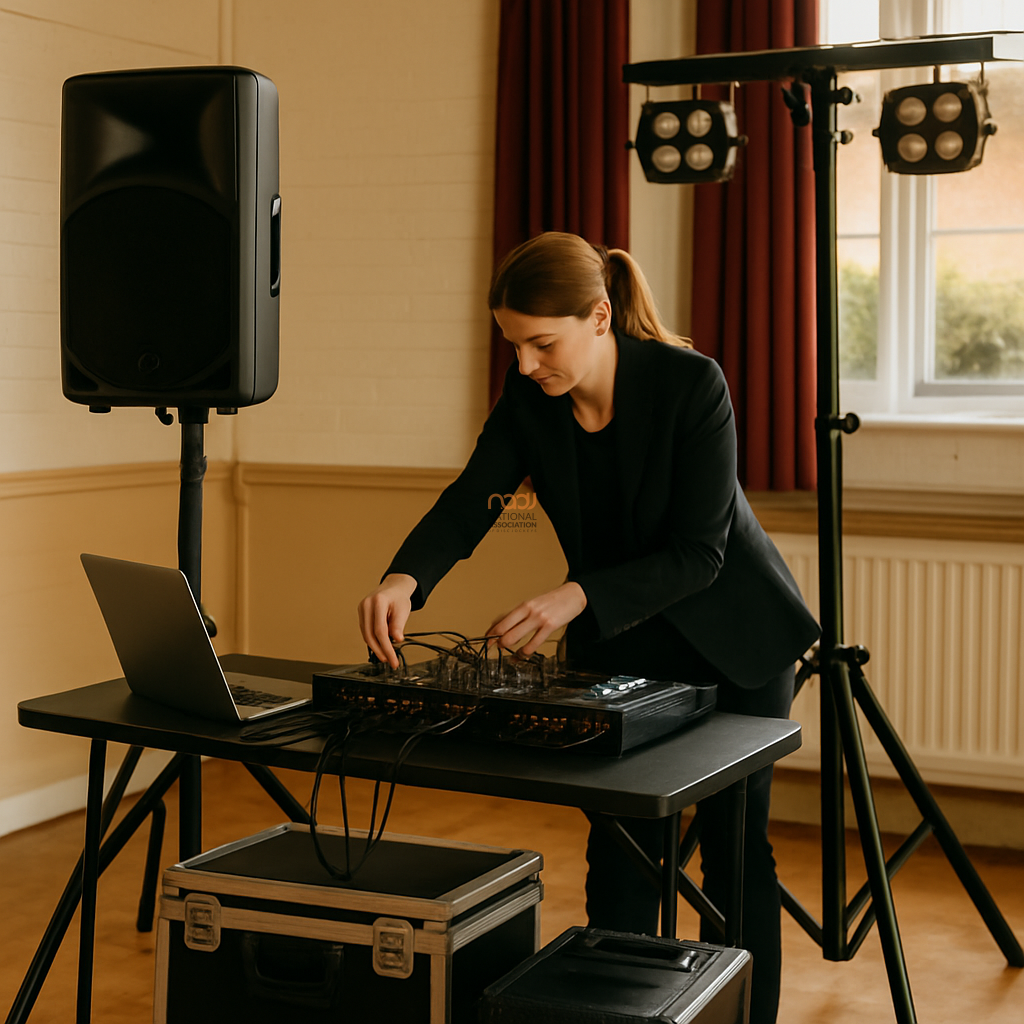
When it comes to the realities of the UK DJ industry, practical technical guidance for DJs is far more valuable than broad, generic advice. A working DJ does not need vague reminders to “be professional” or “know your gear”. They need clear, usable information that helps them choose equipment, prepare for a venue, solve problems quickly and work more safely.
That distinction matters for mobile DJs, club DJs, events DJs and anyone travelling between venues across England, Scotland, Wales and Northern Ireland. Whether you are working in London, Manchester, Birmingham, Leeds, Bristol, Cardiff, Glasgow, Liverpool, Nottingham, Leicester or Coventry, the day-to-day pressures are similar: limited setup time, varied power conditions, changing room sizes and the need to keep an event running smoothly.
Generic advice is too broad to be useful
Generic advice often sounds sensible, but it rarely tells a DJ what to do next. Telling someone to “take care of your equipment” is true, but it does not explain how to inspect cables, organise backups or identify common failure points before a gig. Similarly, saying “invest in quality sound” does not help a DJ decide between speaker configurations, monitor placement or suitable headphones for their working style.
Associations exist to support members and raise standards. That support becomes more meaningful when it is specific. A DJ facing a real-world issue wants guidance they can act on immediately, not broad statements that could apply to any business sector.
Practical guidance helps DJs make better decisions
Technical guidance should be built around the decisions DJs actually make. For example:
- How to check whether your mixer, controller or laptop setup is appropriate for a small function room versus a larger celebration.
- How to plan redundant audio paths so a single fault does not stop the music.
- How to evaluate headphones for cueing, isolation and comfort over long sets.
- How to approach cabling, power distribution and equipment layout in a way that reduces trip hazards and confusion.
- How to communicate technical requirements to a venue or client before the event.
That sort of guidance is useful because it supports judgment. It helps DJs compare options, ask better questions and avoid avoidable mistakes. For example, our own guide to professional mobile DJ headphones is valuable not because it pushes a single product, but because it helps DJs think about the features that matter in live work.
Clear technical guidance reduces uncertainty
Most DJs work under pressure. Set-up windows can be short, venues can be unfamiliar and no two bookings are identical. Under those conditions, uncertainty is expensive. If an association publishes practical checklists, setup notes or equipment considerations, it gives members a better chance of arriving prepared.
This is especially important where technical issues overlap with wider professional responsibilities. For example, public liability matters, venue requirements and equipment safety are all connected in practice. If you want to understand the general considerations around cover, our page on DJ public liability insurance in the UK explains the topic in a more working-DJ-friendly way. As always, readers should check live policy details and individual requirements directly with providers.
Technical advice should reflect how DJs actually work
Useful guidance should be grounded in live working conditions rather than theory. A home studio setup is not the same as a Saturday-night wedding in a hotel, a corporate event in the Midlands or a club show in a busy city centre. Equipment needs, load-in access, power availability and room acoustics can all change the best approach.
That is why association content should address common scenarios. A practical article might cover how to:
- test and pack equipment so it is ready for repeated transport;
- document your setup for quicker load-ins;
- match output levels to venue expectations;
- use backup files and secondary sources;
- plan for communication with venue staff and other suppliers.
This approach respects the reality of the job. It does not assume every DJ works the same way, but it still provides structure that can be adapted.
Better guidance supports better professional standards
Associations should not simply repeat general industry platitudes. They should help members improve their day-to-day practice. When guidance is practical, it can raise standards in a way that is realistic and inclusive. It benefits newer DJs who are still building confidence, and experienced DJs who want to tighten processes or review their systems.
It also supports more consistent communication across the sector. Clear technical guidance makes it easier for DJs to explain their requirements to clients, venues and collaborators. That can reduce misunderstandings, especially when working across different regions of the UK where venue expectations may vary.
NADJ’s wider aim is to support working DJs with information that is relevant, current and genuinely useful. That includes membership support, professional resources and access to practical services. Our membership tiers explained page is a good place to start if you want to understand the support available to different kinds of members.
Where practical support goes beyond articles
Practical technical guidance does not have to live only in blog posts. It can also appear in member hubs, checklists, directories and structured resources that help DJs act on the information quickly. Our NADJ Hub is designed to direct members towards useful information in one place, while the NADJ directory can help DJs and clients connect with relevant industry contacts. If you are looking for event opportunities, the gig listings area is also worth checking.
At a practical level, that is what an association should do: reduce friction, improve confidence and help members work more effectively. Generic advice may sound polished, but it rarely helps when a DJ is troubleshooting a setup five minutes before doors open.
Conclusion: useful beats vague
The UK DJ industry is built on adaptability, reliability and informed decision-making. That is why associations should publish practical technical guidance rather than generic advice. DJs need content that helps them choose equipment, prepare for events, solve problems and communicate clearly with venues and clients.
In short, practical guidance is not just more useful. It is more respectful of the realities of professional DJ work. It recognises that a good association does more than offer encouragement: it helps members do the job better, safer and with more confidence.
If you are interested in the wider support ecosystem around UK DJs, including membership, resources and services, visit NADJ Media Ltd and explore how the organisation continues to support the industry across the country.
AI transparency note
NADJ uses artificial intelligence as an editorial assistant. Articles produced through this publisher begin with a human-selected idea, source, brief or editorial direction, and AI may be used to research, structure, draft or improve the wording. AI does not set NADJ editorial policy or operate free-range: people acting for NADJ set the instructions and publishing framework, monitor the output and retain editorial responsibility.
Images used by NADJ may include stock photography or AI-generated visuals where appropriate. NADJ is volunteer-led and editorial time is limited; much of our available time is currently absorbed by governance and management, a substantial data audit and membership-system transfer, and planning 12 Tea & Test days across the UK. You can help strengthen member-led content by sending article ideas or completed submissions to hello@nadj.org.uk.









 Avtar Thethy
 Fabio Capozzi
 Alastair Craig
 Dave Mills