
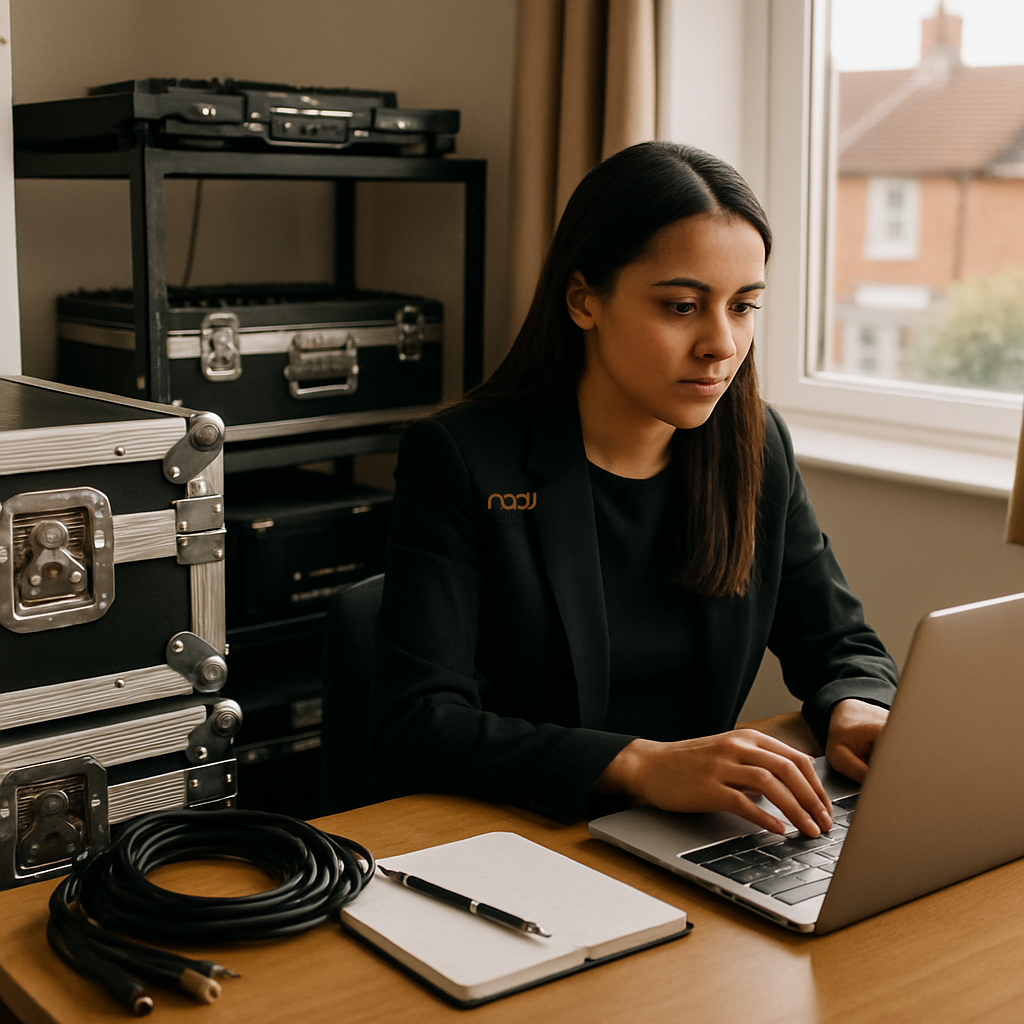
For many UK DJs, the calendar naturally moves in cycles. Wedding peaks, Christmas parties, summer festivals and school events can create intense busy spells, followed by quieter months when enquiries slow down. That is exactly why DJ slow season survival matters: the quiet period is not just downtime, it is a chance to strengthen the business behind the decks.
If you have already read NADJ’s cornerstone guide on how DJs can build a sustainable small business, this article goes one step further. Here, we focus on how to use quieter months productively so you can return to peak season more organised, more visible and better prepared for the next run of bookings.
Start with a proper business audit
The first mistake many DJs make in a slow month is treating it as an extended holiday. Rest matters, of course, but the quieter period is also the best time to review what is and is not working.
Look at the past 12 months and ask some blunt questions: Which gigs were most profitable? Which enquiries converted into bookings, and which did not? Which platforms brought in the best leads: your own website, social media, referrals, or local directory listings? What type of event gave you the strongest return for the least effort?
Keep the review practical. You do not need complex software to spot patterns. A simple spreadsheet, diary review or bookkeeping summary can reveal whether your business is being carried by one client type or one venue category. That kind of clarity is valuable whether you work in London, Birmingham, Manchester, Leeds, Glasgow or smaller regional markets across the Midlands, Wales, Scotland or Northern Ireland.
Tidy your systems before the next rush
When the season gets busy, admin is usually the first thing to slip. Quiet months are the right time to fix that.
Update your booking process, enquiry response templates, invoices, terms and checklists. Make sure your quotes are consistent, your email replies are prompt and your gig paperwork is easy to find. If you use a CRM, cloud folders or shared documents, check that everything is labelled clearly and backed up.
This is also a sensible time to review your public-facing information. Is your website current? Are your contact details correct on your directory listings? If you are not already visible in the NADJ directory, it may be worth checking how your profile appears to potential clients and venue contacts.
Refresh your marketing while attention is low
Many DJs wait until bookings dry up before thinking about marketing, but that approach usually creates stress. Instead, use slow months to build a stronger pipeline before the next peak.
Update your website biography, service pages, photos and FAQs. Replace any outdated images, and add fresh case studies or testimonials if you have them. If you work weddings, corporate events, clubs or private parties, make the offer clear rather than generic. Buyers in Bristol, Cardiff, Liverpool, Nottingham, Leicester and Coventry often compare several suppliers quickly, so clarity matters.
It is also worth reviewing how people find you online. Even small improvements to search visibility, local directory accuracy and enquiry wording can make a difference over time. If you need support with website work, paid ads or other digital marketing, NADJ’s wider ecosystem includes services through nadj.co.uk.
Use the time to develop skills, not just gear
A common temptation in a quiet period is to buy another piece of kit. Sometimes that is justified, but the better question is whether the purchase will actually improve your service or profit.
Consider investing time first in skills that increase your value. That might include better crowd reading, tighter mixing, microphone technique, lighting programming, set planning or event coordination. You could also improve your knowledge of contracts, client communication and contingency planning. These areas are often what separate a reliable business from a hobby with equipment.
Training does not have to be formal to be useful. Rehearse full event sets at home, practise handling awkward requests, review your first-dance or announcement workflow, and test your show from setup to pack-down as if you were on site. That kind of preparation pays off when your next busy weekend arrives.
Check your compliance and risk basics
Quiet months are a sensible time to review the paperwork and safety side of the business. For example, if you carry public liability insurance, check that the cover still suits the way you work and the venues you play. NADJ provides guidance on DJ public liability insurance in the UK, but always verify live policy details with the provider before relying on any cover.
Likewise, if you rely on electrical equipment, use the slow season to inspect leads, cases, connectors and fixtures. Replace items showing damage and arrange testing where appropriate. Do not assume old kit is still safe simply because it powered up last year. If you are unsure about any legal or safety requirement, check current guidance from the relevant authority or insurer rather than relying on habit.
Strengthen your bookings pipeline
One of the best uses of a slow period is follow-up. Contact venues, planners and previous clients with a simple, professional update. Let them know your diary is open for the coming months, and share a clear reason to rebook or refer you.
Also, keep an eye on opportunities in the NADJ ecosystem. The gig listings page can be a useful place to spot live opportunities, while the NADJ Hub can support your broader professional development. In a quieter market, small actions such as consistent follow-up and better visibility often make more difference than a last-minute price cut.
Protect your energy as well as your income
Slow months can be frustrating, especially if you depend heavily on event work. However, they can also be the point where your business becomes more sustainable. Use the time to rest properly, but also to improve the parts of the business that are easy to ignore when you are fully booked.
That might mean refining your niche, improving your client journey, learning a new skill or simply getting your files, kit and calendar in order. In the long run, DJs who treat quiet months as preparation time often enter the next busy season with less pressure and more confidence.
For NADJ members and the wider UK DJ community, the message is simple: slow season is not wasted time. Used well, it is one of the most valuable parts of the year.
AI transparency note
NADJ uses artificial intelligence as an editorial assistant. Articles produced through this publisher begin with a human-selected idea, source, brief or editorial direction, and AI may be used to research, structure, draft or improve the wording. AI does not set NADJ editorial policy or operate free-range: people acting for NADJ set the instructions and publishing framework, monitor the output and retain editorial responsibility.
Images used by NADJ may include stock photography or AI-generated visuals where appropriate. NADJ is volunteer-led and editorial time is limited; much of our available time is currently absorbed by governance and management, a substantial data audit and membership-system transfer, and planning 12 Tea & Test days across the UK. You can help strengthen member-led content by sending article ideas or completed submissions to hello@nadj.org.uk.









 Avtar Thethy
 Fabio Capozzi
 Alastair Craig
 Dave Mills