
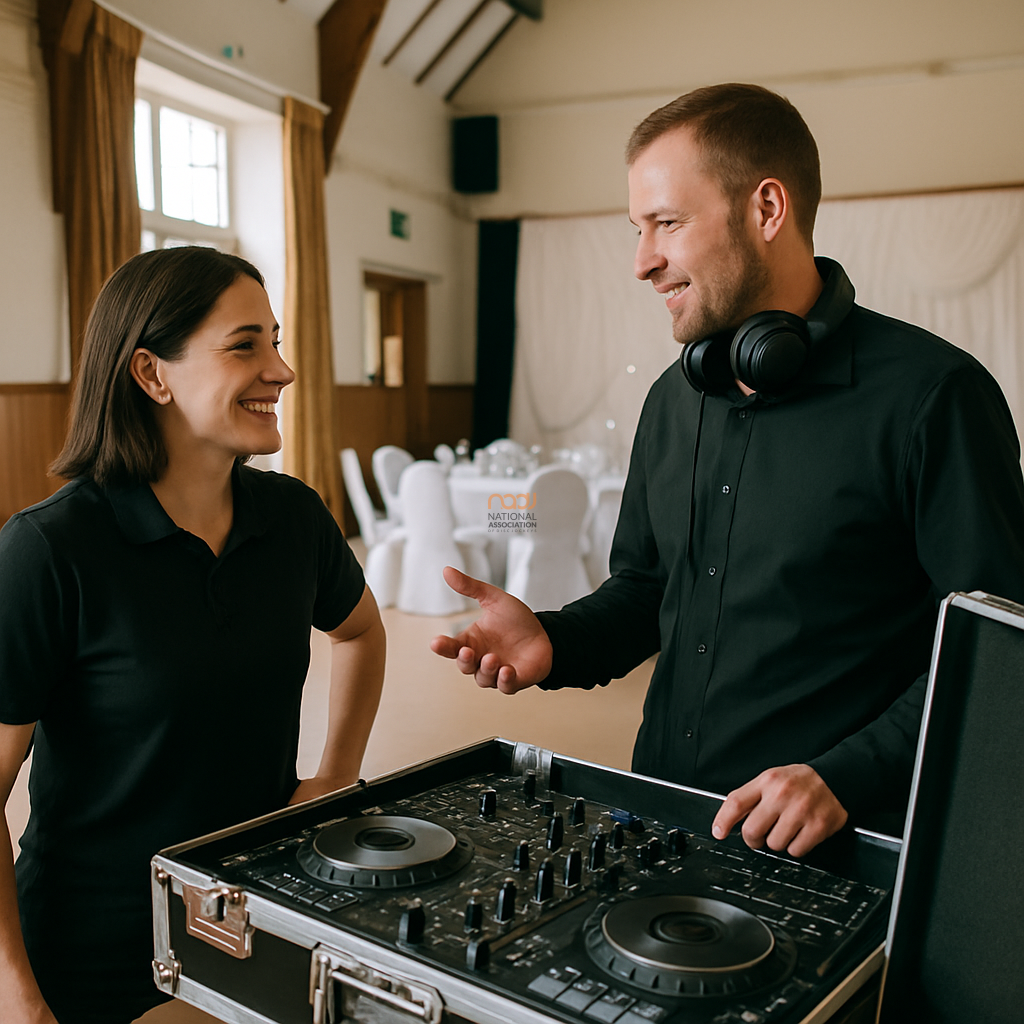
Regional DJ networking is one of the simplest ways to make the UK DJ scene more resilient. When local members know and trust one another, it becomes much easier to arrange emergency cover if a gig is affected by illness, vehicle trouble, family emergencies, bad weather or equipment failure. For working DJs across England, Scotland, Wales and Northern Ireland, that kind of practical support can make a real difference.
At NADJ, we often talk about professionalism in terms of presentation, equipment and client care. However, professionalism also means having a sensible plan for the unexpected. A strong regional network can help members protect bookings, reduce last-minute stress and maintain standards when something goes wrong.
Why regional networking matters
In practice, many emergency cover situations are time-sensitive. A client in Birmingham may need a replacement DJ within hours. A wedding in Cardiff may still need music even if the original operator is unwell. A venue in Glasgow may be expecting a familiar setup, punctual arrival and a calm handover. In these situations, a local or regional contact is often more useful than a distant name in a contacts list.
Regional networking also reflects how the UK mobile DJ market actually works. DJs tend to operate within realistic travel ranges, with strong local knowledge of venues, access routes and event patterns. That makes contacts in places such as London, Manchester, Leeds, Liverpool, Bristol, Nottingham, Leicester, Coventry and across the Midlands especially valuable when cover is needed quickly.
What good emergency cover looks like
Emergency cover is not simply about finding anyone with speakers and a laptop. It should be approached carefully and professionally. The cover DJ should be able to meet the event brief, communicate clearly, understand the venue, and handle the booking with appropriate equipment and music knowledge.
In addition, it helps if members have a basic understanding of each other’s working style. For example, some DJs specialise in weddings, while others focus on private parties, corporate events or family celebrations. Some are used to schools and youth events; others are not. A regional network works best when members know who is suitable for which kind of job.
How to build a reliable local DJ network
Good networking is not about collecting names. It is about building a trusted group of professionals who can help one another in a structured way. Here are some practical steps:
1. Share accurate, up-to-date profile information
Make sure your listing, contact details and service area are current. A simple way to strengthen regional visibility is through the NADJ directory, which helps members and clients find DJs by location and service type. If your regional profile changes, update it promptly so emergency contacts remain useful.
2. Agree the basics in advance
Where appropriate, members can discuss what information they would need to step into a booking at short notice: event type, timings, venue access, music preferences, dress code, setup requirements and whether there are any specific client requests. This reduces confusion and helps avoid rushed assumptions.
3. Keep a trusted shortlist by region
A useful network usually includes several DJs in nearby towns and cities rather than only one direct contact. For example, a member in Leeds might know reliable colleagues in Bradford, Wakefield and Sheffield; a DJ in Bristol might have contacts in Bath, Cardiff or Gloucester; and a DJ in the Midlands may maintain links across Coventry, Leicester and Nottingham. That breadth matters when availability is uncertain.
4. Use group communication sensibly
Many DJs use private groups, messaging apps or member forums to share urgent cover requests. The key is to keep these channels professional, relevant and secure. Avoid posting unnecessary personal details. Instead, provide the essentials needed for another DJ to assess whether they can help.
Reducing risk without overpromising
It is important to be realistic. No network can guarantee cover every time, and no regional group can remove all risk. That is why DJs should still have their own contingency plans, including backup data, spare leads, duplicate music access where lawful, and a sensible workflow for passing on bookings if required.
Insurance, licensing and contractual arrangements should also be checked carefully. For example, if you are arranging a cover DJ, make sure you understand who is responsible for the contract, what the client has agreed to, and whether any terms need to be updated. Likewise, public liability insurance requirements can vary depending on the event, venue and booking arrangement, so it is sensible to check the live details before relying on any assumption. NADJ members may find our guidance on DJ public liability insurance in the UK useful as a starting point, but it should not replace current policy wording or professional advice.
Professional standards make cover easier
Emergency cover works best when members operate to a shared standard. That includes punctual replies, accurate descriptions of equipment, honest communication about availability and a willingness to hand over information clearly. It also helps to know how different membership levels support your professional development, so consider reviewing membership tiers explained if you want to understand the wider benefits of NADJ membership.
Small details can matter too. A DJ who turns up with dependable kit, clear labelling and reliable monitoring gear is easier to place into a cover role. For those reviewing their wider setup, even something as simple as choosing suitable headphones can affect consistency on the job; our guide to the top 10 DJ headphones for professional mobile DJs in the UK may be helpful when assessing everyday reliability.
Where NADJ can support regional connections
Regional networking is stronger when it is supported by an active national community. NADJ exists to help DJs share information, strengthen standards and build professional relationships across the UK. Members can use the NADJ Hub for practical resources, while the gig listings area can help with visibility and opportunity in different areas.
For some members, this may also connect with wider business support through NADJ Media Ltd, which offers services that can help present a professional brand online. Meanwhile, the broader NADJ goal remains the same: to support DJs with useful information, better industry links and a stronger professional community.
Final thoughts
Regional DJ networking is not just a nice extra. Done well, it is a practical business safeguard. It helps members respond faster, maintain standards and support one another when a booking is at risk. Whether you are working in London, the Midlands, Manchester, Belfast, Edinburgh, Cardiff or a smaller town nearby, a trusted regional network can make emergency cover far easier to arrange.
For working DJs, the message is straightforward: know your local contacts, keep your information current and build relationships before you need them. That way, when an urgent call comes in, you are far more likely to have a professional solution ready.
AI transparency note
NADJ uses artificial intelligence as an editorial assistant. Articles produced through this publisher begin with a human-selected idea, source, brief or editorial direction, and AI may be used to research, structure, draft or improve the wording. AI does not set NADJ editorial policy or operate free-range: people acting for NADJ set the instructions and publishing framework, monitor the output and retain editorial responsibility.
Images used by NADJ may include stock photography or AI-generated visuals where appropriate. NADJ is volunteer-led and editorial time is limited; much of our available time is currently absorbed by governance and management, a substantial data audit and membership-system transfer, and planning 12 Tea & Test days across the UK. You can help strengthen member-led content by sending article ideas or completed submissions to hello@nadj.org.uk.









 Avtar Thethy
 Fabio Capozzi
 Alastair Craig
 Dave Mills