
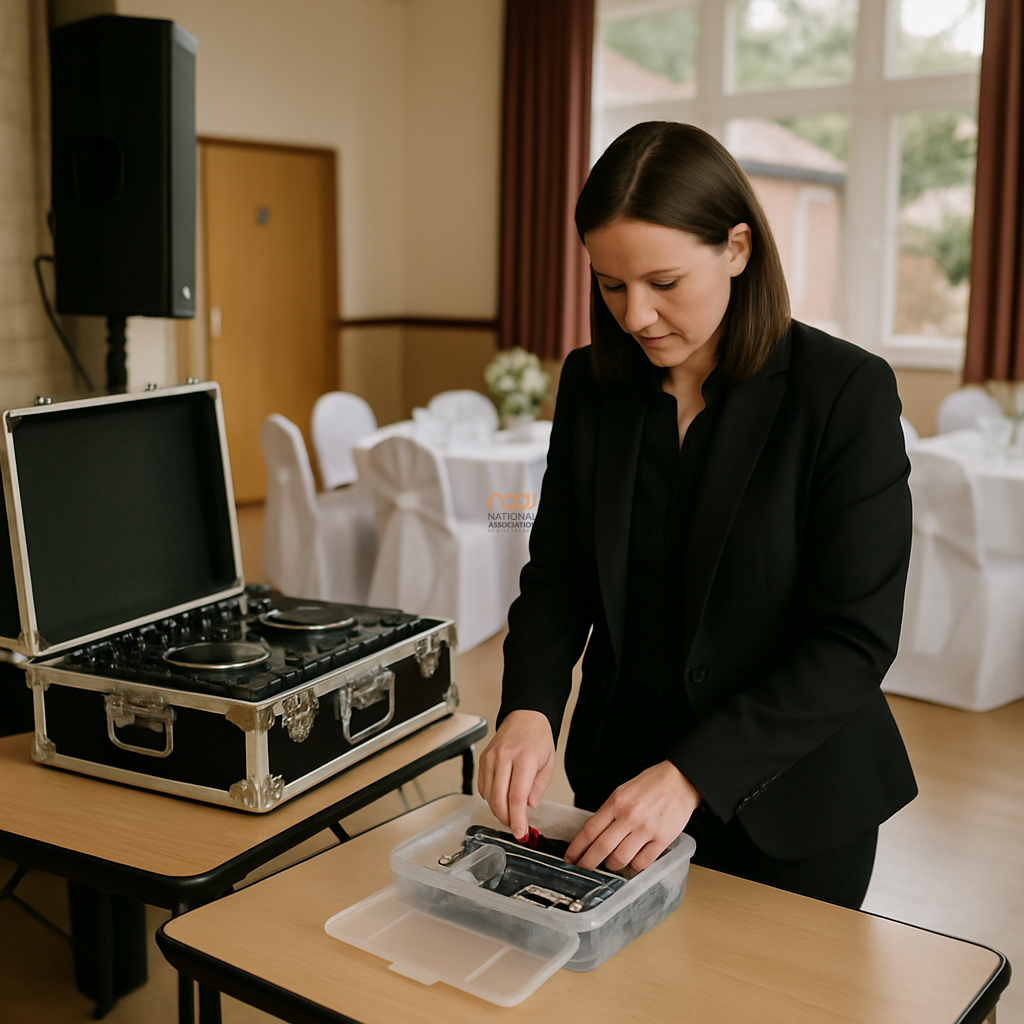
A compact DJ repair kit is one of the most useful pieces of kit a mobile DJ can carry. For working DJs in the UK, a small fault on site can quickly become a lost booking, a delayed start or an avoidable stress point. The aim is not to rebuild a deck at the venue. It is to handle the most common minor issues calmly and safely, then keep the show moving.
For NADJ members and the wider UK DJ community, this is part of professional preparation. A well-planned repair kit sits alongside good cable management, sensible backups and regular equipment checks. It supports smoother gigs whether you are working in London, Manchester, Birmingham, Leeds, Bristol, Cardiff, Glasgow, Liverpool, Nottingham, Leicester, Coventry or elsewhere across England, Scotland, Wales and Northern Ireland.
Why every mobile DJ should carry a compact repair kit
Most on-site faults are simple. A connector works loose. A cable develops an intermittent break. A battery door or adapter goes missing. A small part falls out during transport. These problems often have practical fixes if you have the right tools and a little preparation.
However, a repair kit should be treated as a contingency measure, not a substitute for proper maintenance. If a fault involves mains wiring, heat damage, liquid ingress or repeated failure, stop using the item and arrange a qualified repair or replacement. Do not attempt repairs beyond your competence.
What to include in a compact DJ repair kit
The key is to keep the kit small enough to live in your flightcase, rucksack or soft bag without becoming clutter. Start with the basics and build around the gear you actually use.
1. Essential hand tools
- Small multi-bit screwdriver set
- Precision screwdriver for compact equipment
- Small adjustable spanner
- Needle-nose pliers
- Wire cutters or snips
- Compact torch or head torch
These tools cover loose screws, stubborn fixtures and quick inspection in low-light venues. A head torch is especially useful when you are behind a booth, under a table or dealing with a late setup in a dark function room.
2. Spare cables and adapters
- Short XLR and RCA leads
- Jack leads and adapters
- IEC power cable
- UK mains plug adapter where relevant
- USB cables for controllers, interfaces and charging
- 3.5 mm to RCA or 3.5 mm to jack adaptors
Many on-site issues are solved by swapping out a lead rather than trying to diagnose the fault in the middle of a set. Keep spares coiled neatly and labelled by type where possible. If you work with multiple systems, carry the connections you use most often rather than every cable you own.
3. Fast fix consumables
- Electrical tape
- Self-amalgamating tape
- Zip ties in a few sizes
- Velcro cable ties
- Small pack of cable markers
- Cleaning cloths and screen-safe wipes
These items can stabilise a loose lead, tame strain on a connector and tidy a booth quickly. Self-amalgamating tape can be particularly useful for temporary cable protection, but it is not a permanent repair. If a lead is damaged, replace it as soon as practical.
4. Small spares that match your rig
- Fuses for your own equipment, in the correct rating and type
- Spare knobs or caps for frequently used controls
- Extra batteries for microphones, remotes or accessories
- Memory cards, USB drives or media backups if you still rely on them
- Small screws, washers and mounts that fit your own kit
Only carry spares you understand and use regularly. A drawer full of random parts is not a kit. Keep a simple note of which device each fuse or screw belongs to, and check that any replacement matches the manufacturer’s specification.
How to pack it so it stays compact
A repair kit works best when it is easy to find and quick to use. Divide it into three sections: tools, cables and consumables. A small zipped organiser, compact tool roll or hard case with inserts works well. Many DJs keep the kit in the same flightcase or bag every time so it is always within reach during load-in.
Try to keep weight down. If an item is rarely used, leave it out. For example, a full toolbox may be useful at home, but on site you only need the items that solve the most likely faults. The smaller the kit, the more likely you are to carry it every time.
Create a simple fault-response routine
Good gear alone will not save time if you do not have a process. When something fails, work through a short routine:
- Pause and check whether the fault is cable, power, source or speaker related.
- Swap the simplest item first, usually the cable or adaptor.
- Test one change at a time so you know what fixed the issue.
- Keep the spare item in serviceable condition and label any suspect gear for later inspection.
- If the issue may affect safety or the integrity of the system, stop and isolate the item.
This approach reduces panic and prevents unnecessary tinkering. It also helps you make better decisions under pressure, which is exactly what working DJs need on site.
Test the kit before you need it
Your compact DJ repair kit should be checked regularly. Replace flat batteries, remove corroded items and confirm that your spare leads still work. If you use your kit across venues in the Midlands, Scotland, Wales or Northern Ireland, remember that transport knocks and temperature changes can loosen connectors over time.
It is also sensible to review your full rig occasionally. For example, if you are thinking about upgrading your mobile system, NADJ’s guide to best PA speakers for mobile DJs in the UK is a useful starting point when assessing what belongs in your main setup versus your emergency bag.
Do not overlook safety, insurance and venue rules
Some faults are simple to diagnose but not safe to fix on the night. Anything involving mains power, damaged plugs, burnt components or exposed conductors should be treated cautiously. If in doubt, remove the item from use until it can be checked properly. Live venue conditions vary, so always follow the venue’s rules and your own risk assessment.
Likewise, if you are unsure how an equipment issue could affect cover or liability, check the current details of your own arrangements rather than making assumptions. NADJ’s guidance on DJ public liability insurance may help as a starting point, but policies and requirements should always be confirmed directly with the provider.
Keep your business side as organised as your kit
A reliable DJ operation is more than speakers and software. It is also about admin, visibility and staying ready for work. NADJ’s membership tiers explained page is useful if you are weighing up professional support, while the NADJ directory and gig listings can help you stay connected to the wider industry. You can also explore NADJ Hub and NADJ Media Ltd for wider member and business services.
Final check: build for real-world use
The best compact DJ repair kit is the one that matches your own rig, your own venues and your own working style. Keep it small, label it clearly and review it every few months. That way, when a minor fault appears during a wedding in Leeds, a corporate night in Birmingham or a club event in Glasgow, you are dealing with a quick fix rather than a crisis.
In short, build the kit around the problems you actually encounter. That practical mindset is what keeps your setup professional, resilient and ready for the next booking.
AI transparency note
NADJ uses artificial intelligence as an editorial assistant. Articles produced through this publisher begin with a human-selected idea, source, brief or editorial direction, and AI may be used to research, structure, draft or improve the wording. AI does not set NADJ editorial policy or operate free-range: people acting for NADJ set the instructions and publishing framework, monitor the output and retain editorial responsibility.
Images used by NADJ may include stock photography or AI-generated visuals where appropriate. NADJ is volunteer-led and editorial time is limited; much of our available time is currently absorbed by governance and management, a substantial data audit and membership-system transfer, and planning 12 Tea & Test days across the UK. You can help strengthen member-led content by sending article ideas or completed submissions to hello@nadj.org.uk.









 Avtar Thethy
 Fabio Capozzi
 Alastair Craig
 Dave Mills