
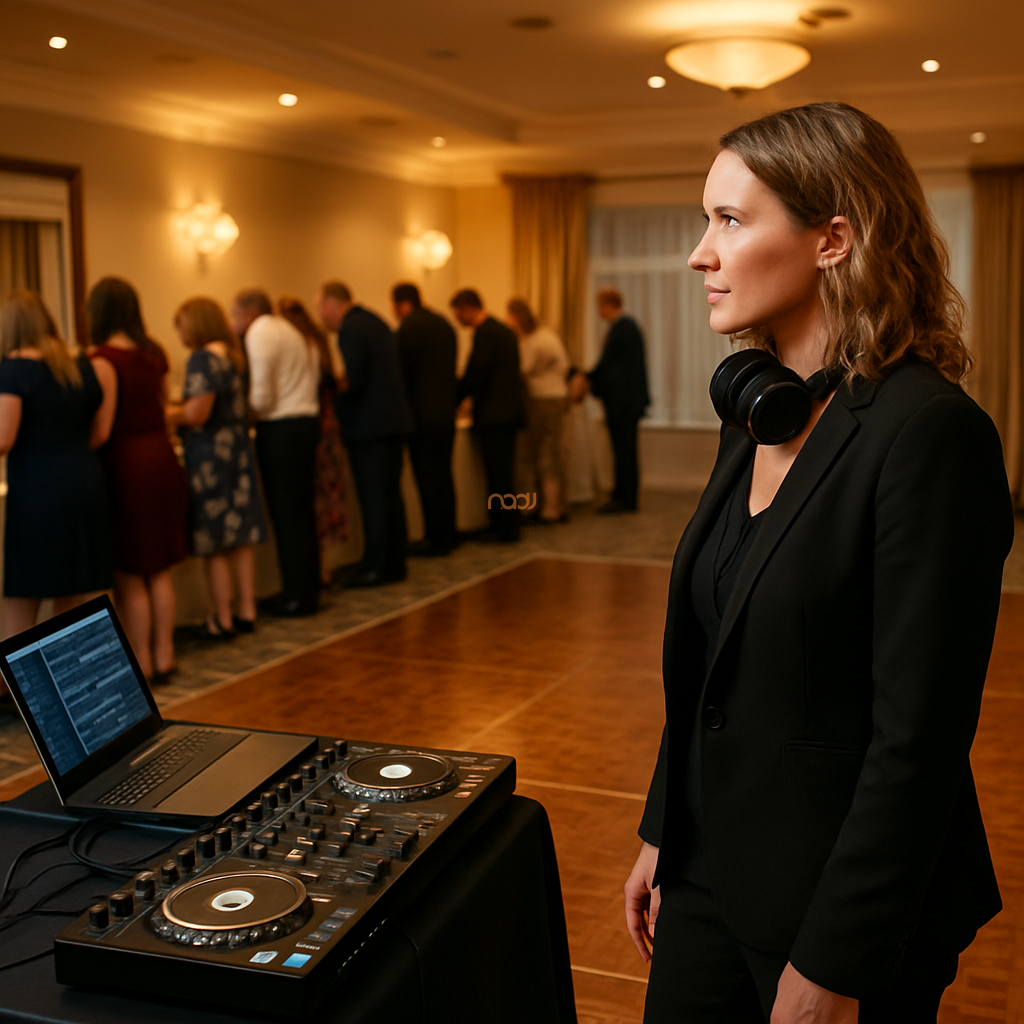
When planning a wedding dancefloor around buffet service, the food schedule can be just as important as the playlist. For UK mobile DJs, the key is not only to read the room, but to understand how guest movement, meal timings and venue layout affect dancefloor energy.
At many weddings across England, Scotland, Wales and Northern Ireland, the evening buffet or late food drop is the point at which the room changes character. Some guests step away for a few minutes and return ready to dance again. Others disappear for longer, especially if the buffet is positioned badly or the service clashes with a peak moment on the floor. Good DJ planning can reduce that disruption.
Why food timing matters to the dancefloor
In practical terms, food creates a reset. If it is introduced at the right moment, it can help settle the room, refresh guests and set up a stronger second wind later in the evening. If it arrives during the wrong track or at the height of a packed dancefloor, it can split the crowd and flatten the atmosphere.
For DJs working weddings in places such as London, Manchester, Birmingham, Leeds, Bristol, Cardiff, Glasgow, Liverpool, Nottingham, Leicester and Coventry, the same principle applies: the event works best when the music, announcements and catering are aligned.
Speak to the couple and venue early
The most reliable way to plan is to ask specific questions before the booking date. Find out:
- When the buffet or evening food is scheduled
- Whether it is a seated service, self-serve buffet or street-food style drop
- Where the food station will be placed
- How long the venue expects guests to be away from the dancefloor
- Whether there will be speeches, cake cutting or another formal moment nearby
Venue staff often know where bottlenecks occur. A buffet table in a narrow corridor or close to the DJ booth can create movement conflicts, especially when guests queue and return with plates at the same time. If possible, encourage a layout that keeps the dancefloor route clear.
Build the music around natural breaks
Rather than fighting the buffet, use it. A short dip in intensity just before food service can feel intentional and help guests step away without a jarring stop. Then, once the catering rush has passed, you can rebuild the floor with familiar hooks, singalongs and well-timed crowd favourites.
What works well in practice
- Before food: energetic but not peak-club intensity
- During food service: lighter background, unless the room stays busy
- After food: a clear lift with recognisable, crowd-friendly tracks
That approach is often more effective than pushing relentless high-energy music while the room is half-empty. A wedding audience usually responds better to a measured reset than to pressure.
Watch the room, not the clock alone
Timings are useful, but they are not the full picture. A buffet may be announced for 9.30pm, yet guests may drift off earlier if drinks are low, speeches have overrun, or the room temperature is too warm. In other cases, a late-night snack appears and the floor empties more slowly than expected.
This is where experience matters. The best wedding DJs do not treat food as an interruption; they treat it as a signal. If the crowd is already tiring, the buffet can give them a break and extend the evening. If the floor is already peaking, a short pause may be the right call provided the DJ knows how to bring people back.
Use announcements carefully
Simple, calm communication usually works best. If you need to help the venue by signposting the buffet, keep the message brief and positive. Avoid repeated interruptions, which can feel heavy-handed and break momentum.
If the couple has a wedding planner or toastmaster, coordinate with them so the message is delivered once, clearly, at the right moment. This is especially helpful for larger receptions and multi-room venues where guests may not all hear the same update.
Plan for crowd flow around the booth
Buffet service can create practical issues for equipment placement. Guests carrying plates and drinks need space to move safely. DJs should check for trip hazards, cable runs and congested corners before the evening begins. That is good practice in any setting, but it becomes more important when food service increases foot traffic.
Where possible, leave a sensible gap between the booth, speakers and guest routes. If you use lighting stands or subs, make sure they do not narrow the path to the buffet or bar. The room should feel inviting, not obstructed.
Tailor the finish, not just the start
Many DJs focus heavily on the opening dance set, but the post-buffet section often decides whether the night finishes strongly. Once the food has settled, a planned run of well-known tracks can help bring guests back in waves. This is often the point to move from broad crowd-pleasers into more personalised selections based on the couple’s preferences.
If the evening buffet is likely to be substantial, avoid saving all your biggest floor-fillers for too early in the night. Give the event room to breathe. A wedding reception is not a club night, and pacing is part of professional delivery.
Useful operational details for UK DJs
Alongside music planning, make sure your general business basics are in order. Many venues ask about documentation, including public liability cover, although requirements vary and should always be checked against live venue policy rather than assumed. For a useful overview, see NADJ’s guidance on DJ public liability insurance in the UK.
If you are developing your business more broadly, NADJ resources can also help. Our membership tiers explained page sets out the options for DJs at different stages, while the NADJ Hub is a useful place to keep up with industry information. You can also explore the NADJ directory or view gig listings if you are looking for opportunities.
For additional professional context, including wider DJ business services, visit nadj.co.uk. And if you are updating your kit for wedding work, our article on the top 10 DJ mixers for mobile wedding DJs may be helpful.
Final thought
Planning a wedding dancefloor around buffet service is ultimately about control, empathy and timing. The DJ who understands how food affects guest movement can protect the atmosphere, keep the room comfortable and create a better night for everyone. That is good service, good event planning and good DJing.
AI transparency note
NADJ uses artificial intelligence as an editorial assistant. Articles produced through this publisher begin with a human-selected idea, source, brief or editorial direction, and AI may be used to research, structure, draft or improve the wording. AI does not set NADJ editorial policy or operate free-range: people acting for NADJ set the instructions and publishing framework, monitor the output and retain editorial responsibility.
Images used by NADJ may include stock photography or AI-generated visuals where appropriate. NADJ is volunteer-led and editorial time is limited; much of our available time is currently absorbed by governance and management, a substantial data audit and membership-system transfer, and planning 12 Tea & Test days across the UK. You can help strengthen member-led content by sending article ideas or completed submissions to hello@nadj.org.uk.









 Avtar Thethy
 Fabio Capozzi
 Alastair Craig
 Dave Mills