
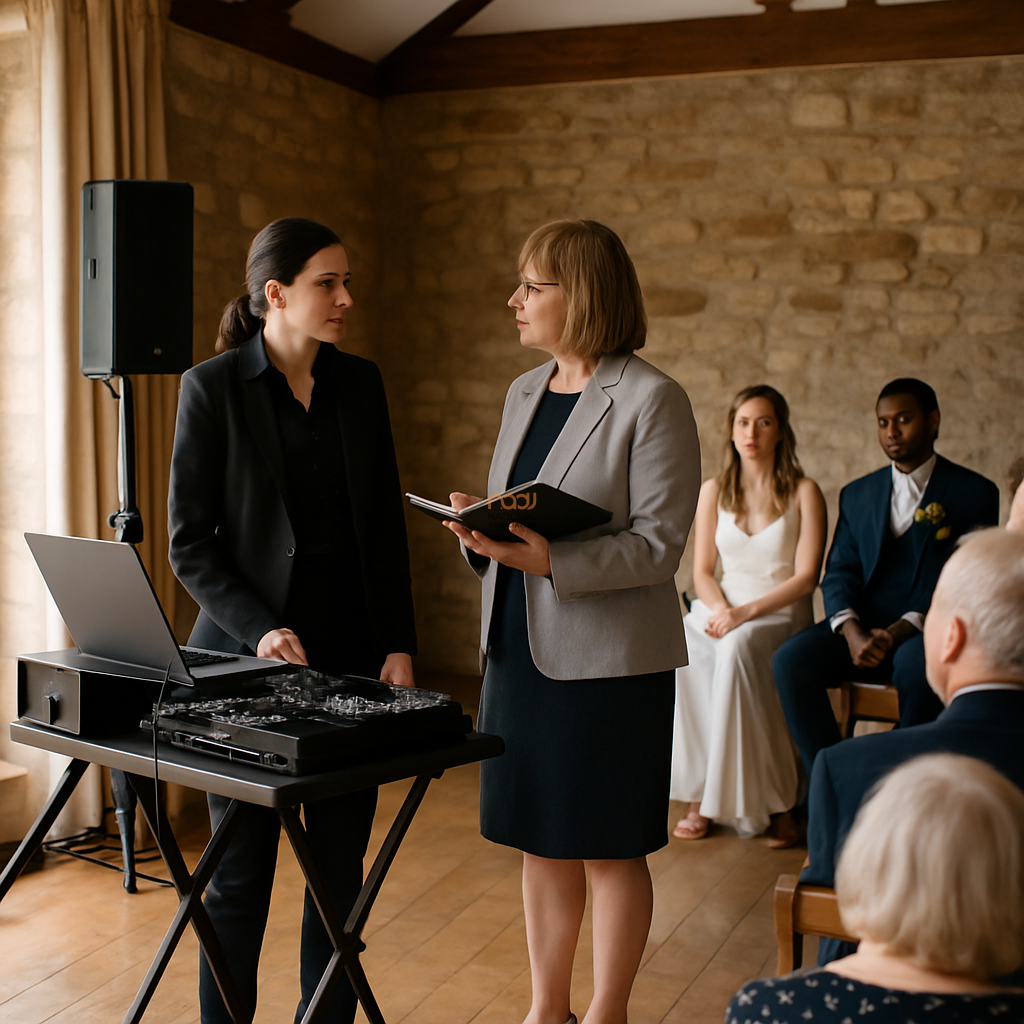
For many modern couples, the wedding day does not follow a traditional format. Humanist ceremonies, blended cultural traditions, outdoor venues, festival-style celebrations and relaxed “all day” events are now common across the UK. In these settings, working with celebrants during non-traditional wedding ceremonies is often essential for keeping the day smooth, respectful and on schedule.
For DJs, this is not simply a matter of playing music at the right moment. It is about understanding the flow of the ceremony, supporting the celebrant’s role, and being ready to adapt when the plan changes. That applies whether you are working in London, Manchester, Birmingham, Leeds, Bristol, Cardiff, Glasgow, Liverpool, Nottingham, Leicester or Coventry, and whether the event is in England, Scotland, Wales or Northern Ireland.
Why celebrant-led ceremonies need a different approach
Celebrant-led weddings are often more personalised than registrar-led ceremonies. They may include readings, symbolic rituals, live musicians, family involvement, or carefully timed entrances and exits. As a result, the DJ may be asked to provide ceremony sound, background music, or announcement support as well as the evening reception.
The key point is this: the celebrant usually manages the structure of the ceremony itself, but the DJ can still influence the atmosphere and the technical reliability of the event. A good working relationship helps everyone stay calm if timings shift.
Start with a clear pre-event conversation
The most useful step is a direct conversation with the celebrant well before the wedding day. Do not assume the couple will brief both suppliers equally. Ask for the celebrant’s contact details, then confirm how they prefer to communicate.
Questions DJs should ask
- What time do you want the sound system available?
- Will you need microphones for vows, readings, or guest participation?
- Do you want music faded manually, or should tracks be cued and stopped at specific points?
- Are there any cultural or religious elements that affect music choices or volume?
- Who gives the cue for each key moment?
This is also the stage to discuss practical issues such as access, power, weather if the ceremony is outdoors, and whether the venue has any restrictions on noise or equipment placement.
Agree the ceremony format, not just the playlist
Many DJs focus on the songs, but for celebrant-led weddings the sequence matters just as much. Ask for a run sheet or order of service if one exists. If there is no formal document, create a simple shared timeline covering arrivals, entrance music, vows, readings, signing rituals, recessional music and any post-ceremony transition into the drinks reception.
Where appropriate, confirm the duration of each cue. For example, some celebrants prefer a short entrance track rather than a full song, while others want a piece to run naturally. Avoid making assumptions. A short check-in can prevent awkward fades or premature track stops.
Music choices should support the ceremony tone
Celebrants often work with couples who want a ceremony that reflects personality rather than tradition. The music may range from acoustic versions of pop tracks to classical pieces, film themes, soul, indie or culturally specific music. The DJ’s role is to support that vision while keeping the sound quality consistent.
It is sensible to encourage couples to choose music that will still sound appropriate in the ceremony space and on the day itself. Outdoor locations, marquee weddings and unconventional venues can all affect how music carries. If you are advising on playback, keep the advice practical rather than personal.
Sound checks and kit planning matter more than usual
Non-traditional ceremonies often place the DJ in environments that are less predictable than a hotel function room or dedicated event suite. You may be working in a garden, barn, tipi, village hall, heritage site or private property. That means your setup must be adaptable.
Before the event, confirm:
- Power availability and cable runs
- Microphone requirements and backup options
- Speaker placement so guests can hear the celebrant clearly
- Weather protection for outdoor kit
- What happens if the ceremony location changes at short notice
For DJs reviewing or upgrading equipment, it may also be worth comparing kit that suits mobile wedding work. NADJ has a useful guide to top DJ mixers for mobile wedding DJs, which may help when planning reliable ceremony and reception setups.
Know your role during the ceremony
One of the most common mistakes is for a DJ to become over-involved. Even when you are handling microphones and music cues, the celebrant remains the lead for the ceremony itself. Your job is to support, not direct.
That means keeping communication discreet, avoiding unnecessary stage presence, and being ready to respond quickly if the celebrant changes pace. If they pause for emotion, laughter or audience reaction, let the moment breathe. Non-traditional ceremonies often depend on warmth and flexibility, not rigid timing.
Build trust with calm, professional communication
Celebrants work with couples who have often invested significant emotional energy into the ceremony. They need suppliers who are organised, discreet and reliable. DJs who respond promptly, ask sensible questions and avoid jargon are more likely to build strong working relationships.
If you are still developing your wedding workflow, it can help to review wider professional standards too. NADJ members often use their membership resources to strengthen credibility and consistency; the membership tiers explained page is a useful starting point for understanding what different levels of membership can offer. You can also explore the wider NADJ Hub for support and guidance.
Insurance, licensing and venue rules still need checking
Wedding professionals often discuss risk in general terms, but DJs should be careful not to make assumptions. Insurance needs, venue requirements and music usage rules can vary depending on the event, equipment and location. Always check live details for the venue, supplier contracts and your own cover.
If you are reviewing your business setup, NADJ’s guidance on DJ public liability insurance in the UK may be a useful reference point, but it should not replace up-to-date policy advice from your provider. Likewise, any licensing or copyright questions should be verified against current rules and the relevant venue arrangements.
Use local networks to strengthen your wedding work
Celebrant-led weddings are often booked by couples who want a personal, polished and flexible experience. DJs who can demonstrate that they understand this market will stand out. Keep your venue notes organised, maintain clear pre-event communication, and build relationships with celebrants and planners in your area.
If you want to grow your wedding business, NADJ’s member directory can help with visibility, while the gig listings page is another place to monitor opportunities. For wider industry support and services, you can also visit NADJ.
Final thoughts
Working with celebrants during non-traditional wedding ceremonies is about precision, flexibility and respect. The best DJs do more than press play: they help shape the rhythm of the ceremony, support the celebrant, and keep the day moving for the couple and their guests.
As the UK wedding market continues to evolve, DJs who understand celebrant-led ceremonies will be better placed to serve couples across the Midlands, London, Scotland, Wales and Northern Ireland. The formula is simple: communicate early, confirm the format, prepare your kit properly, and stay adaptable on the day.
AI transparency note
NADJ uses artificial intelligence as an editorial assistant. Articles produced through this publisher begin with a human-selected idea, source, brief or editorial direction, and AI may be used to research, structure, draft or improve the wording. AI does not set NADJ editorial policy or operate free-range: people acting for NADJ set the instructions and publishing framework, monitor the output and retain editorial responsibility.
Images used by NADJ may include stock photography or AI-generated visuals where appropriate. NADJ is volunteer-led and editorial time is limited; much of our available time is currently absorbed by governance and management, a substantial data audit and membership-system transfer, and planning 12 Tea & Test days across the UK. You can help strengthen member-led content by sending article ideas or completed submissions to hello@nadj.org.uk.









 Avtar Thethy
 Fabio Capozzi
 Alastair Craig
 Dave Mills