
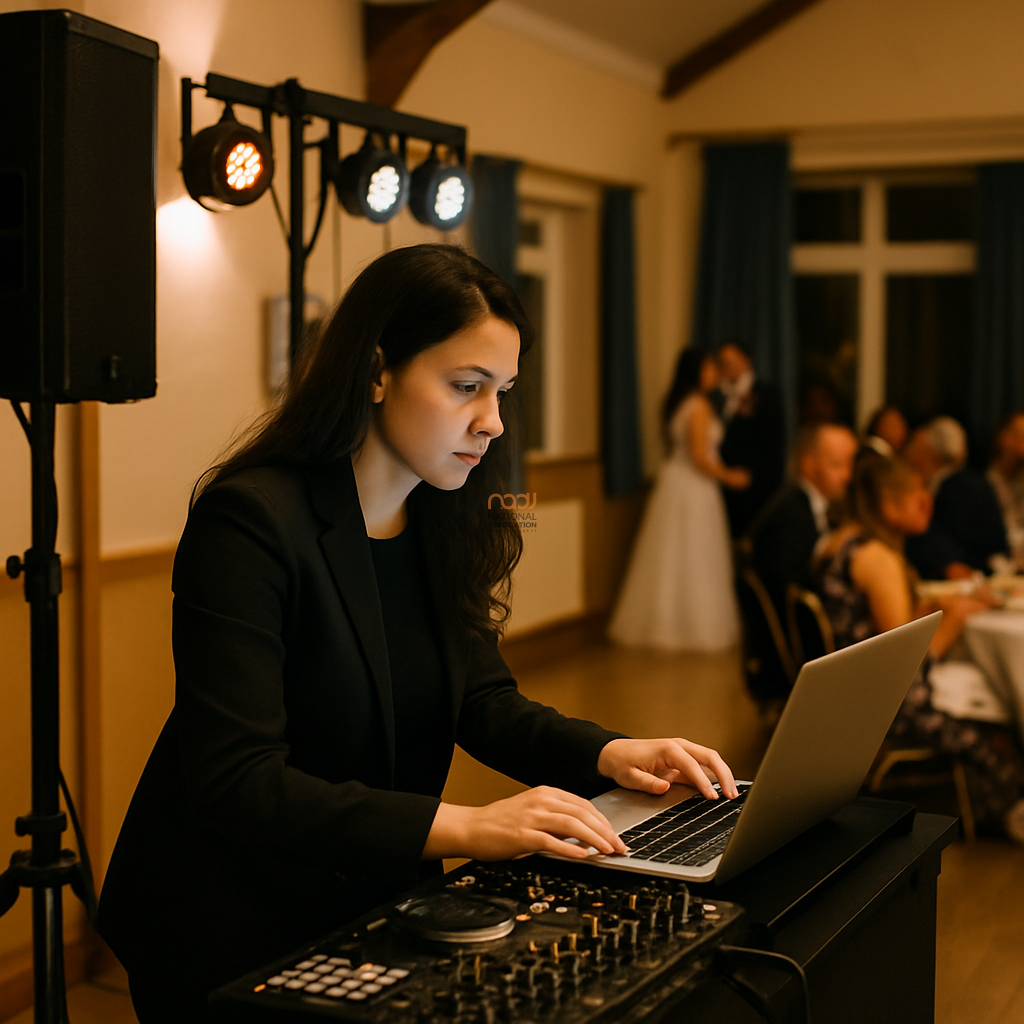
Copyright and DJ mixing is one of those subjects every working DJ should understand, whether you play clubs in London, weddings in the Midlands, or corporate events in Manchester, Birmingham or Glasgow. The good news is that most DJs can mix professionally without being copyright lawyers. The caution is that once you start copying, recording, streaming or distributing music, the risk profile changes quickly.
This article sits alongside NADJ’s cornerstone guide to Music Licensing, Venues and Responsible DJ Practice in the UK. If that piece covers the wider licensing picture, this one focuses on the copyright basics behind the music you play, edit and share.
What copyright actually protects in DJ music
In UK terms, copyright can apply to several separate parts of a track. For DJs, the most relevant are usually:
- The musical composition — the underlying song, melody and lyrics.
- The sound recording — the specific recorded performance you play from a file, CD, record or stream.
- Artwork and other creative material — usually relevant if you are repackaging or distributing content, rather than simply performing it.
This distinction matters. A DJ who buys a track is buying access to a copy, not the right to exploit the work however they choose. Ownership of a file, record or subscription does not mean you own the copyright.
What is usually permitted for DJs?
Most live DJing in licensed venues is built around the venue’s permissions and licences, not around each individual DJ clearing every track personally. In practice, if you are performing in a venue that has the appropriate arrangements in place, your role is generally to play music as a public performance rather than to manufacture new copies of it.
Common examples of lower-risk, generally expected activity include:
- Mixing tracks live at a private or public event where the venue has the necessary music licensing arrangements.
- Using your legally obtained music collection to perform set after set.
- Creating cue points, loops and playlists for your own performance workflow, provided you are not breaching terms of service or making unauthorised copies.
That said, “usually permitted” is not the same as “always lawful in every situation”. Venue type, event type, platform rules and contract terms can all change the picture. Check live details if you are unsure.
Where DJs get into trouble
1. Ripping from streaming services
This is one of the clearest risk areas. A subscription to a streaming platform does not normally give you the right to extract files, reformat them and use them as your performance library. Even where software makes a workflow feel convenient, the underlying licence terms still matter. For DJs working in Bristol, Leeds, Cardiff or elsewhere, the principle is the same: if the service does not allow that use, do not assume it is permitted.
2. Sharing recorded mixes online
Uploading a mix to social media, a website, SoundCloud-style platform or video channel is where copyright issues become much more visible. A DJ mix can contain multiple rights holders across multiple tracks. Whether a platform allows it, monetises it, mutes it or blocks it is a separate issue from whether you had the right to upload it in the first place.
Short excerpts may sometimes be treated differently from full recordings, but there is no simple rule DJs can rely on across every platform or use case. If you are posting promotional mixes, check the platform’s current policies and be realistic about takedowns, geo-blocking and monetisation claims.
3. Bootlegs, edits and mashups
Creative edits are part of DJ culture, but they can also be legally sensitive. If you combine vocals, instrumentals or stems from different sources without permission, you may be making an unauthorised derivative work. A white-label promo sent privately to trusted peers is not the same as a public release. Likewise, a bootleg played once in a club is not automatically safe to distribute online.
4. Sampling and stem-based production
Many modern DJs also produce. Once you start lifting identifiable audio from someone else’s recording for a new track, clearance questions become more serious. Even if the sample is short, the legal and commercial risk may still be meaningful. If you plan to release the work commercially, get proper advice before assuming it is “only a small sample”.
Why venue context still matters
DJs often assume copyright is only about the DJ. In reality, the venue and event organiser matter too. A club night in London, a bar in Liverpool or an outdoor event in Nottingham may all sit under different permission structures. The rights cover the music itself, but the practical licensing burden is often managed at venue level. That is one reason responsible bookkeeping, clear contracts and good communication are part of professional DJ practice.
If you are building your business and want the wider professional picture, NADJ members can also explore membership tiers explained, browse the NADJ directory to connect with peers and suppliers, or keep an eye on gig listings for opportunities. For association updates and broader industry information, visit NADJ Hub and the main site at nadj.co.uk.
A practical DJ checklist
Before you perform, post or distribute music, ask yourself:
- Do I own or legitimately access this music in a way that covers this use?
- Am I playing it live, recording it, streaming it, editing it or re-uploading it?
- Does the platform, venue or service specifically allow this?
- Could this create a takedown, claim or dispute later?
If the answer is unclear, slow down and check the live terms. That may feel less exciting than building a seamless mix, but it is part of running a professional DJ business across England, Scotland, Wales and Northern Ireland.
The bottom line
Most DJs are not trying to infringe copyright. Problems usually arise when convenience outruns caution: copying from streaming platforms, uploading mixes without checking platform policy, or assuming that buying music means owning every right in it. A responsible DJ keeps good records, respects rights holders and understands the difference between playing music and reusing it.
For the wider licensing and venue context, return to NADJ’s cornerstone guide on music licensing, venues and responsible DJ practice in the UK. If you are unsure about a specific situation, seek current legal guidance rather than relying on assumptions or forum advice.
AI transparency note
NADJ uses artificial intelligence as an editorial assistant. Articles produced through this publisher begin with a human-selected idea, source, brief or editorial direction, and AI may be used to research, structure, draft or improve the wording. AI does not set NADJ editorial policy or operate free-range: people acting for NADJ set the instructions and publishing framework, monitor the output and retain editorial responsibility.
Images used by NADJ may include stock photography or AI-generated visuals where appropriate. NADJ is volunteer-led and editorial time is limited; much of our available time is currently absorbed by governance and management, a substantial data audit and membership-system transfer, and planning 12 Tea & Test days across the UK. You can help strengthen member-led content by sending article ideas or completed submissions to hello@nadj.org.uk.









 Avtar Thethy
 Fabio Capozzi
 Alastair Craig
 Dave Mills