
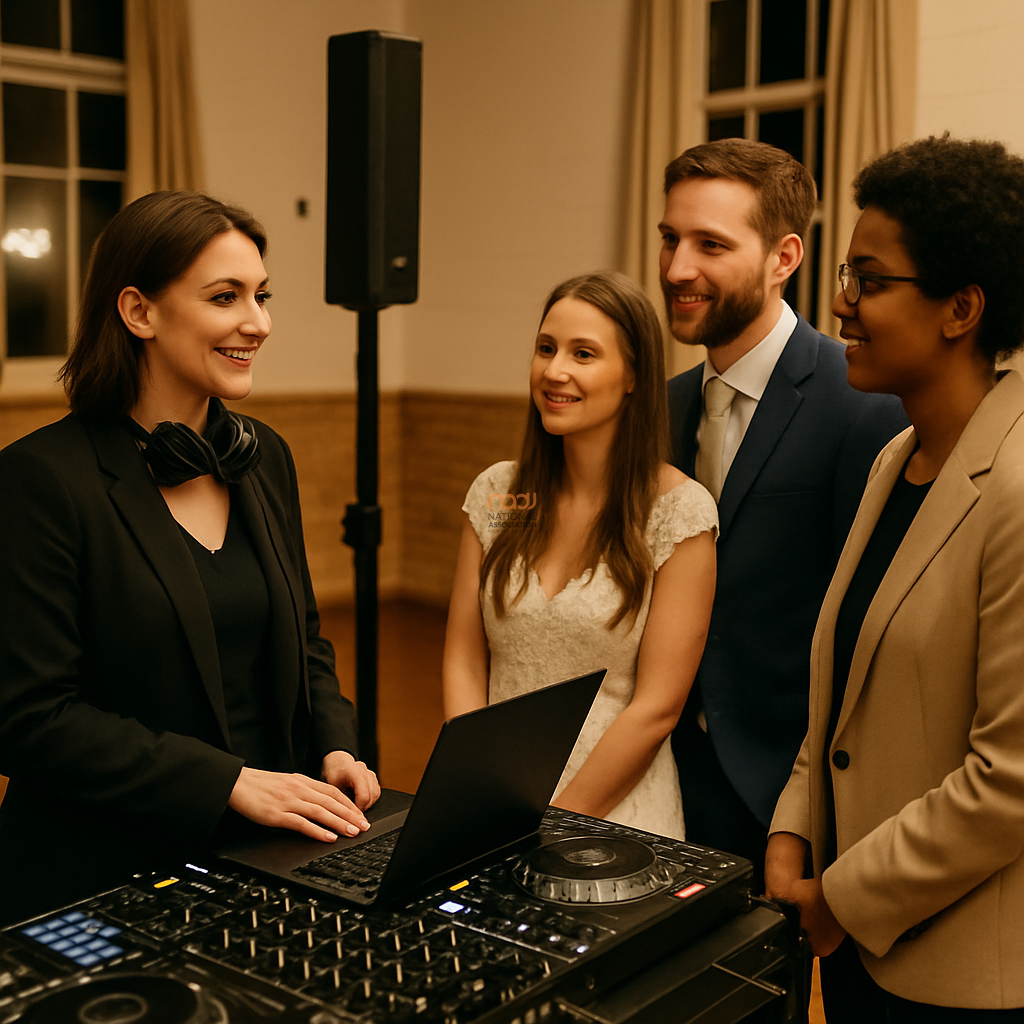
A clear DJ quote separate included hours from overtime is one of the simplest ways to run a more professional mobile DJ business. It helps the client understand exactly what they are paying for, and it helps you protect your time when a party runs later than planned. In the UK DJ industry, where weddings, birthdays, corporate events and club-style functions can all overrun for different reasons, that distinction matters.
At NADJ, we regularly encourage DJs to present pricing in a way that is transparent, easy to compare and straightforward to deliver. A quote should not leave room for guesswork. If your base fee includes six hours, say so plainly. If additional time is charged separately, show that as a distinct line or a clearly defined rate. That approach is better for you and better for the client.
Why the distinction matters
The first reason is expectation management. Many clients do not think in terms of soundcheck, setup, guest arrivals, awards, speeches, first dances or the practical realities of packing down. They often think only of the “party time”. By separating included hours from overtime, you make the working window visible from the start.
Secondly, the structure reduces awkward conversations on the night. If the room is busy and the organiser wants an extra hour, the answer should not depend on memory or negotiation under pressure. The quote already explains what is covered, what is not, and how any extension is priced.
Thirdly, it protects your margin. A DJ who quotes a flat fee without a time boundary may find themselves effectively working two or three extra hours for free. That is not sustainable, especially for self-employed DJs balancing transport, loading, admin, music acquisition, equipment wear and tear, and the wider business costs of trading in the UK.
What should be included in the base fee?
The exact structure will vary by event and region, from London and Birmingham to Glasgow, Leeds, Bristol, Cardiff, Manchester, Liverpool, Nottingham, Leicester and Coventry. However, the principle stays the same: define the core service clearly.
For example, your base fee might include:
- One DJ performance period of a set number of hours
- Standard sound and lighting for the agreed event type
- Arrival, setup and pack-down within a defined window
- Pre-event planning by phone or email
- Travel within a stated area, if applicable
If you provide extras such as additional microphones, uplighting, projectors, PA hire or an upgraded system, make those separate too. If you are advising a client on sound levels or equipment suitability, our guide to the best PA speakers for mobile DJs in the UK can also help frame the kind of service level being quoted.
How to define overtime clearly
Overtime should never be an afterthought. State the rate, the billing unit and any conditions. For example, you may charge by the half-hour or by the hour once the included period ends. You may require a decision before a certain cut-off time. You may only extend if venue rules, licensing conditions, or your own working limits allow it.
Keep the wording simple. A client should be able to read the quote and understand the answer to three questions: how long is included, what happens if we need more time, and how much will it cost?
Where relevant, add a caveat that overtime is subject to availability and venue permissions. That is especially important for weddings and late-night functions, where the finishing time may be influenced by the venue, security, local policies or the event schedule. Do not imply that every extension is guaranteed.
Better quotes build trust
Clients often compare DJs on price, but they also compare on clarity. A quote that separates included hours from overtime looks more professional because it gives structure. It shows that you have thought through the booking rather than simply naming a number and hoping for the best.
This can be particularly useful for business clients and event planners, who may need to approve spend in advance. If a client in Manchester or Birmingham is comparing several suppliers, a quote with explicit hours and overtime is easier to assess than one with vague wording. It also reduces the risk of complaints later if an event runs beyond the original finish time.
Clear pricing also supports your wider reputation. DJs who present themselves well are more likely to be recommended, added to a venue’s preferred supplier list, or found through directories such as the NADJ directory. For members exploring professional development and support, our NADJ Hub is also a useful place to stay informed.
What to avoid in your quote
Try to avoid phrases such as “all night”, “until finish” or “overtime if required” unless you explain exactly what those terms mean. Vague language causes misunderstanding. It is also wise not to bury overtime details in the small print where they are easy to miss.
Avoid promising unlimited flexibility. Even if you are keen to win the booking, a quote should reflect a realistic working pattern. Remember that your travel, loading time and the physical demands of the job are part of the service. If you routinely work across England, Scotland, Wales and Northern Ireland, your admin needs to be robust enough to keep pricing consistent from one event to the next.
A simple quote structure DJs can use
You do not need a complicated template. A practical DJ quote might include:
- Event date, venue and client details
- Included performance hours
- What equipment and services are included
- Arrival and setup window
- Overtime rate and billing unit
- Conditions for extending the booking
- Deposit, balance and payment terms
If you are a newer DJ, it is worth reviewing your membership and support options too. NADJ’s membership tiers explained page sets out the different levels available, which may help you decide how best to position your business and the professional support you need.
Final thought
Separating included hours from overtime is not just an admin exercise. It is a professional habit that improves communication, supports fair pricing and helps events run more smoothly. For working DJs across the UK, from small community venues to large city-centre functions, that clarity is worth building into every quote.
As with any pricing or contractual matter, check your own terms carefully and make sure they suit your business model, venue expectations and current obligations. Where insurance, licensing or venue rules are relevant, always refer to the live requirements and seek appropriate advice if needed. A well-structured quote will not solve every problem, but it will prevent many of them before they begin.
If you are also reviewing your public-facing business setup, services such as websites, advertising and accounting are part of the wider support available through NADJ Media Ltd. And if you are looking for live work opportunities, the gig listings page is another useful resource to keep an eye on.
AI transparency note
NADJ uses artificial intelligence as an editorial assistant. Articles produced through this publisher begin with a human-selected idea, source, brief or editorial direction, and AI may be used to research, structure, draft or improve the wording. AI does not set NADJ editorial policy or operate free-range: people acting for NADJ set the instructions and publishing framework, monitor the output and retain editorial responsibility.
Images used by NADJ may include stock photography or AI-generated visuals where appropriate. NADJ is volunteer-led and editorial time is limited; much of our available time is currently absorbed by governance and management, a substantial data audit and membership-system transfer, and planning 12 Tea & Test days across the UK. You can help strengthen member-led content by sending article ideas or completed submissions to hello@nadj.org.uk.









 Avtar Thethy
 Fabio Capozzi
 Alastair Craig
 Dave Mills