
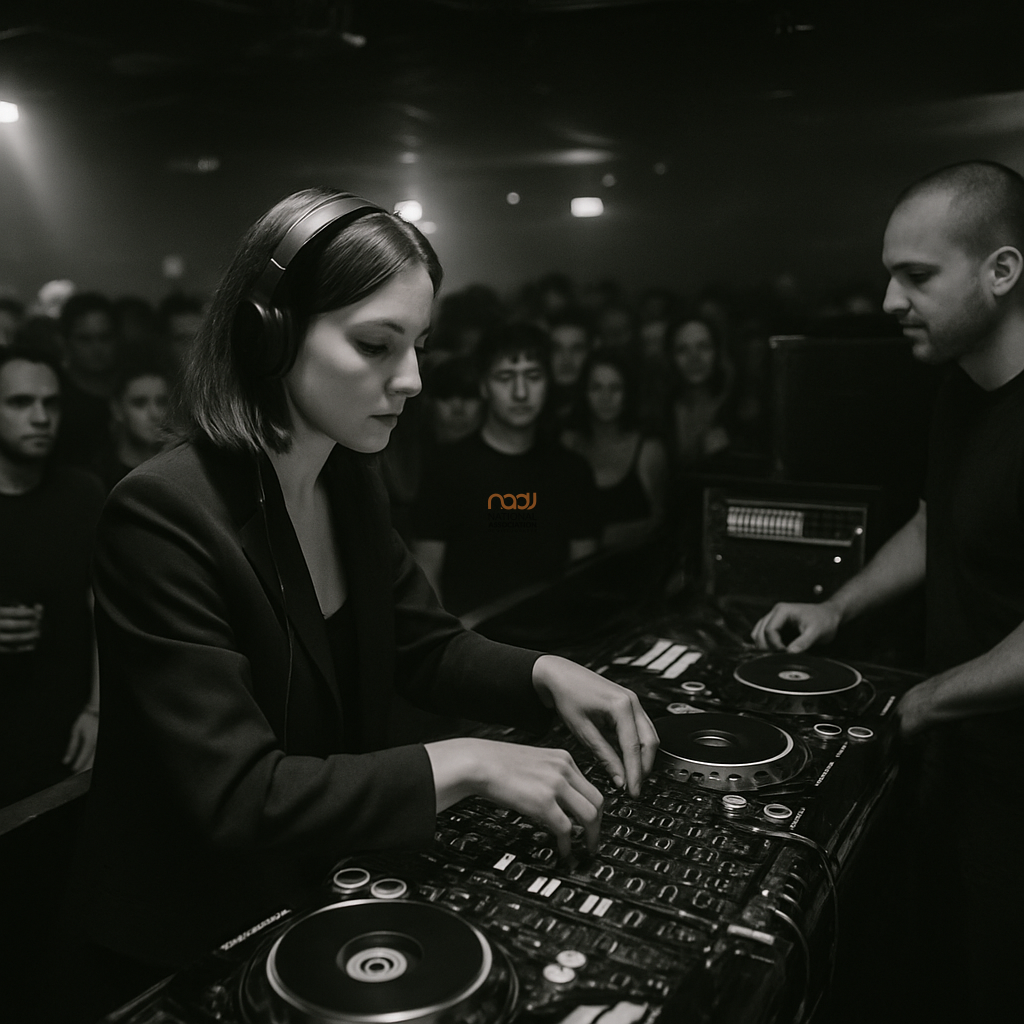
Amelie Lens has become one of the most visible names in contemporary techno, and the Amelie Lens career story is a useful reminder that recognisable sound, steady output and strong live work still matter. For UK DJs watching how artists move from club rooms to festival main stages, her path is a clear example of how a focused identity can build momentum over time.
Lens, who is from Belgium, emerged through the club circuit rather than through a manufactured online persona. Her rise was built in the settings that matter most to dance music: regular gigs, selective releases and a reputation for high-intensity sets. That grounding gave her a practical understanding of crowd control and pacing, which has remained central to her work even as her profile has grown internationally.
Early development: learning the room before learning the world
Like many DJs who later cross into headline territory, Lens’ early career was shaped by club dates where the audience came for the music first. Those rooms matter because they teach timing, tension and restraint. Techno can feel relentless from the outside, but the best DJs know when to hold back, when to build and when to push the room forward.
That instinct became one of Lens’ calling cards. Rather than relying on a broad stylistic spread, she developed a direct, driving approach that listeners could identify quickly. In an industry where many DJs try to be everything at once, that clarity helped her stand out.
Her rise also reflects a broader shift in electronic music. Over the past decade, techno has moved further into the mainstream festival economy, with artists now moving between underground clubs and huge outdoor stages more fluidly than before. Lens was well placed for that change because her sound is club-rooted but built with enough scale to translate in bigger environments.
Breakthrough: releases, recognition and a stronger platform
Lens’ profile rose sharply as her releases gained traction and her name spread beyond Belgium. She became associated with a hard-edged, fast-moving style of techno that fit both peak-time club sets and large-scale festival programming. That combination is important: records alone rarely build a lasting career unless the DJ can also prove they can deliver live, night after night.
One of the key steps in her development was the launch of Exhale, her event and label project. Exhale gave her a platform to present music in a way that matched her own curation. For DJs, that is significant. Building a label or event brand is not only about control; it is also about consistency. It lets an artist define a lane, support similar sounds and deepen trust with an audience.
In practical terms, Exhale also helped Lens move from being simply a performer to being a curator and tastemaker. That shift matters in modern DJ careers, especially in the UK, where the most sustainable names often do more than play: they present, programme, release and build ecosystems around their work.
Sound and stagecraft: why her sets translate
Lens’ sound is often described as tough, propulsive techno, but that shorthand misses what makes her effective. The real strength is structure. Her sets are generally built around pressure, repetition and release, with a focus on momentum rather than dramatic genre-hopping. That makes them accessible to large crowds without losing the urgency that techno audiences expect.
Her production catalogue has supported that reputation. By keeping the relationship between her records and her DJ sets tight, she has avoided the common problem where an artist’s live persona and studio output feel disconnected. For working DJs, that is a reminder that audiences respond well when the booth and the booth-ready music point in the same direction.
She has also benefited from the broader visibility that comes with major festival and club bookings across Europe and beyond. Appearances at internationally recognised events helped turn her from a respected underground name into a globally touring artist. However, that progression did not happen overnight. It depended on repeat bookings, audience response and a body of work that promoters could rely on.
Influence: visibility, representation and expectation
Lens’ career is often discussed in the context of visibility for women in techno, but the more useful point is that she has become a reference point for professionalism. She is not an outlier because of image alone; she is notable because she has built a coherent, durable career in a competitive part of the industry.
That visibility matters. When a DJ becomes a regular fixture on line-ups at major venues and festivals, it can widen what newer artists think is possible. In the UK, where the scene stretches from London and Manchester to Birmingham, Leeds, Bristol, Glasgow, Liverpool, Nottingham, Leicester and Coventry, there is still room for DJs who develop a clear sound and remain consistent over years rather than weeks.
For audiences and bookers alike, Lens demonstrates that scale does not have to mean compromise. She has kept her identity tightly defined while working on bigger stages, which is often harder than changing styles to suit every slot.
What working DJs can take from her career
There is a practical lesson in how Lens built her profile: clarity compounds. A DJ who knows what they represent, and proves it steadily, is easier to programme, easier to remember and easier to book again. That is true whether you are playing club nights in Cardiff, student events in Nottingham or larger rooms in London.
There is also a production lesson. Releases work best when they support the DJ’s live identity rather than distract from it. If your sets are built around energy and flow, your tracks should usually do the same. In that sense, the strongest careers tend to be the most coherent ones.
Finally, presentation still matters. Even at the highest level, DJs need reliable logistics: the right kit, a professional approach to bookings, and a clear understanding of what is required for each event. For UK readers, NADJ members often use resources such as membership tiers explained, the NADJ directory and the gig listings area to stay connected to the working market. If you are building a broader DJ business, you may also want to review practical guides such as DJ public liability insurance UK and, where relevant, equipment guidance like the best PA speakers for mobile DJs. Live details should always be checked against current requirements.
A career built on consistency
Amelie Lens’ rise has not depended on a single viral moment or a gimmick. It has been built on repeated club success, identifiable sound design and a business approach that extends beyond the booth. That is why her story remains relevant to working DJs in the UK: it shows that a focused artistic identity, backed by solid execution, can still carry a DJ from early gigs to major stages.
For many in the trade, that is the real benchmark. Not instant fame, but durable demand.
AI transparency note
NADJ uses artificial intelligence as an editorial assistant. Articles produced through this publisher begin with a human-selected idea, source, brief or editorial direction, and AI may be used to research, structure, draft or improve the wording. AI does not set NADJ editorial policy or operate free-range: people acting for NADJ set the instructions and publishing framework, monitor the output and retain editorial responsibility.
Images used by NADJ may include stock photography or AI-generated visuals where appropriate. NADJ is volunteer-led and editorial time is limited; much of our available time is currently absorbed by governance and management, a substantial data audit and membership-system transfer, and planning 12 Tea & Test days across the UK. You can help strengthen member-led content by sending article ideas or completed submissions to hello@nadj.org.uk.









 Avtar Thethy
 Fabio Capozzi
 Alastair Craig
 Dave Mills