
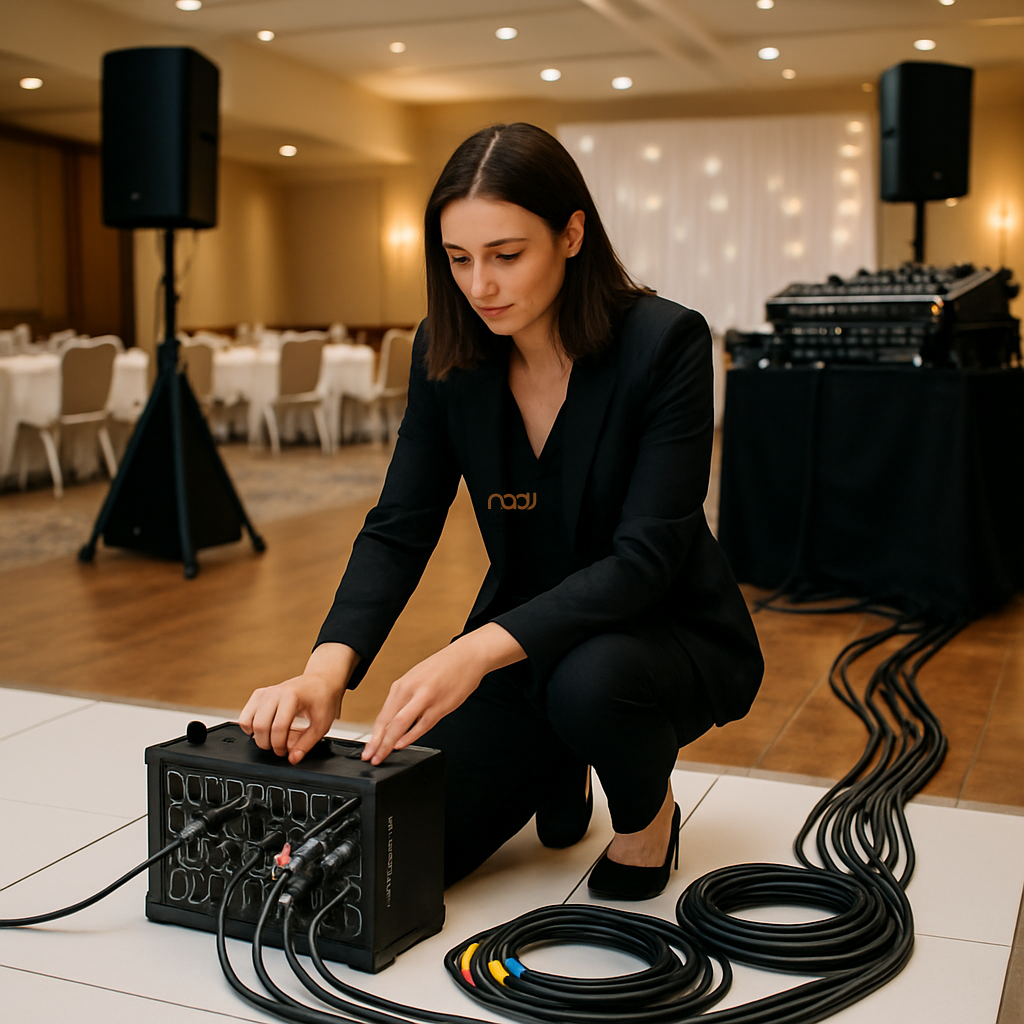
For larger mobile DJ rigs, digital splitters and stage boxes can make a major difference to speed, tidiness and reliability. Whether you are working weddings in the Midlands, corporate functions in London, or multi-room events in Scotland, a well-planned signal distribution setup helps keep your system organised and easier to troubleshoot.
The basic principle is simple: rather than running multiple long cables directly from the DJ position to every speaker, processor or recording point, you use a central distribution point. That may be an analogue splitter, a digital stage box, or a networked audio system depending on your equipment and workflow. The right choice depends on the size of the setup, the venue layout and the type of work you do.
What do digital splitters and stage boxes do?
A stage box is a remote I/O point that brings multiple audio channels together in one place. In a larger DJ setup, it can sit near the performance area or behind the PA, allowing you to send audio over a single cable type or network rather than a bundle of separate leads. A digital splitter serves a similar purpose by distributing signals cleanly to more than one destination, often with better consistency than a long daisy chain of adaptors and extension leads.
In practical terms, that means less cable clutter, faster changeovers and fewer trip hazards. It can also make it easier to integrate subs, delays, zone speakers, wireless microphones, and sometimes a separate feed for venue recorders or livestream systems. However, the exact gain depends on the quality of the system and how it is configured.
Why larger mobile DJ rigs benefit from better signal distribution
Once you move beyond a simple two-speaker setup, cable management becomes part of your overall system design. A typical larger mobile DJ package may include front-of-house tops, subwoofers, uplights, microphones, booth monitoring and occasionally additional speakers for a second room or terrace. Running all of that from the booth without a structured approach can quickly become messy.
Digital splitters and stage boxes help by centralising connections. This brings a few practical advantages:
- Faster setup and breakdown at busy weddings and events.
- Cleaner cable runs and fewer visible leads in front of guests.
- Better consistency when signals need to travel farther across a venue.
- Easier fault-finding because each line is part of a planned signal path.
- More scalable systems if you regularly work in larger rooms or split-room venues.
Digital or analogue: choose the right method for the job
Not every mobile DJ needs a digital stage box. For many operators, a high-quality analogue splitter or a compact mixer with sensible outputs is still perfectly adequate. If your setup is modest, adding digital complexity may not improve anything. In fact, it may create unnecessary points of failure if the team using it is not fully familiar with the system.
Digital stage boxes are most useful when you already work with a more advanced workflow, such as networked audio, multichannel playback, separate microphone control, or a hybrid DJ/live sound package. If you are regularly supplying sound for larger venues in Manchester, Birmingham, Leeds, Bristol, Cardiff or Glasgow, the efficiency gains can be worthwhile. But only if the equipment is robust and you understand the signal path from end to end.
Key planning points before you invest
1. Check compatibility
Before buying anything, make sure the stage box or splitter matches your mixer, audio interface or speaker management system. Different manufacturers may use different protocols, connector types and power arrangements. Do not assume that two digital systems will work together just because the sockets look similar. Check the current manual and test the exact configuration you intend to use.
2. Think about redundancy
For an event DJ, reliability matters more than novelty. A simple analogue backup path can be valuable if a digital network component fails. At minimum, consider how you would keep music playing if a primary output, network switch or stage box becomes unavailable. This is especially important for large paid bookings, where downtime is not an option.
3. Keep power distribution separate and sensible
Signal distribution is not the same as mains distribution. Keep audio cabling, power and lighting runs organised and avoid overloading a single outlet or extension. Use proper cable protection where guests or staff may walk. If your setup includes significant power demands, work within the manufacturer’s guidance and seek qualified advice where needed.
4. Label everything
Labelling may sound basic, but it saves time on every job. Mark inputs, outputs, network links and spare lines clearly. This is particularly helpful if multiple DJs, techs or venue staff may touch the system during the night. A well-labelled stage box also makes it easier to train a backup operator.
When a stage box makes sense for mobile DJs
A stage box is most useful when you want a fixed connection point in the room and a more polished cable layout. Common examples include:
- Weddings with an off-centre DJ position.
- Large hotel ballrooms where the booth is separated from the dancefloor.
- Corporate events with live speakers and multiple audio sources.
- Multi-room functions requiring a clean feed to another area.
- Setup environments where speed is crucial, such as venue turnarounds.
If you also provide entertainment in smaller venues, remember that flexibility still matters. Sometimes a simple, high-quality portable rig is the better choice. Our guide to the best PA speakers for mobile DJs in the UK may help you weigh the rest of your system around the same practical priorities.
How this fits into a professional mobile DJ business
Clean system design is part of presenting yourself professionally. Clients may never ask what stage box you used, but they will notice if your setup looks tidy, starts on time and runs without fuss. That is why many experienced DJs treat signal routing as part of their service, not as an afterthought.
If you are refining your operation, it can also help to think about your wider business standards. NADJ membership gives working DJs access to resources, development and industry support through membership tiers explained, while the NADJ Hub is a useful place to keep up with practical industry information. You can also use the NADJ directory to discover suppliers and contacts, and the gig listings page for opportunities.
Insurance, venue requirements and safe working
When you add more complex wiring, the need for safe working becomes even more important. Always follow manufacturer instructions, venue rules and any relevant electrical guidance. If you are unsure about a product’s suitability for a particular installation, pause and check rather than guessing. Also, if you are carrying out public events, make sure your business insurance remains appropriate for the services you provide. Our guide to DJ public liability insurance gives a useful overview, but you should always check live policy terms and cover levels with your provider.
Final thoughts
Digital splitters and stage boxes are not essential for every DJ, but they can be a smart step up for larger mobile setups. Used well, they reduce clutter, simplify logistics and help you deliver a more professional service across England, Scotland, Wales and Northern Ireland. The key is to choose equipment that fits your actual workflow, test it properly, and keep a sensible backup plan in place.
As your bookings grow, so should your systems. Thoughtful infrastructure is often what separates a busy operator from a well-organised one. For further business support, learning resources and industry services, you can also visit NADJ Media for wider digital and operational support.
AI transparency note
NADJ uses artificial intelligence as an editorial assistant. Articles produced through this publisher begin with a human-selected idea, source, brief or editorial direction, and AI may be used to research, structure, draft or improve the wording. AI does not set NADJ editorial policy or operate free-range: people acting for NADJ set the instructions and publishing framework, monitor the output and retain editorial responsibility.
Images used by NADJ may include stock photography or AI-generated visuals where appropriate. NADJ is volunteer-led and editorial time is limited; much of our available time is currently absorbed by governance and management, a substantial data audit and membership-system transfer, and planning 12 Tea & Test days across the UK. You can help strengthen member-led content by sending article ideas or completed submissions to hello@nadj.org.uk.









 Avtar Thethy
 Fabio Capozzi
 Alastair Craig
 Dave Mills