
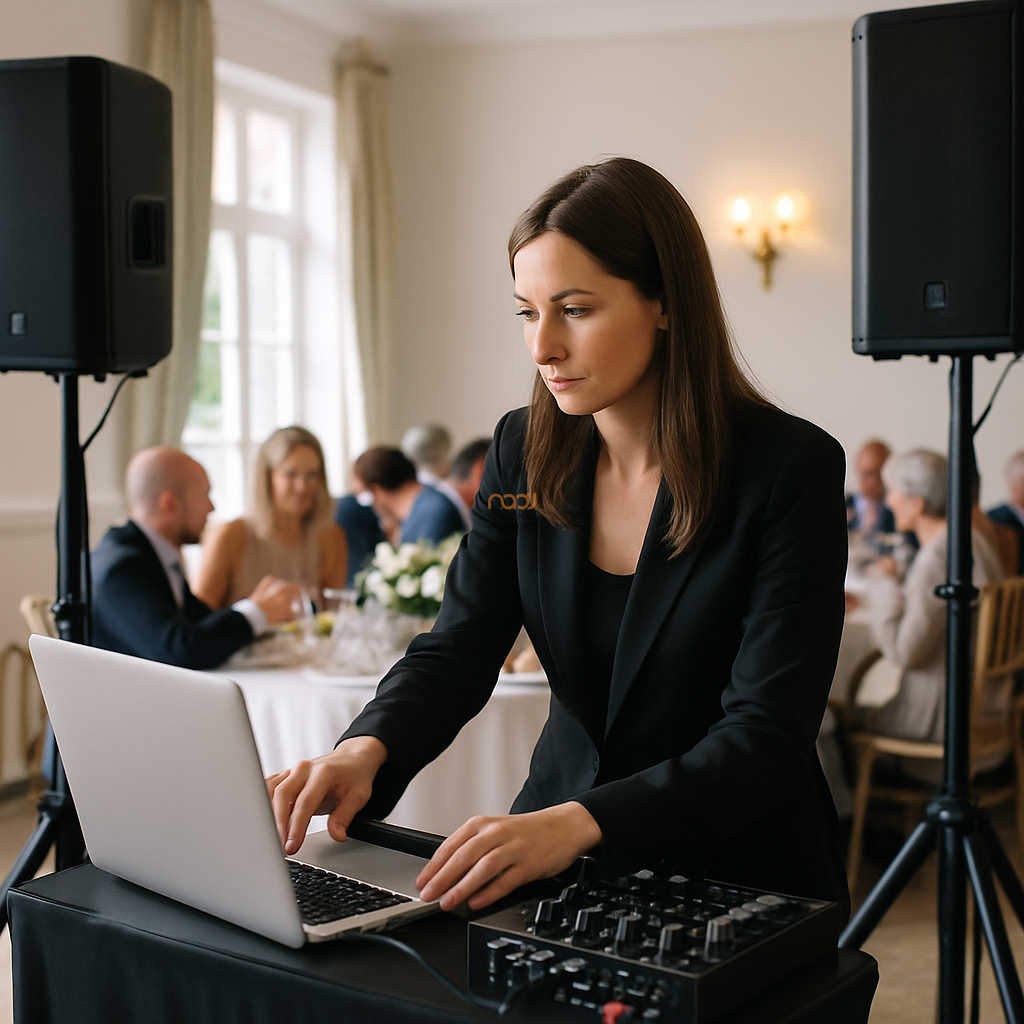
Wedding breakfast music is one of the easiest parts of a wedding day to underserve, yet it has a big impact on the atmosphere. If the background playlist feels generic, it can flatten the room before speeches, dessert and the evening reception even begin. For UK wedding DJs, the challenge is simple: create a soundtrack that supports conversation, reflects the couple, and still feels professionally selected.
The best wedding breakfast music does not try to dominate the room. Instead, it adds shape, warmth and identity. That means moving beyond the standard “easy listening” approach and thinking like a curator. The goal is not to impress with volume or technical flourish, but to build a playlist that suits the venue, the crowd and the flow of the day.
Start with the function of the room
The wedding breakfast sits in a specific part of the day. Guests have usually been through a ceremony, a drinks reception and a seating shuffle. They want comfort, clarity and a sense of occasion. In practical terms, that means music should support conversation while still giving the room character.
Tempo matters. Keep the middle of the playlist in a moderate, steady range, and avoid too many abrupt style changes. A good background set can move from acoustic soul to soft indie, then into gentle jazz-inflected pop or timeless classics. The exact mix will depend on the couple, but the principle remains the same: smooth progression beats random variety.
Use the couple as your editorial brief
Generic playlists often happen when the DJ starts from genre labels instead of the couple’s story. Ask for more than “our favourite songs”. Find out what they actually listen to in the car, what they play at home, and which artists matter to them as a pair. There is often a stronger connection in those details than in a broad request for “chill music”.
This is where a professional approach sets you apart. A bride and groom in Manchester may want a different tone from a couple in Bristol, while a city-centre venue in London may need a more polished, contemporary feel than a barn in the Midlands or a hotel in Scotland. The music should feel locally aware without becoming themed or overcomplicated.
Build a playlist with layers, not clichés
A strong wedding breakfast playlist usually works in layers. Start with recognisable, low-pressure tracks that many guests will know without feeling shouted at. Then add deeper cuts that still suit the mood. Finally, include a few songs that say something about the couple’s taste. This prevents the set from sounding like the same hospitality playlist used in every venue from Leeds to Liverpool.
Be careful with overused “wedding background” choices. They are not always bad songs, but too many obvious picks in one block can make the set feel formulaic. Instead, look for versions, arrangements and artists that provide familiarity without predictability. A well-chosen acoustic cover, a stripped-back soul track or a mellow rework of a well-known song can work well if it genuinely fits the room.
Plan for speeches, service and timing
Good wedding breakfast music is not only about the songs themselves. It is also about timing. Music should be able to pause cleanly for speeches, service announcements and key moments without causing disruption. That means having an organised running order, clear cue points and a sensible backup plan if the day runs late.
Be ready to adjust the energy around practical moments. If service is slow, keep the music unobtrusive. If the room feels flat after the meal, lift the pace gently before speeches. This kind of judgement is what separates a generic playlist from a responsive one.
Think about equipment and delivery
Background music still needs reliable delivery. Even at lower volumes, poor speakers or a bad source file will be noticed. Keep the sound clean, balanced and easy on the ear. If you are working a wedding where you may also be handling the evening party, check your monitoring setup and headphones as part of your standard prep; our guide to DJ headphones for professional mobile DJs in the UK may help when reviewing kit.
It is also wise to maintain a professional mindset around risk and responsibility. If you are visiting venues across England, Wales, Scotland or Northern Ireland, make sure your usual checks are current and appropriate for the work you do. For example, public liability insurance expectations can vary by venue and supplier arrangement, so it is sensible to review the details carefully rather than assume a standard requirement. NADJ members often check guidance through our DJ public liability insurance information before each season.
Create structure, then personalise
A practical way to avoid sounding generic is to design the playlist in blocks. For example: arrival and meal opening, main course, speeches reset, dessert and soft transition towards the evening. Within each block, plan for subtle changes in mood rather than dramatic jumps. This helps the music follow the pace of the room.
Once the structure is in place, personalise it. Add a track that references the couple’s first holiday, their shared university years, a favourite artist from a memorable trip, or the sound they both play at home. Those touches make the set feel written for real people, not assembled for an anonymous booking file.
Use your network and keep learning
One of the most useful habits for working DJs is to keep your ears open to what others are doing well. NADJ members and readers can use the NADJ directory to find DJs and industry contacts, and the NADJ Hub for wider resources. If you are looking for work, the gig listings page may also be worth checking from time to time.
If you are reviewing your wider professional setup, membership options are explained on our membership tiers page, while the main association site at nadj.co.uk remains the best place to explore what NADJ is doing for the UK DJ industry. That includes support, standards and practical development for working DJs across Birmingham, Leicester, Coventry, Nottingham, Glasgow, Cardiff, Leeds and beyond.
Final thought
Wedding breakfast music should feel calm, considered and personal. If it sounds generic, it usually means the selection was made too quickly or without enough context. By focusing on the couple, the room and the flow of the day, you can build playlists that feel natural, polished and memorable without ever becoming intrusive. That is the mark of a thoughtful wedding DJ.
AI transparency note
NADJ uses artificial intelligence as an editorial assistant. Articles produced through this publisher begin with a human-selected idea, source, brief or editorial direction, and AI may be used to research, structure, draft or improve the wording. AI does not set NADJ editorial policy or operate free-range: people acting for NADJ set the instructions and publishing framework, monitor the output and retain editorial responsibility.
Images used by NADJ may include stock photography or AI-generated visuals where appropriate. NADJ is volunteer-led and editorial time is limited; much of our available time is currently absorbed by governance and management, a substantial data audit and membership-system transfer, and planning 12 Tea & Test days across the UK. You can help strengthen member-led content by sending article ideas or completed submissions to hello@nadj.org.uk.









 Avtar Thethy
 Fabio Capozzi
 Alastair Craig
 Dave Mills