
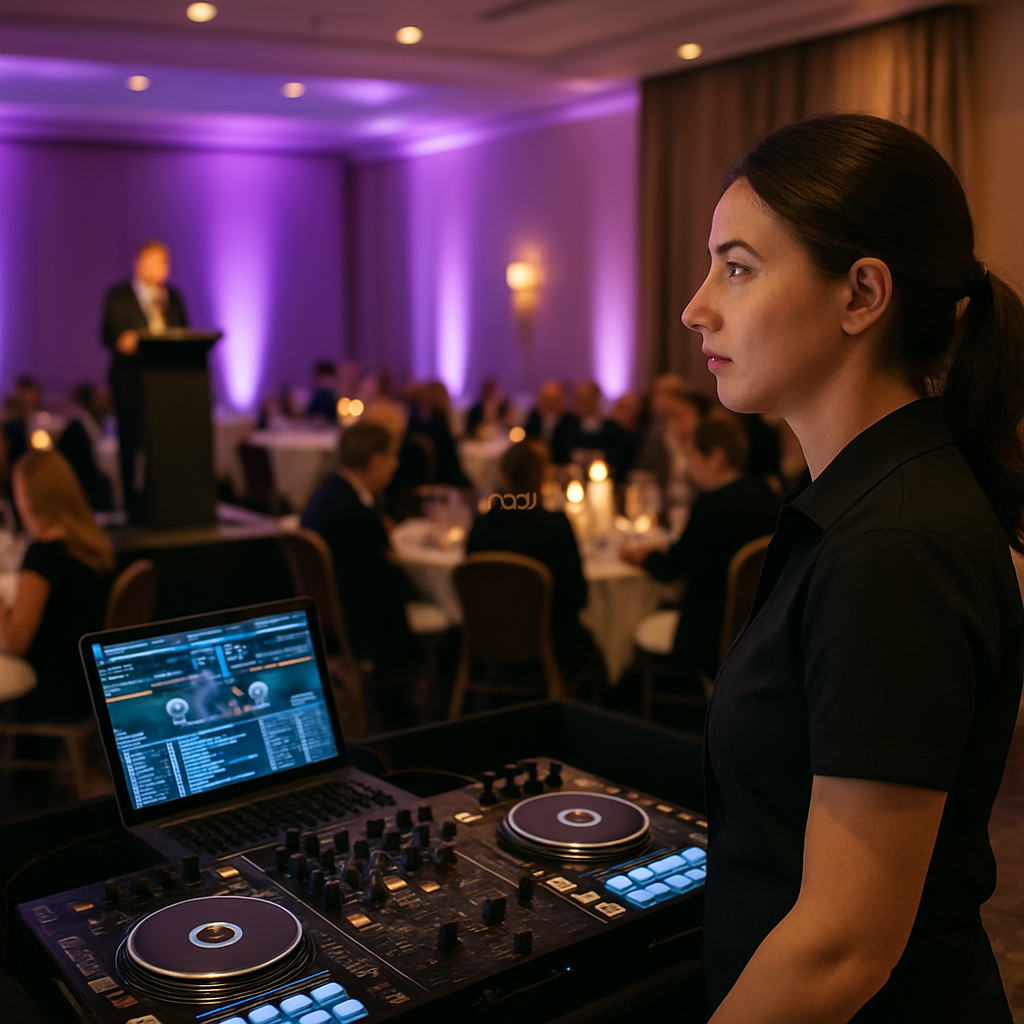
Programming music for awards nights is a specialist skill that sits somewhere between DJing, stage management and event support. Done well, it helps presenters, nominees and audiences feel the pace of the evening. Done poorly, it distracts from the room, slows the ceremony or makes each walk-up feel awkward.
For UK DJs working in hotels, conference venues, civic halls and function rooms across England, Scotland, Wales and Northern Ireland, awards events can be a valuable part of the calendar. Whether you are working in London, Manchester, Birmingham, Leeds, Bristol, Cardiff, Glasgow, Liverpool, Nottingham, Leicester or Coventry, the same principle applies: the music should support the event, not compete with it.
Start with the structure of the night
Before you build a playlist, ask how the awards will run. You need to know how many categories there are, whether winners walk up individually or in groups, how long speeches will last, and whether there is a strict running order. Ideally, obtain the script, cue sheet or show plan in advance.
This matters because awards nights rarely behave like a standard party set. You are not reading the crowd for a dancefloor peak. Instead, you are managing transitions. The right piece of music can underline a winner’s arrival on stage, while the wrong one can make the room feel rushed or unfocused.
Use a clear music framework
A practical awards-night framework usually includes three layers:
1. Intro and opening walk-up music
Use music with a strong start and a confident, recognisable feel. This does not have to be loud or aggressive. It should simply create anticipation and signal that the ceremony is underway. Keep the intro long enough for the nominee or presenter to get into position without awkward silence.
2. Walk-up cues and winner stings
These are short, consistent cues that become part of the event’s identity. Many DJs use a brief stinger, fanfare or instrumental phrase for each category, then a slightly longer walk-up track for winners or presenters. Consistency is useful here because it helps the audience understand the rhythm of the night.
3. Between-awards underscoring
When the stage is being reset, use low-key background tracks to maintain energy without stealing attention. Instrumentals, light pop edits, soul, funk, acoustic versions and cinematic beds often work well. Keep vocals restrained if the room needs to hear the compère or production team.
Match the music to the event tone
Not every awards night should feel like a nightclub warm-up. A corporate awards dinner in Bristol or Birmingham may need polished, contemporary backing. A charity gala in Glasgow or Cardiff may suit something more elegant and restrained. A youth awards event in Nottingham or Leeds may allow for more contemporary energy. The key is to match the music to the brand and audience.
As a rule, avoid anything too niche unless you know the room. Familiarity helps. However, familiar does not mean obvious. Repeated use of the same overused fanfare can make an event feel formulaic. Build a set of versatile walk-up options so you can vary the feel while keeping control.
Mind the timing and volume
Timing is often more important than track choice. Walk-up music should start quickly once the winner is announced, but not so fast that the room loses the moment. Leave enough space for applause, names and photographs. If the presenter is still speaking, do not step on the speech with a sudden cue.
Volume should be set conservatively. Awards nights rely on clarity. If your music is too loud, the compère will struggle, the room will become restless and the production team may be forced to keep asking for changes. Use the first category as a soundcheck opportunity, then adjust gradually.
Headphones remain useful throughout the evening, especially if you need to cue clips, edit in real time or manage multiple files discreetly. If you are updating your kit, NADJ’s guide to top DJ headphones for professional mobile DJs in the UK is a helpful place to start.
Build flexibility into your playlist
At awards events, the schedule can shift at short notice. A winner may be late back from the table, a presenter may extend their remarks, or the organiser may ask for a pause while stage photos are taken. That means your music folder should contain options of different lengths and intensities.
Prepare:
- short stings for quick transitions
- medium-length walk-up tracks for standard awards
- longer instrumental beds for pauses or stage resets
- a handful of neutral background tracks in case the room needs calming
It is also wise to label your files clearly and keep them in a logical order. You do not want to be hunting through folders while an award presenter is waiting at the lectern.
Work closely with the organiser and venue
Good awards-night programming is a team effort. Speak to the organiser, compère and venue manager before doors open. Check who controls microphones, who calls the winners, whether there are video clips to play and whether any sponsor requirements affect the running order.
If you are working through a directory or booking platform, confirm the event brief early and keep your communication professional. NADJ members and working DJs can also use the NADJ directory and the gig listings section to stay aware of opportunities and industry activity. For wider professional support and resources, the NADJ Hub is also worth exploring.
Do not overlook the basics
A polished awards-night set depends on reliability. Bring backups of your music, check your cables, and test playback before guests arrive. If your event involves public-facing work, make sure your insurance and venue requirements are in order. For example, if public liability cover is relevant to your business model, review live policy details carefully and do not assume one event or one venue operates the same way as another. NADJ’s guide to DJ public liability insurance in the UK is a useful reference point, but always verify current terms directly.
Similarly, if you are looking at your wider business setup, membership or support options, NADJ’s membership tiers explained page and the main site at nadj.co.uk can help you understand the broader services available to working DJs.
Final thoughts
Programming music for awards nights is about control, judgement and preparation. The best DJs know when to lead, when to hold back and when to let the moment breathe. Keep the structure clear, the music appropriate and the transitions smooth, and you will help the event feel organised, polished and memorable.
For UK DJs, that professionalism matters. Awards ceremonies may not always be the most technically demanding events you work on, but they often demand the most restraint. Get the pacing right, and the music becomes part of the occasion rather than a distraction from it.
AI transparency note
NADJ uses artificial intelligence as an editorial assistant. Articles produced through this publisher begin with a human-selected idea, source, brief or editorial direction, and AI may be used to research, structure, draft or improve the wording. AI does not set NADJ editorial policy or operate free-range: people acting for NADJ set the instructions and publishing framework, monitor the output and retain editorial responsibility.
Images used by NADJ may include stock photography or AI-generated visuals where appropriate. NADJ is volunteer-led and editorial time is limited; much of our available time is currently absorbed by governance and management, a substantial data audit and membership-system transfer, and planning 12 Tea & Test days across the UK. You can help strengthen member-led content by sending article ideas or completed submissions to hello@nadj.org.uk.









 Avtar Thethy
 Fabio Capozzi
 Alastair Craig
 Dave Mills