
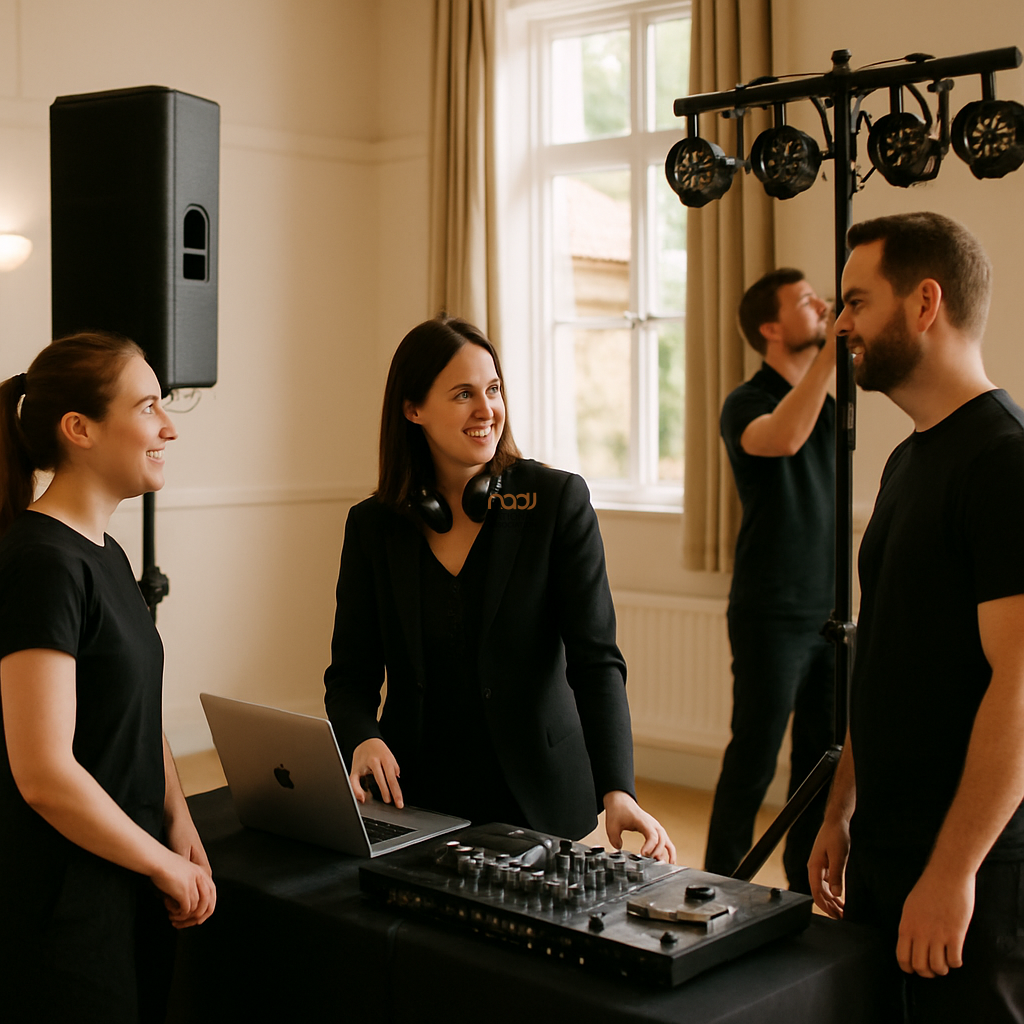
Employers’ liability for DJs is one of those insurance topics that can be overlooked until a booking, a team member or an accident makes it relevant. For many mobile DJs working across the UK, from London and Birmingham to Glasgow and Cardiff, the answer is simple: if you do not employ anyone, you may not need employers’ liability cover. However, if you hire staff, even occasionally, the position changes quickly.
This guide looks at the practical side of employers’ liability for DJs: when it may apply, when it usually does not, and what working DJs should check before they rely on assumptions. It sits alongside the broader guidance on DJ Public Liability Insurance: NADJ Cover and Requirements, which is the main page for understanding public liability cover in the UK DJ industry.
What employers’ liability insurance is for
Employers’ liability insurance is designed to protect a business if an employee is injured or becomes ill because of work. In simple terms, it deals with claims made by people who are working for you, rather than members of the public, venue staff or clients.
For DJs, this can matter if someone helping your business is legally considered your employee. That might be a permanent worker, a part-time assistant or, in some cases, a casual person you bring in to help at events. The key point is not the label you use, but the working relationship itself.
When DJs may need employers’ liability cover
You may need employers’ liability if you employ anyone in the UK and they work under your direction. That could include:
- a second DJ on your payroll
- a roadie or sound assistant
- a booking administrator employed by your business
- a lighting or setup helper who works for you on a regular basis
If you run a larger operation, or you are growing beyond a solo business, it is sensible to check whether anyone working for you is legally classed as an employee. In some situations, even part-time or temporary workers can count.
This is particularly relevant if you operate a small DJ company with multiple bookings, equipment transport and regular set-up support. In cities such as Manchester, Leeds, Liverpool, Bristol or Nottingham, where busy event calendars can make extra hands useful, it can be tempting to use helpers informally. That is exactly the point at which insurance and employment status deserve proper attention.
When DJs usually do not need it
If you are a sole trader or limited company director who works alone and does not employ anyone, employers’ liability insurance may not be necessary. Many mobile DJs fall into this category. They set up their own gear, perform the booking, and leave the venue without anyone else working under their control.
Likewise, if you occasionally call on another DJ as an independent contractor who runs their own business and controls how they work, you may not automatically have an employer-employee relationship. But do not assume this without checking the facts. The real arrangement matters more than the invoice wording.
It is also worth remembering that volunteers, family members and casual helpers can sometimes create uncertainty. If someone helps you regularly, follows your instructions and works as part of your business, it may be worth asking an insurer or legal adviser to review the setup.
Why the distinction matters
Employers’ liability is not just a box to tick. If a helper is injured while loading speakers, carrying flight cases, running cables or setting up lighting, a claim could arise if they were legally working for you. That is why the relationship between you and the helper matters so much.
For DJs, the risk is often around practical tasks rather than performance itself. Heavy lifting, trailing cables, storage, transport and venue access can all create hazards. A simple misunderstanding about who counts as staff can leave a business exposed.
Also, if you book work through a wider network, it is useful to keep your paperwork clear. The NADJ directory can help clients find working DJs, while the gig listings area supports members looking for opportunities. Good business records, clear terms and correct insurance all work better together than any one measure on its own.
Practical questions to ask before buying cover
If you are unsure whether employers’ liability applies to your DJ business, ask yourself the following:
- Do I pay anyone to work for me?
- Does anyone take instructions from me as part of my business?
- Does anyone regularly help with set-up, tear-down or administration?
- Could someone reasonably argue that they are my employee rather than an independent contractor?
If the answer to any of these is yes or maybe, it is sensible to get advice before assuming you are covered or exempt. Insurance providers assess risk using the actual business structure, so it pays to be accurate.
Don’t confuse employers’ liability with public liability
Many DJs first come across public liability insurance, which is different. Public liability is generally about injury to third parties or damage to third-party property. Employers’ liability, by contrast, is about people working for you.
That means a sole DJ who performs alone may still want public liability insurance, but may not need employers’ liability. Once you start employing people, the picture changes. For that reason, the cornerstone guide on DJ Public Liability Insurance: NADJ Cover and Requirements is a useful reference point, but it should be read alongside your own staffing arrangements.
How this affects DJs across the UK
Whether you are based in the Midlands, Scotland, Wales or Northern Ireland, the same basic principle applies: look at how your business is actually run. A solo wedding DJ in Leicester or Coventry may have a very different insurance picture from a DJ company in London or Birmingham that uses assistants every weekend.
Venue size and event type can also influence how you operate. A small private party in a village hall is very different from a large corporate event, nightclub installation or touring setup. The more people involved in your operation, the more important it is to review employment status, insurance cover and risk management together.
Final checks for working DJs
Employers’ liability for DJs is not something every DJ needs, but it becomes important as soon as you start employing people. If you are completely solo, you may not need it. If you use staff, helpers or assistants, you should not rely on guesswork.
NADJ’s wider aim is to help DJs work professionally, safely and with the right information. If you are unsure about your insurance position, check your current policy wording, speak to your insurer and review your business structure before your next booking. That way, you can focus on the event itself with fewer surprises in the background.
For more detail on the core insurance issues facing UK DJs, read the main NADJ guide to DJ Public Liability Insurance: NADJ Cover and Requirements and explore the wider resources available through NADJ Hub and NADJ Media Ltd.
AI transparency note
NADJ uses artificial intelligence as an editorial assistant. Articles produced through this publisher begin with a human-selected idea, source, brief or editorial direction, and AI may be used to research, structure, draft or improve the wording. AI does not set NADJ editorial policy or operate free-range: people acting for NADJ set the instructions and publishing framework, monitor the output and retain editorial responsibility.
Images used by NADJ may include stock photography or AI-generated visuals where appropriate. NADJ is volunteer-led and editorial time is limited; much of our available time is currently absorbed by governance and management, a substantial data audit and membership-system transfer, and planning 12 Tea & Test days across the UK. You can help strengthen member-led content by sending article ideas or completed submissions to hello@nadj.org.uk.









 Avtar Thethy
 Fabio Capozzi
 Alastair Craig
 Dave Mills