
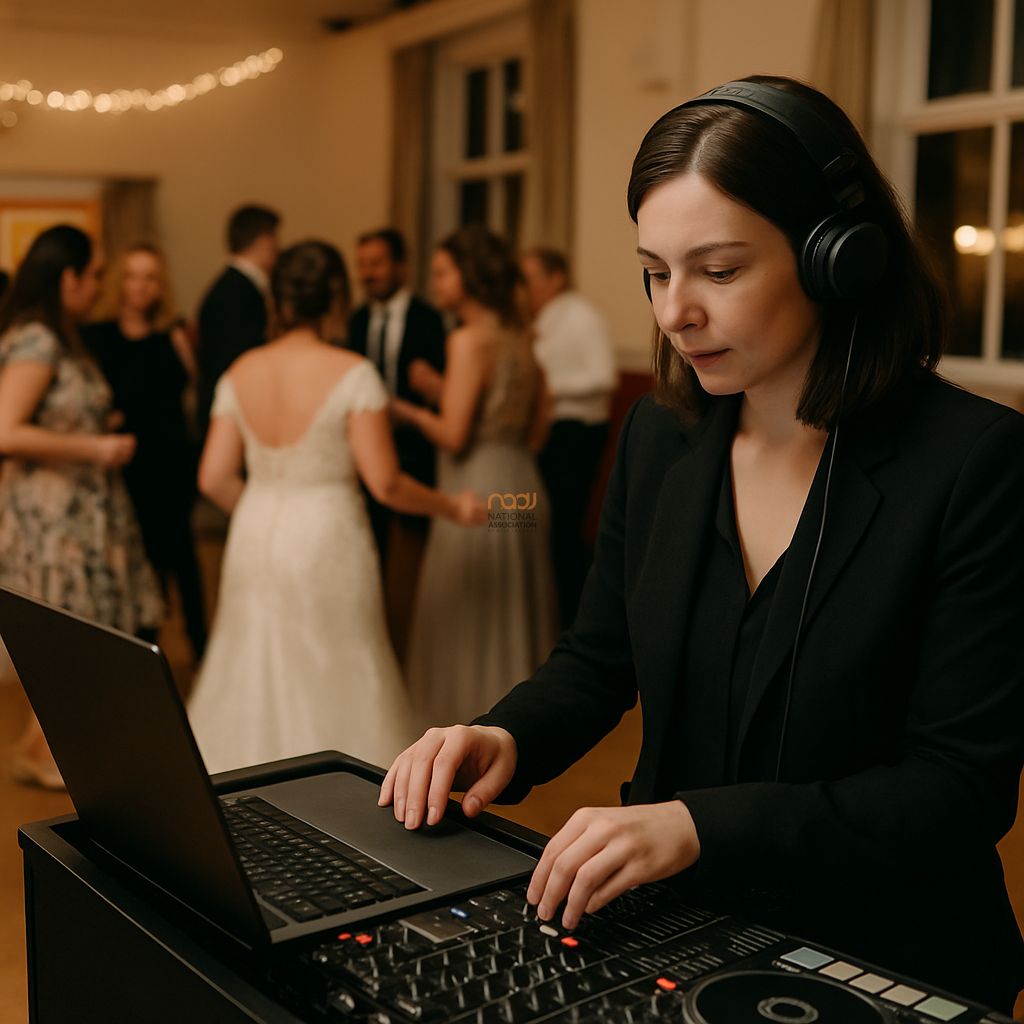
For many working DJs, DJ intro edits and short edits are part of the everyday toolkit. Used well, they can tighten pacing, make mixes feel more deliberate, and help you manage time on a packed wedding or club floor. Used badly, they can strip away energy, make transitions feel abrupt, and limit your ability to read the room.
The key point is simple: edits are not inherently better than full versions. They are tools. The right choice depends on the venue, the crowd, the set format, and what you need the music to do in that moment. That matters whether you are playing in London, Manchester, Birmingham, Leeds, Bristol, Cardiff, Glasgow, Liverpool, Nottingham, Leicester, Coventry, or anywhere else across the UK, England, Scotland, Wales and Northern Ireland.
What DJ intro edits and short edits are for
DJ intro edits usually add a clean beat-led opening, giving you room to bring in a track on phrase and beat-match more easily. Short edits reduce the overall running time of a song, often by trimming extended intros, long breakdowns, repeated choruses, or instrumental sections.
In practical terms, both formats are designed to improve control. They can make your library more usable for mobile gigs, wedding receptions, bar work, student nights, and fast-paced club sets. They can also help when you need to keep a set moving without long gaps between recognisable moments.
When intro edits improve pacing
Intro edits are most useful when the crowd benefits from momentum. If you are working a dancefloor that responds to quick changes and frequent recognition, a shorter route to the hook can keep attention focused. That is especially helpful when the room is already active and you want the energy to keep building rather than resetting.
They are also valuable when you need to cue mixes quickly. A clean intro gives you a reliable start point, which can reduce risk during live performance. If you are working with limited booth space, poor lighting, or unfamiliar equipment, that extra structure can be welcome. For that reason, many DJs in busy venues and at mobile events keep a bank of intro edits ready for high-pressure moments.
Short edits can also be effective when you are managing a tight running order. At a wedding, for example, the evening may include first dance, buffet calls, speeches running late, and a limited dance window. In those settings, concise versions can help you cover more ground without making the set feel rushed. The same logic applies to some corporate events and private parties where the brief is to keep the programme moving.
When short edits do not help
Short edits are not always the best answer. If a track depends on atmosphere, tension or a slow build, cutting it down can weaken the record. Some songs need their full intro, breakdown or final chorus to create impact. In those cases, a short edit may save time but lose character.
They can also work against you when the crowd wants to settle into a groove. A dancefloor that is fully engaged may prefer longer passages, extended mixes, or a more natural progression. If you keep switching away too quickly, the set can feel mechanical. This is where experience matters: the most effective DJs in the UK do not just chase speed, they balance pace with anticipation.
Another issue is over-reliance. If your entire library is built around short edits, you may find it harder to respond creatively. You lose the option to let a record breathe, to extend a moment, or to use a long outro to guide a transition. In practice, that can make your set less flexible, not more.
How to decide track by track
A useful test is to ask three questions before you load the edit:
- Does the crowd need speed, or does it need anticipation?
- Is the song being used as a peak-time weapon, a singalong moment, or a mood setter?
- Will a shorter format help the set, or simply make it feel compressed?
If the answer to the first question is speed, an intro edit or short edit may be the right choice. If the answer is anticipation, use the full version, a long intro, or an extended mix instead. The aim is not to fit every record into the same format, but to make the format serve the moment.
For mobile DJs, that often means building different crates for different outcomes: clean intros for cueing, short edits for high-turnover dance sections, and full-length versions for emotional or anthemic tracks. For club DJs, the decision may be more about blend time and floor control. Either way, the principle is the same: choose the version that supports pacing, not the one that merely feels efficient on paper.
Practical considerations for UK working DJs
Good pacing is not only about edits. Monitoring, headphones, and preparation all matter. If your cueing is inconsistent, even the best intro edit will not save the transition. NADJ has useful guidance on DJ headphones for professional mobile DJs in the UK, which may help when you are refining your workflow.
It is also worth thinking about the wider business side of DJing. If you are building a mobile operation or taking more bookings, you may want to review your setup, membership options, and support resources. NADJ’s membership tiers explained page outlines the different options available, while the main NADJ Hub brings together member resources and practical information.
For DJs seeking more work, the gig listings and NADJ directory can also be useful reference points. If you are checking your business essentials, you may wish to review DJ public liability insurance guidance as part of your normal due diligence. As ever, check live details and policy wording directly before relying on any cover or service.
Best practice: use edits with intent
The best DJs do not choose between intro edits, short edits and full versions by habit. They choose by intent. If the job is to keep a busy floor moving from one big moment to the next, concise edits can be a real asset. If the job is to create atmosphere, sustain tension, or allow a track to land properly, longer forms are often stronger.
In other words, pacing is not only about how fast the set moves. It is about whether the crowd feels guided, rushed, lifted or held. That judgment is different in a Belfast wedding, a Bristol club night, a Glasgow student event, or a Midlands corporate function, but the principle is always the same: use the version that serves the room.
For NADJ members and the wider DJ community, that is the real value of understanding DJ intro edits and short edits. They are not shortcuts. They are options. And when you use them carefully, they can make a good set feel tighter, smoother and more professional.
AI transparency note
NADJ uses artificial intelligence as an editorial assistant. Articles produced through this publisher begin with a human-selected idea, source, brief or editorial direction, and AI may be used to research, structure, draft or improve the wording. AI does not set NADJ editorial policy or operate free-range: people acting for NADJ set the instructions and publishing framework, monitor the output and retain editorial responsibility.
Images used by NADJ may include stock photography or AI-generated visuals where appropriate. NADJ is volunteer-led and editorial time is limited; much of our available time is currently absorbed by governance and management, a substantial data audit and membership-system transfer, and planning 12 Tea & Test days across the UK. You can help strengthen member-led content by sending article ideas or completed submissions to hello@nadj.org.uk.









 Avtar Thethy
 Fabio Capozzi
 Alastair Craig
 Dave Mills