
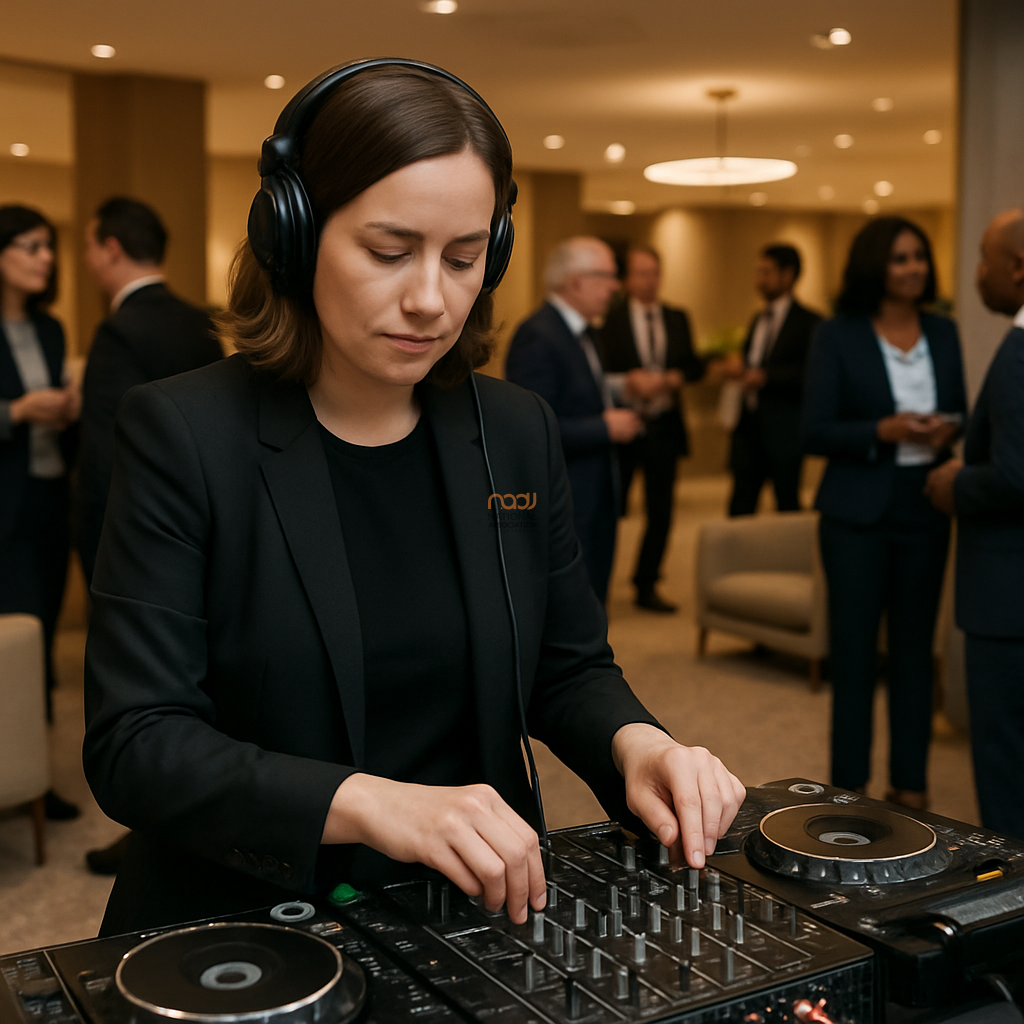
For working DJs across England, Scotland, Wales and Northern Ireland, this is especially relevant at receptions in hotels, conference venues and private dining spaces in London, Manchester, Birmingham, Leeds, Bristol, Cardiff, Glasgow, Liverpool, Nottingham, Leicester and Coventry. Corporate clients often want something tasteful and safe, but they still expect judgement. That means building a background soundtrack that feels specific, not generic.
Start with the room, not the playlist
Before you load a single track, assess the environment. Is the reception taking place in a bright foyer, a function suite, a gallery space or a hotel bar? How loud is the room before guests arrive? Is the brief informal networking, award drinks or a client celebration? These details matter because the same music will land very differently in each setting.
A good background set should sit comfortably under speech. That usually means controlled levels, a steady groove and minimal surprises in the opening section. If guests are still greeting each other and exchanging business cards, lyrics that compete for attention can quickly become distracting. In many cases, instrumental versions, light disco, soul, jazz, nu-disco, chilled house or tasteful contemporary edits are more effective than obvious crowd-pleasers.
Use the brief to define the musical identity
The quickest route to sounding generic is choosing tracks that are merely acceptable. Instead, translate the client brief into musical qualities. A tech company may want polished and modern. A heritage brand may prefer elegant and understated. A creative agency may be comfortable with a little more edge. Even a modest shift in tempo, texture and genre can make a set feel tailored.
Ask sensible questions in advance: Who is the audience? What age range is likely? Is there a brand guide or tone of voice to reflect? Are there songs, genres or eras the client definitely wants to avoid? The answers will help you programme intelligently rather than defaulting to the same background staples every time.
Build variety without creating jumpiness
Variety is essential, but too much contrast can make a reception feel disjointed. The trick is to change colour, not character. Keep the overall energy level stable while varying instrumentation, vocal presence and genre flavour. For example, a set might move from mellow jazz-funk to sophisticated pop reworks, then into soft groove-based house, and finally into more familiar tracks once the room has warmed up.
This approach prevents the set from sounding like a looped café playlist. At the same time, it avoids sudden lurches that can feel more suited to a nightclub than a corporate function. Transition management matters here. Clean mixing, careful phrasing and sensible use of EQ can help maintain a seamless feel, especially in venues where sound carries easily.
Think in phases, not one long mix
Corporate receptions usually have a natural flow. Guests arrive, settle, network, listen to brief speeches, then move towards dinner or the next part of the programme. Your music should mirror that journey.
Arrival
Keep the opening restrained and welcoming. This is the time for clarity, polish and confidence. Avoid overloading the first 15 minutes with anything too busy or recognisable. Guests are orientating themselves and may still be focused on check-in, coats and introductions.
Mid-reception
Once the room is fuller and conversations are flowing, you can increase rhythmic movement slightly. This is often the best time to introduce more identity into the set: tasteful remixes, deeper grooves and more memorable melodies, provided they remain background-friendly.
Transition
If speeches, announcements or dinner service are due, plan clean handovers. Reduce complexity, trim the bass, and give the venue team space. Good reception programming always works with the event timetable, not against it.
Avoid the usual generic traps
Generic corporate music often happens for predictable reasons. First, the DJ relies too heavily on one streaming playlist or an old folder that has not been refreshed. Second, the set is built around the DJ’s personal taste rather than the event brief. Third, there is not enough attention paid to track length, repetition or lyrical content.
It also helps to remember that “background” does not mean anonymous. A smart set can still have personality. In fact, the best corporate reception music often uses subtle cues: a familiar intro line, a warm bass figure, a clean vocal hook or a well-chosen edit that gives recognition without turning the room into a singalong.
Practical preparation for working DJs
Preparation is what separates a competent background set from a really effective one. Build multiple crates by mood, not just genre. Keep emergency options ready for older and younger audiences. Test your playback and levels in advance, and make sure you can adapt if the room is louder or quieter than expected. If you are using headphones for cueing in a busy venue, our guide to top DJ headphones for professional mobile DJs in the UK may be useful when comparing features that support reliable mixing in live environments.
It is also worth checking the broader professional basics. Corporate clients may expect a reliable, insured and well-presented supplier, so it can be useful to direct them to clear information on DJ public liability insurance and common cover requirements. For those building their business structure, NADJ membership tiers explained can help clarify the support available through the association.
Make use of NADJ resources and network intelligence
One of the strengths of the UK DJ community is the amount of practical knowledge shared by working professionals. If you are looking to sharpen your event preparation, the NADJ Hub is a useful place to keep up with guidance and industry discussions. The NADJ directory can also help clients and venues find established DJs, while the gig listings section may offer useful visibility for those seeking opportunities across the UK.
For DJs who also run their business through the wider NADJ ecosystem, remember that nadj.co.uk and NADJ Media Ltd services may be relevant when planning your website, marketing or business administration. A professional presence supports the confidence needed when dealing with corporate buyers.
Final thought
Programming corporate reception background music is not about proving how much you know. It is about making informed choices that serve the event, the client and the people in the room. Keep the music tasteful, varied and responsive. Read the space, respect the brief and avoid the temptation to reach for the same safe tracks every time. That is how a reception sounds polished without becoming generic.
Note: any guidance on venue requirements, licensing, insurance or event policy should always be checked against the latest live details and the specific circumstances of the booking.
AI transparency note
NADJ uses artificial intelligence as an editorial assistant. Articles produced through this publisher begin with a human-selected idea, source, brief or editorial direction, and AI may be used to research, structure, draft or improve the wording. AI does not set NADJ editorial policy or operate free-range: people acting for NADJ set the instructions and publishing framework, monitor the output and retain editorial responsibility.
Images used by NADJ may include stock photography or AI-generated visuals where appropriate. NADJ is volunteer-led and editorial time is limited; much of our available time is currently absorbed by governance and management, a substantial data audit and membership-system transfer, and planning 12 Tea & Test days across the UK. You can help strengthen member-led content by sending article ideas or completed submissions to hello@nadj.org.uk.









 Avtar Thethy
 Fabio Capozzi
 Alastair Craig
 Dave Mills