
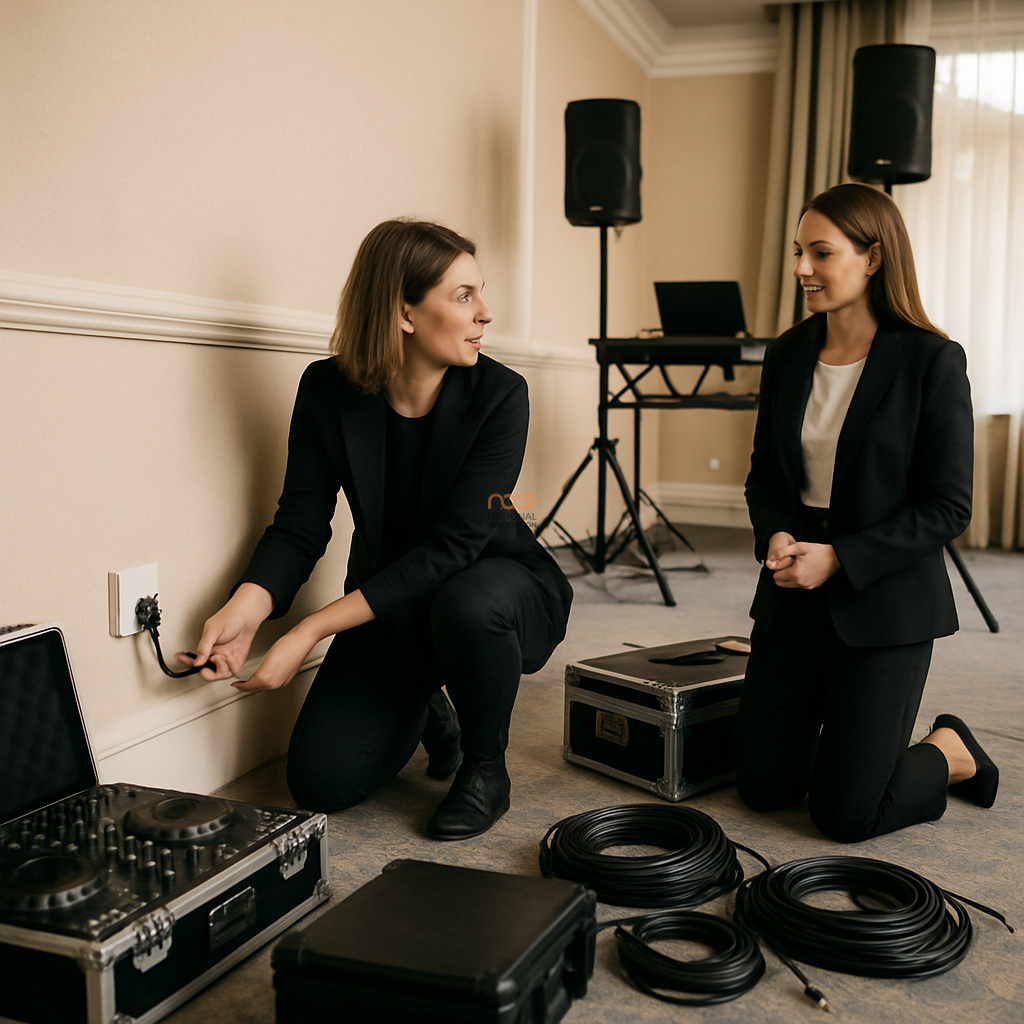
If a damaged venue socket looks unsafe, the right response is simple: do not use it until it has been checked and made safe. For working DJs across the UK, from London and Birmingham to Glasgow, Cardiff, Manchester, Leeds and beyond, a suspect socket can be more than an inconvenience. It may present a real risk to you, your equipment and the people around you.
At NADJ, we regularly remind DJs that professionalism is not just about sound quality and presentation. It is also about safe working practice, sensible decision-making and knowing when to stop and ask for help. If you are unsure, treat the socket as unsafe until a competent person confirms otherwise.
First, stop and assess the situation
If you notice cracks, scorch marks, exposed conductors, a loose faceplate, unusual heat, buzzing, visible sparking or a plug that does not sit correctly, stop using that outlet immediately. Do not test it repeatedly “just to see”. That can make the hazard worse.
Switch off and unplug any equipment already connected, if you can do so safely. If the socket is part of the area you are setting up in, pause the load-in and let the venue know straight away. A calm, practical response is usually the best one.
What counts as a warning sign?
- Burn marks or discolouration around the socket
- Cracked or loose socket plates
- Plugs that feel hot to the touch
- Sparking, crackling or a burning smell
- Intermittent power when a plug is moved
- Obvious damage to the faceplate, cable or surrounding wall
These are not minor cosmetic issues. They may indicate a fault that needs attention before the socket is used again.
Do not assume a socket is safe because it still works
One of the most common mistakes DJs make is assuming that if a socket powers up, it must be fine. In practice, a socket can still function while being unsafe. That is why visible condition matters. A socket that is damaged, loose or overheating should not be treated as acceptable just because the lights are on.
UK venues vary widely, and that includes hotels, village halls, pubs, social clubs, wedding barns and purpose-built event spaces. Older buildings in the Midlands, Northern England, Scotland, Wales and Northern Ireland may have a mixture of newer and older electrical fittings. So, always apply the same standard: if it looks wrong, do not use it.
Tell the venue contact immediately
Report the issue to the venue manager, duty manager or event organiser as soon as possible. Be clear and factual. Say what you saw, where the socket is and why you are concerned. Avoid speculation and avoid arguments. Your job is to flag the concern, not to diagnose the fault.
If the venue offers an alternative outlet, inspect that one too before using it. A different socket may be fine, but do not assume the whole room is safe simply because one outlet is serviceable.
Useful approach
You can keep the conversation straightforward:
“I’ve noticed damage to that socket and I’m not comfortable using it. Can someone from the venue check it before we continue, or can we use a different outlet?”
That keeps the tone professional while making your position clear.
Document what you found
Where practical, take a photo on your phone and make a brief note of the time, location and what you observed. This is sensible record-keeping, especially if the venue later needs to trace the problem. Keep it factual. There is no need to dramatise or make accusations.
If your event paperwork includes setup notes, add the issue there. If you work regularly with the same venue, it is worth keeping your own records so you can spot patterns. That can be helpful whether you are working in Bristol one weekend and Nottingham the next, or returning to the same local hall each month.
Use alternatives only if they are genuinely suitable
If an alternative socket is available, use it only after a quick visual check and only if it is appropriate for your setup. Check that the plug fits securely and that the area around the socket appears sound. If you are using extension leads or power distribution equipment, make sure they are in good condition and placed to avoid trip hazards.
Never trail cables through water, under doors that may crush them, or across areas with heavy public traffic unless you can protect them properly. Good cable management is part of safe DJ practice.
If you are unsure about the supply, or if the venue cannot offer a clearly safe alternative, it is reasonable to stop and wait for the issue to be resolved by the venue’s own competent person. In some cases, that may mean altering the setup or delaying the performance start. That is inconvenient, but it is better than taking avoidable risks.
How this fits with wider DJ professionalism
Safe working habits go hand in hand with the rest of your operation. That includes protecting your kit, choosing suitable accessories and making sure you are prepared for real-world conditions. If you are reviewing your kit, our guide to top DJ headphones for professional mobile DJs in the UK may help you choose equipment that suits demanding environments.
It also helps to think about the business side of the job. NADJ supports DJs with practical resources, community and industry information, including membership tiers explained, our DJ directory, the NADJ hub and gig listings. If you are looking to strengthen your professional profile, you can also explore NADJ Media Ltd services, which support DJs and related businesses with digital and operational needs.
Insurance, PAT and risk management
Questions about electrical safety often lead DJs to ask about PAT testing, public liability cover and venue responsibilities. These are important topics, but the details can vary depending on the circumstance. As always, check live requirements, venue conditions and your own policy wording rather than relying on assumptions.
For general guidance on insurance-related considerations, see our page on DJ public liability insurance in the UK. If your equipment testing or record-keeping needs reviewing, make sure you speak to a suitably qualified provider and follow current guidance.
Final advice: if in doubt, stop
The clearest rule for any DJ faced with a damaged venue socket is this: if it looks unsafe, do not use it. Protect your own safety first, then protect your equipment and the people around you. A venue should want that too.
Professional DJs are expected to be flexible, but flexibility should never mean ignoring a visible electrical hazard. Whether you are playing a wedding in Leicester, a corporate event in Coventry, a party in Liverpool or a club night in Manchester, the standard is the same: stay alert, raise concerns early and only proceed when the power point is genuinely safe to use.
AI transparency note
NADJ uses artificial intelligence as an editorial assistant. Articles produced through this publisher begin with a human-selected idea, source, brief or editorial direction, and AI may be used to research, structure, draft or improve the wording. AI does not set NADJ editorial policy or operate free-range: people acting for NADJ set the instructions and publishing framework, monitor the output and retain editorial responsibility.
Images used by NADJ may include stock photography or AI-generated visuals where appropriate. NADJ is volunteer-led and editorial time is limited; much of our available time is currently absorbed by governance and management, a substantial data audit and membership-system transfer, and planning 12 Tea & Test days across the UK. You can help strengthen member-led content by sending article ideas or completed submissions to hello@nadj.org.uk.









 Avtar Thethy
 Fabio Capozzi
 Alastair Craig
 Dave Mills